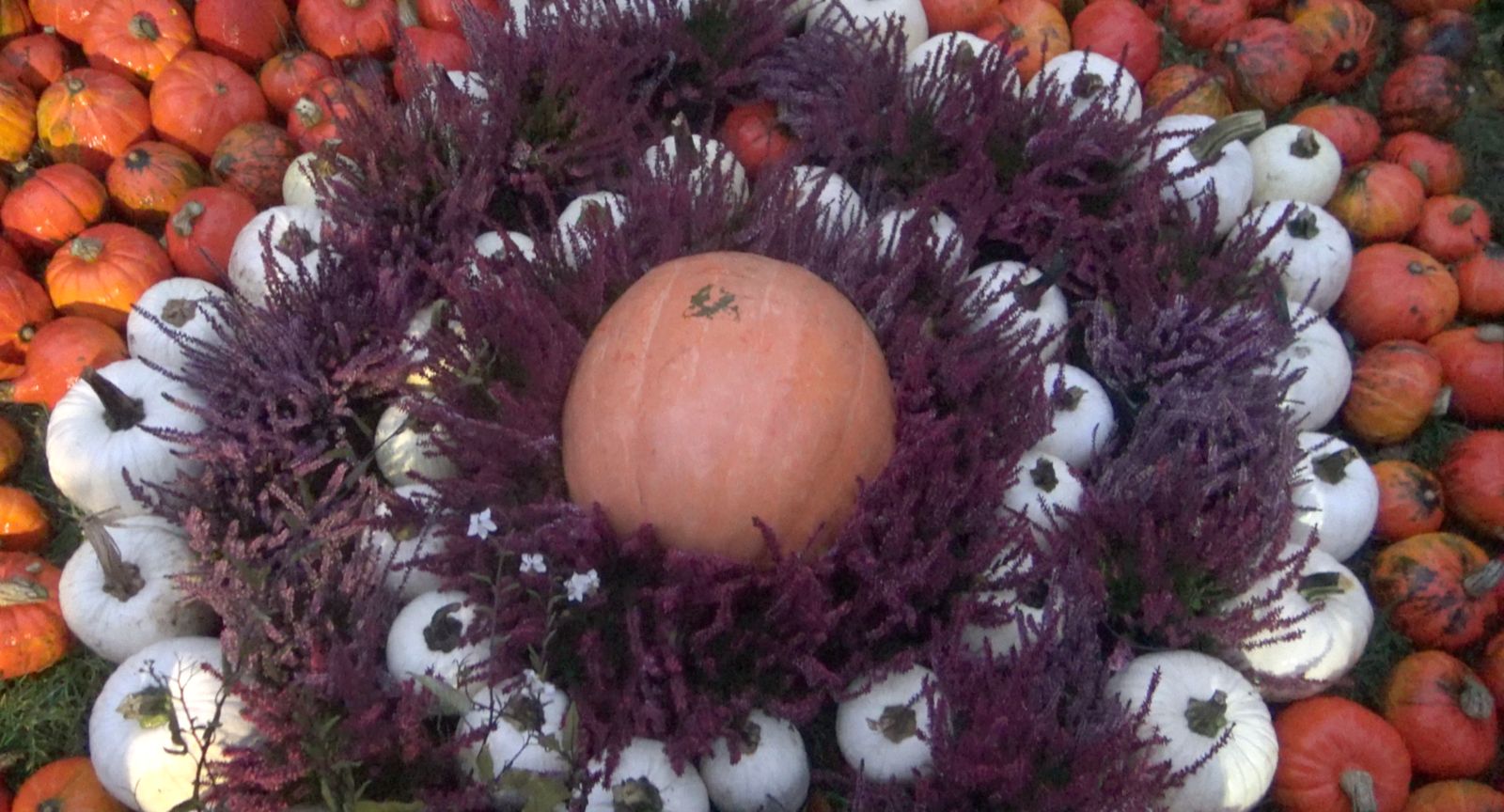

First held in the late 1990s as a way to bring regional farmers and city dwellers together, the festival now draws thousands to taste, trade, and admire the humble pumpkin. Celebrating its 26th year, this edition differed from those before by showcasing more elaborate decorative displays designed to catch the eyes of visitors and curious tourists. In one installation, pumpkins of different colours were arranged in concentric circles, drawing the eye toward the largest, which sat regally in the centre on a bed of lavender.
The event’s decorative appeal clearly paid dividends when a group of visiting students decided to attend after seeing a video on the pumpkin festival’s TikTok channel. “We are here for the decoration because we don’t have festivals like this at home,” said Chilean student Esperanza. “The variety of pumpkins is impressive. We didn’t know that you could have this many.” Esperanza added that she intends to make the Chilean recipe sopaipillas for her friends, a traditional fried bread where pumpkin is added to the dough to give a sweet flavour.
While tourists admired the artistry of the displays, for local vendors like Erna, the pumpkin is far more than decoration. The Berlin Pumpkin Festival boasts an estimated 10,000 pumpkins for sale across 20 different varieties, which are transformed by local restaurateurs into soups, cakes, compotes, frittatas, and other delicacies. Of the 20 varieties, “Hokkaido is the most popular type of pumpkin now because you can use it for soup and sauté,” says the local merchant, “because it also softens very quickly and is therefore creamy in the direction of chestnuts.” Her explanation, given in German, was detailed and animated. “The Crown Prince, our Turkish customers love it for the sweet compote with sugar, nuts, and raisins. It’s wonderful how every culture makes something different from the same pumpkin.”
This year marks the eighth time that Erna has attended the festival, and each year she brings a new type to the celebration, as “pumpkin seeds are traded and exchanged everywhere.” This year is the first time she has grown the South African variety Flat White Boer, which she says is “very sweet, nutty, and good for cakes.”
The stall next to hers showcased a different approach to pumpkins, run by local farmer Omer Brie, who smiled when asked about what made this year unique: “We’re offering sorted pumpkins from regenerative cultivation.” Regenerative cultivation uses sustainable methods that enhance soil health and biodiversity, part of a growing movement that values quality and taste over specific pumpkin types. The Pumpkin Festival’s organiser, Martina, echoed this sentiment, noting that all produce is sourced regionally from local farms.
As the sun set over Schöneberg, the scent of roasted pumpkin lingered in the air. For Erna, Esperanza, and thousands of others, the festival is a reminder that the pumpkin is more than a decoration or food; it’s a symbol of how one humble vegetable can connect different cultures during the gentle arrival of autumn.