

The Guardian: Family law shifts hailed as victory for children facing domestic abuse
The main headline concerns a significant family law change that has been called a victory for children affected by domestic abuse. The courts will no longer start with the assumption that contact with both parents is in the child’s best interest. This shift aims to prioritize child safety and welfare over parental rights in cases where abuse has occurred. Also featured is former French president Nicolas Sarkozy, who has begun serving a five-year prison term following his conviction for criminal conspiracy. He had been found guilty of using his position to illegally obtain information from a high-ranking magistrate.
Financial Times: Bailey hears “alarm bells” over private credit after big US corporate failures
The Bank of England’s Governor, Andrew Bailey, is expressing serious concern about the rapid growth and high risk in the private credit market. He sees worrying parallels to the 2008 financial crisis. The core issue is that large chunks of private market lending, which often operates outside traditional banking regulation, are carrying high leverage debt. His primary fear is that the complexity and opacity of these unregulated private markets could pose a systemic risk to the wider financial system. Meanwhile, in a historic political development, Sanae Takaki has been elected as Japan’s first female Prime Minister. Her victory, achieved through a parliamentary vote, is being widely celebrated. She faces two main challenges and priorities: tackling the nation’s massive national debt and addressing the long-term, structural issue of Japan’s declining population.
The Boston Globe: Trump wants $230m compensation for probes
The front page reports that U.S. President Donald Trump is demanding $230 million from the Justice Department to cover expenses related to federal investigations into him. The claim, filed through an administrative process, alleges that the FBI and the special counsel’s investigation caused him financial harm. Meanwhile, a government shutdown is looming. The White House and President Trump are selectively determining which government services and employees remain operational, raising concerns that these decisions are politically motivated and testing the legal limits of presidential authority during a shutdown.
The New York Times: Vance, in Israel, stand by truce after flare-ups
US Vice President J.D. Vance is visiting Israel for urgent talks on efforts to shore up the fragile cease-fire deal. His trip comes alongside a significant flare-up of violence just days earlier. He acknowledged that “things are going, frankly, better than anticipated”, but gave few details on the current status of the deal. The NYT also reports on President Trump’s renovation plans, stating that he is turning the White House into “a project that will truly leave his mark.” The White House offices have been “gutted,” including the Oval Office. Described as a “Demolition Dream” that is being realized on the exterior and interior of the White House.
El País: El rey: “Cualquier alternativa a un mundo multilateral es peor”
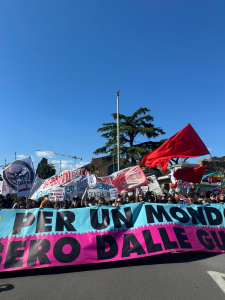
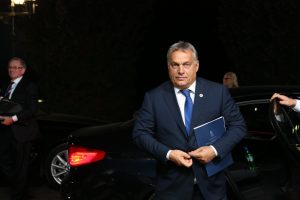
The main headline highlights King Felipe VI’s address at the World in Progress forum in Barcelona. He emphasized the need to preserve the “elements of the world order,” warning that without them, relations between states would be guided solely by the struggle for power, lacking any other principle or foundation. The monarch also stated that “the democratic quality of societies depends on the education” they provide. He affirmed that believing in a multilateral world is not idealism, but rather an expression of pragmatism. Meanwhile, it is also reported that the White House announced the cancellation of a previously scheduled meeting in Budapest, Hungary between President Trump, and Russia’s President Vladimir Putin. The reason given is that Moscow is not willing to declare a truce in Ukraine as Washington is demanding.
Clarín: Estados unidos ahora dice que comprará poca carne argentina y que tiene “aftosa”
Clarín reports a controversial statement by Brooke Rollins, Secretary of Agriculture under Donald Trump, who claimed the U.S. would reduce beef imports from Argentina due to concerns over foot-and-mouth disease—despite Argentina being declared disease-free 24 years ago, with the last outbreak recorded in 2001. The U.S. currently imports just 30,000 tons of Argentine beef annually. The remark comes amid ongoing trade negotiations. Another headline focuses on the rising dollar and its impact on Argentina’s economy. Since exchange controls were lifted in April, savers have purchased US$18 billion in foreign currency, with total bank deposits now exceeding US$35 billion. The dollar closed at $1.515, prompting the Central Bank to intervene by selling US$45 million to contain the surge, reflecting growing tension in the exchange rate market.