
“Sometimes it feels like I’m behind on everything compared to my peers,” said Timilehin Folorunsho, a final-year student of Agricultural Sciences at the Federal University of Agriculture, Abeokuta (FUNAAB). “For me, a five-year course has now become almost seven or even eight years because of these breaks.”
Timilehin is one of thousands of students affected by the latest strike declared by the Academic Staff Union of Universities (ASUU) on October 14 by ASUU President, Prof. Christopher Piwuna. The union described it as a two-week warning action, intended to pressure the government into meeting its long-standing demands.
This marks ASUU’s 18th strike in 26 years, highlighting how frequent and unresolved these disruptions have become in Nigeria’s public university system.
Timilehin said he still hopes the strike will be called off soon so he can return to school and finally complete his final-year project.
“I just hope it ends next week,” he added. “I really want to graduate and move on with my life.”
ASUU’s demands stem from long-standing grievances, notably the 2009 Academic Staff Union of Universities and Federal Government of Nigeria (FGN) Agreement, which sought to secure better funding for public universities, improved working conditions, and infrastructure renewal. Other demands include addressing unpaid salary and promotion arrears, ensuring remittance of third-party deductions, and halting alleged victimisation of union members at some campuses.
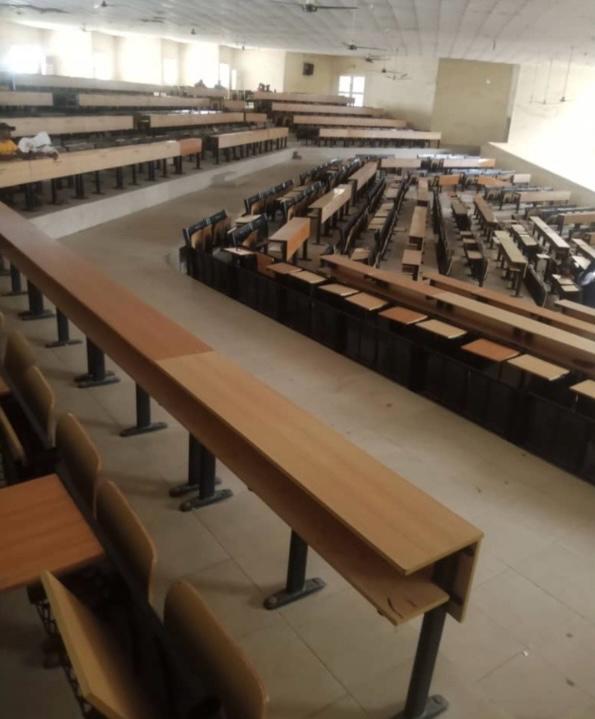
At the Federal University of Agriculture, Abeokuta (FUNAAB), the lecture halls are quiet, and some students have returned home to wait for further updates.
“It’s hard for everyone,” said Pamilerin Obikoya, a lecturer at Olabisi Onabanjo University (OOU). “For students, it’s the loss of time and motivation. For lecturers, it’s the disruption of academic plans, research, and income. The longer it goes on, the more damage it does to the system.”
Across the campus, the sentiment is the same: frustration. Some students fear they’ll lose grip on what they’ve learned by the time classes resume. Others worry about lagging behind peers in private or foreign institutions who continue to advance academically while public university students remain grounded.
For now, the waiting continues. While the Academic Staff of Union Universities (ASUU) and the federal government engage in talks, students like Timilehin can only hope this will be the last time their education is disrupted and that this will not become yet another prolonged interruption.
“We just want to finish and move on,” he said. “We’ve waited long enough.”