
Walking through the bustling, crowded streets of Rome’s neighbourhood Trastevere, the noise and chaos can feel overwhelming. But turn down a quiet side street, and you stumble upon a place that feels like a world apart—a vibrant cultural oasis pulsing with creativity, community, and calm.
As Saturday night unfolds, people pour in. Most settle into the garden: friends debriefing relationship dilemmas, unloading the stress of work or school, or diving into lively debates on politics and culture. Others gather around board games picked up at the entrance or play a quick game of ping pong. Everyone seems at home, surrounded by ease, warmth, and the freedom to be entirely themselves.
This is Zalib.
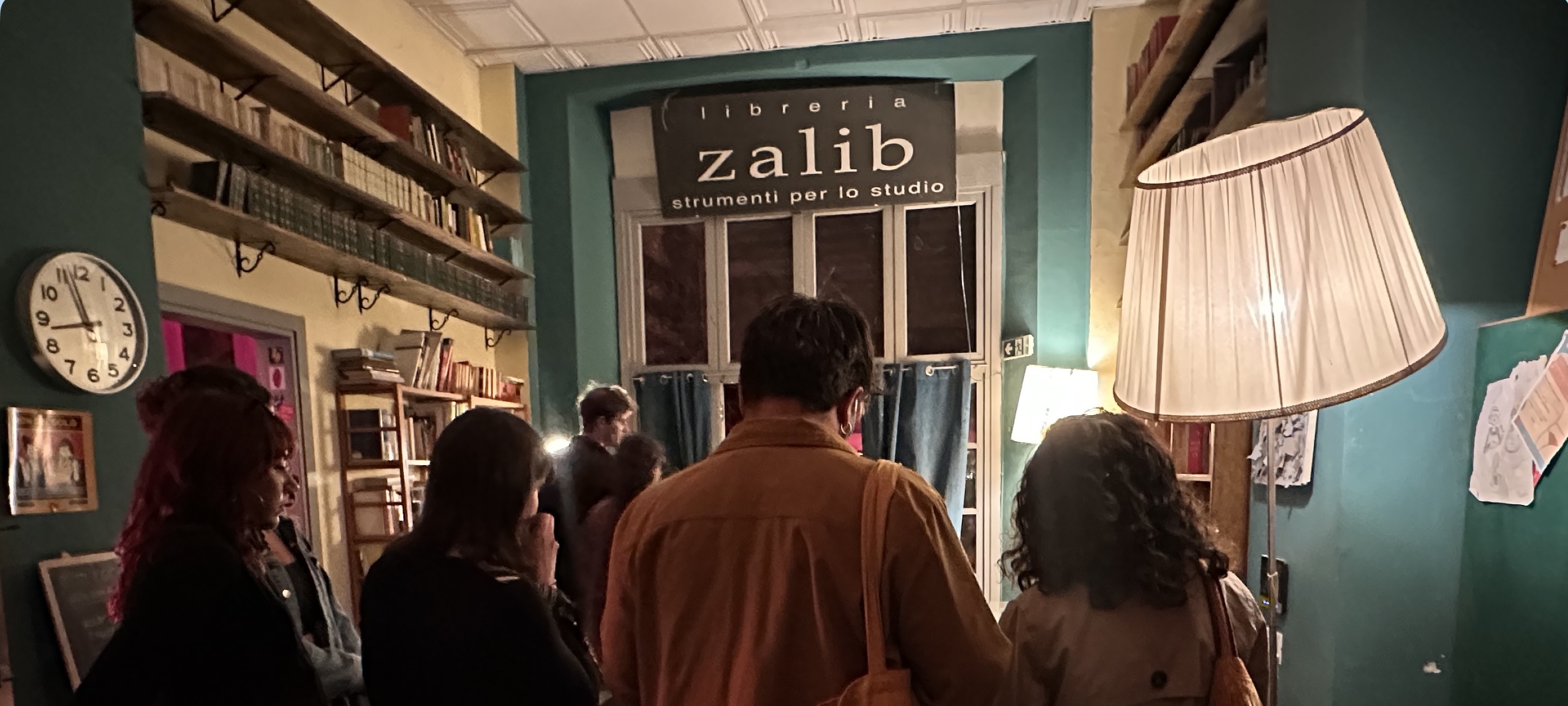
Tucked away at Via della Penitenza 35 in Trastevere, Zalib is a cultural hub and youth centre run by an under-35 leadership team, supported by volunteers and staff. Originally a humble bookshop on Via della Gatta, it closed in 2017 after 20 years due to declining sales and rising rents.
Following the closure announcement, the community rallied to save it, launching the #SaveZalib campaign and raising nearly €20,000. Despite these efforts, the bookshop officially closed, but its spirit lived on. The community continued to gather and collaborate with other cultural groups, committed to fostering youth-driven culture.
In June 2018, with support from Municipio I, Zalib reopened in Trastevere, evolving into the vibrant cultural centre it is today.
Its beauty lies in having become a touchstone for the community—whether for those who live, study, or work in Trastevere, or for the broader Roman youth.
A group of women runs into friends, embracing and laughing at the surprise encounter. “This place has remained a point of reference. You can come alone, have a coffee, sit and study or work, or in the evening meet up with friends, have a beer. Even if you come alone, for those of us who live nearby, you always end up seeing someone you know,” says Giulia, who, along with her friends, has been coming to Zalib since it first opened.
They describe it as a “safe zone”—a place where they feel relaxed and unguarded. It’s a world of its own, a kind of exception to the larger reality of Trastevere: “which is super chaotic and noisy—this place feels quiet, cosy, really set apart from the hectic pace.”
It is also a place fuelled by creativity, art, and culture. “There are often small concerts, readings, and talks. Sometimes even beautiful photography exhibitions. I’ve discovered emerging artists here—it’s a space to experience culture freely and peacefully, without judgment.” There’s a kind of freedom in how culture is shared here: open, accessible, and never intimidating. You don’t need credentials to speak, play, or perform. The stage, like the space, belongs to everyone.
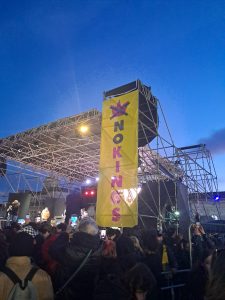
That spirit of freedom comes alive on nights like last Saturday, when Sync Into the Void’s DJ set blasted through a haze of fog and flickering coloured lights, with bass so deep you felt it thumping from your feet straight up to your chest.
This openness is felt by everyone—members and employees alike. As Alessandro explains, “Zalib isn’t just a workplace—it’s a place for connection. You don’t come here with a strict work mindset, but with the intention of making people feel good, sharing a space, and bringing joy and positive energy to those who come through.”
That welcoming spirit guides everything at Zalib. Those who work here strive to make it a space for everyone. “You can find anything here—from ping pong tables to live shows. Right now, there’s even an academy offering theatre and music. It’s really become a cultural hub.” Accessibility is a priority: all that’s required is an €8 membership card, which grants entry for an entire year.
Essentially, it’s the creative activities, community, and inclusivity that have made Zalib a beacon for the city’s young adults, attracting around 20,000 members each year.
As Giulia remarks, “Everyone is welcome. That should be a given these days, but too often it’s not. At Zalib, it genuinely is—you feel that openness the second you step inside.”