
The hum of ranchera music plays in the background amidst the sounds of vespas, cars and buses zooming outside the open door. The smell of asphalt in the Esquilino area of Rome fades away upon entry, replaced by the wafting aroma of meat on a grill.
Figurines of countryside homes and tan people in colorful outfits hang from the walls next to a shelf lined with beer bottles. In this place, customers can get a Corona or a Peroni.
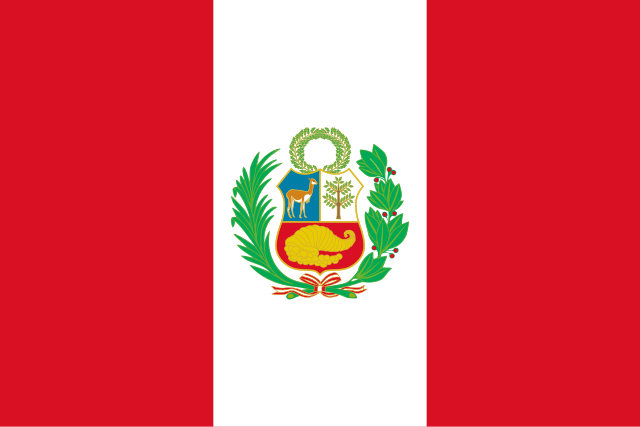
The restaurant Rico Perú doesn’t have a sign above its doorway, but someone can tell this enclave sandwiched between Italian cucinas is an escape into a different world by the flag waving in the wind outside the doorway: not the red, white and green of the Italian flag, but the red and white of the Peruvian one.
The straight-faced woman behind the payment counter abandoned her post to talk in a Spanish that’s mixed with “alloras” and “quindis” with the two customers sitting across from her.
“That’s my sister-in-law,” the waitress said, gesturing to another dark-haired woman walking past the door on the far side of the restaurant that leads to an open-air kitchen. As she grabbed a notebook and pencil from the counter to take a customer’s order, she passed a mirror on the wall with red sticker letters on it reading “Viva El Peru.”
Despite the few customers at 4:30 p.m. on a Tuesday, Peruvians are the largest Latin American demographic in Italy and the fifteenth largest international community in the country, according to the Ministero del Lavoro e delle Politiche Sociali. Lejos is one of those many Peruvian immigrants who migrated to Italy during a diaspora in the ‘90s that scattered Peruvians escaping narcotrafficking across the world.
“Where the Peruvians are, they stay there,” said Eva Lejos, one of the customer chatting with the waitress.
Lejos, who immigrated to Rome 33 years ago, said it was lucky that she got a job in a cooperative that studied Latin America while she was in Italy technically on vacation from her job as a police officer in Peru. Now, she has a job helping other immigrants establish themselves in Rome, hoping to give a recent new wave of Peruvian immigrants the same luck.
“My brother was killed, sadly, in that era of narcotrafficking. It was like that in 1990, 91, 92… and now, we’ve started with the same. Always politics, right?”
Across from Lejos sits a 20-year-old and turquoise-haired Lacy Pèrez, a new Peruvian in the city. Pèrez’s move two years ago wasn’t motivated by politics, but by education and family. Her mother has been here for eight years, and Lejos helped the family build a life across the Atlantic.
Lejos said that it’s easier for Peruvians to settle in Italy, not just because they’re better able to more easily secure documents than in other countries, but because the rosary hanging from the thermostat and the framed picture of Jesus in the restaurant matches the city that has churches in every square.
“I think it’s the Vatican,” said Lejos when asked why Peruvians choose Rome.
Data from the World Religion Database from 2025, compiled by The Association of Religion Data Archives, shows that 82.98 percent of Peru is Catholic. Lejos suggested that the common religion and Rome’s proximity to the Pope’s home draws Peruvians to the city.
But every immigrant coming to a place where they don’t speak the language tends to stay in a bubble with other immigrants of the same nation.
“The ones who have been here 30 years, they’ve integrated into the Italian culture. The ones that have come recently have a lot to go,” Lejos said.