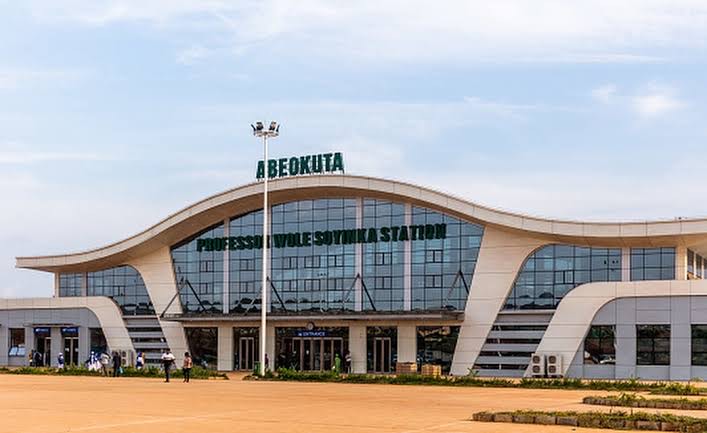

By 8:57 a.m., the train is already waiting on the tracks at the Wole Soyinka Station in Abeokuta, the capital of Ogun State in southwestern Nigeria a major terminal on the Lagos–Ibadan railway line connecting passengers between neighboring states, named after the Nobel laureate who hails from the city. Painted in green, white, and some indomitable designs across its sides, it looks calm and peaceful. People hurry down the stairs with bags and boxes, trying to catch their coaches.
The lifts and escalators at the station haven’t worked for a long time, so everyone has to use the stairs. An old woman stops halfway, breathing heavily as two young men stop to help her with her luggage. “They should fix these things,” the woman says. “It’s too stressful for we old people.”
At the platform, passengers stand behind the yellow safety lines as an attendant tries to guide people to their right coaches, but many still enter wherever they find space. A man gets to his seat and finds someone else sitting there. “Excuse me, that’s my seat,” he says, holding out his phone to show his e-ticket. The woman moves rather rudely and reluctantly, saying “but there are other empty seats now”
Inside, the air conditioner is cold and loud. Some passengers are on their phones, talking so loudly that others turn to look at them. Amid the chatter, a man suddenly begins shouting into his phone, angry at a mechanic who, he says, did a shabby repair job but still demands his money. His voice echoes through the coach. A man sitting beside me shook his head in annoyance saying “people really lack courtesy in public spaces,” he said, glancing at the young man still shouting into his phone.
Even with all the small issues, the train leaves on time, just as it usually does. The journey is smooth, and outside the windows, trees and open fields pass by quickly, in a blur against the soft morning light.
A passenger behind me says in a discussion with another passenger. “I wish there were more afternoon trains,”. “If you miss the morning one, you have to wait till evening.”
Not long after, more passengers came on board after a quick stop at the Yaba station. Another small argument breaks out over seat numbers. A train worker standing nearby sighs as he checks their tickets and quietly settles the matter.
When the train finally stops at the Agege station, the crowd thins out as the coaches empty. Someone drags a box that’s missing a wheel; another pair struggle to lift a heavy Ghana-must-go, a large, checkered plastic travel bag popular across West Africa across the gap as we disembark.
As the train empties people begin climbing the stairs again with their heavy bags. The same struggle repeats itself. An older man behind me mutters, almost to himself as we climb towards the arrival hall “if only they maintained this place better.”