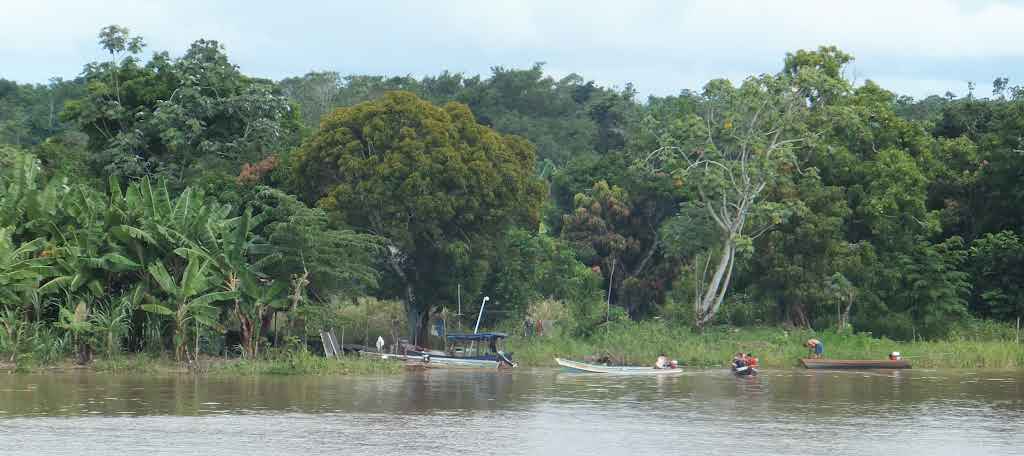

On November 10th, COP30 opens in Belém — the first Brazilian host city — on the edge of the Amazon, as this vital rainforest stands on the brink of irreversible damage. This summit illustrates that climate change’s worst effects fall on the most vulnerable as a byproduct of political inequality.
The 30th “Conference of the Parties” to the UN Climate Convention brings together nearly 200 countries that signed the 1992 UN Climate Agreement. This year’s convention, which will take place until 21 November, marks 10 years since the 2015 Paris Agreement, where nations pledged to limit global warming to 1.5 °C above pre-industrial levels. The Paris Agreement is a global pact to reduce greenhouse gas emissions and prevent the planet from heating beyond levels that would cause severe droughts, floods, and ecosystem collapse. The 1.5 °C threshold represents the point scientists agree would keep climate impacts manageable and avoid the most catastrophic effects of climate change.
The conference takes place at a pressing moment, where global temperatures in 2024 exceeded the 1.5 °C global temperature. Although the U.S. has contributed most to rising temperatures, President Donald Trump will not attend, having rolled back climate commitments by withdrawing from the Paris Agreement in 2019.
Belém’s selection—home to Brazil’s highest slum population, with 57% living in favelas—symbolically links climate and poverty. Hosting climate negotiations there highlights the connection between environmental crises and political, economic, and social inequalities. As deforestation, climate change, and wildfires threaten to transform the Amazon from a lush carbon sink into a degraded savanna-like ecosystem, Belém’s setting underscores how political inequality shapes both the causes and impacts of the crisis.
According to the U.N., 1.1 billion people globally live in critical poverty. Even in wealthy nations, 82% of people in poverty will experience at least one significant climate threat, such as droughts, floods, and air pollution. Vulnerable populations are most affected since their limited savings and constrained social mobility make them unable to relocate, rebuild, or recover in the aftermath of a climate disaster.
Experts have expressed scepticism over compelling solutions emerging from COP30. The reduction of poverty has reached a stagnant trend worldwide. Director of the U.N. Human Development Report Office, Pedro Conceição, stressed that reducing poverty and addressing climate action must be unified in a single agenda. Meanwhile, Bill Gates has highlighted the reality of the unequal burden impoverished countries experience, calling for a shift in focus from emission goals to minimizing human suffering.
This reality speaks to the core of “political ecology,” viewing the environment through a political lens. Dr. Paise West, Professor of Anthropology at Columbia University, defines political ecology as the study of how human and natural systems shape ecological change and its impacts on people. This was clearly evidenced by the contrasting U.S. response to Hurricane Harvey compared to Hurricane Maria in 2017.
Harvey caused flooding mainly in Houston, Texas, leaving hundreds of thousands without power. Maria, nearly a Category 5 hurricane, caused greater destruction in Puerto Rico. Yet the U.S. federal response favoured Texas, providing more funding and personnel. The difference was not due to geography or natural forces, but political inequality. As a U.S. territory, Puerto Rico lacks full representation in Congress and cannot vote in presidential elections. It is subject to U.S. laws but does not have the same political power or access to federal resources as a state. Because of this unequal status, Puerto Rico did not receive the swift aid Texas did, showing how the costs and benefits of disasters are unevenly distributed along political, economic, and social lines.
Brazil’s president, Luiz Inácio Lula da Silva, asserts that COP30 marks a turning point. He presses that the Global South be provided with fair access to resources, not as a form of charity but as climate justice, arguing that developed nations owe a climate debt after benefiting from centuries of carbon-intensive growth.
He emphasizes that it must be the “COP of truth”, centred on real action that goes beyond rhetoric. Lula cautions that if world leaders do not materialize their speeches into concrete measures, global faith in climate summits and multilateralism will collapse.