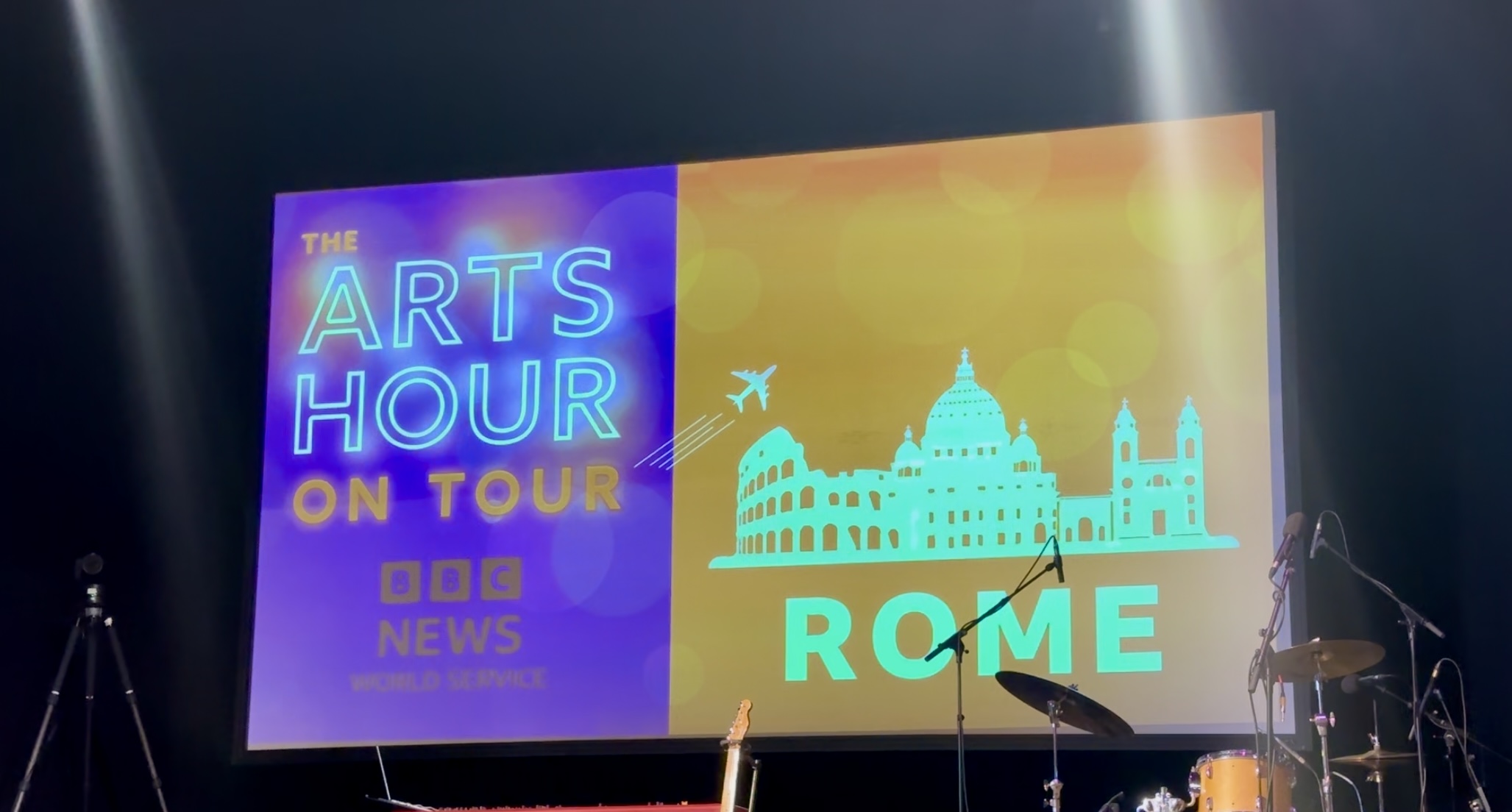


The Arts Hour on Tour landed in Rome’s Teatro Italia on 19 November with the host Nikki Bedi bringing center stage a number of prominent guests through their artistic journeys.
“What we are trying to explore on this show is what impact the layers and layers of cultural heritage, colossal cultural heritage from the past have on creatives today,” Bedi said in an interview backstage. “I just think the arts have a way of disseminating stories, information, the culture as it is today”
The radio show and podcast first took its act “on tour” in 2016, and Bedi said she has been to more than 50 cities in almost every continent since. The Arts Hour has garnered about 75 million listeners.
Comedian Luca Ravenna performed a set in English poking fun at the idiosyncrasies of Italian society such as the Northern and Southern divide and his experiences in practicing Catholicism. Meanwhile, rap artist Mecna reminisced about how he fell in love with the genre after being inspired by Eminem. He performed “Sognare in Grande” which is a reflection on ambition, the fear of failure and the importance to never stop dreaming of something bigger.
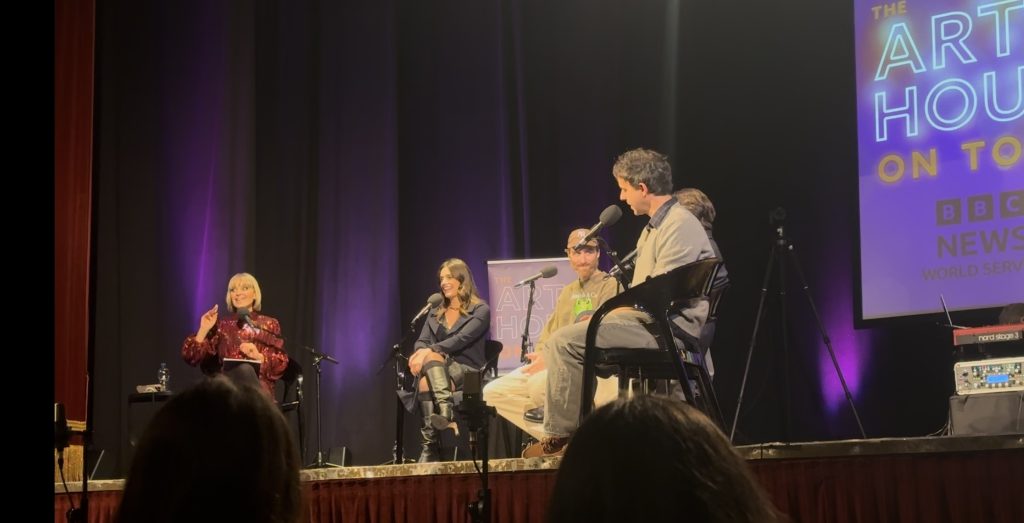
The guests also reflected on their ties to the Eternal City. Director, filmmaker, and composer Margherita Vicario recalled Gore Vidal’s line from Federico Fellini’s Roma: “Rome is the city of illusions; it’s no coincidence that the Church, the government, and the film industry are all here. They all create illusion”.
She then spoke about her debut film Gloria!, which won three David di Donatello Awards. Margherita drew inspiration from a personal revelation: while she could easily list numerous male composers, no women came to mind. This sparked the desire to create a story in which history and contemporary art coexist and inform one another, set against a backdrop of female allyship in a world where women’s relationships are so often portrayed in opposition.
Among the guests was also Sicilian-born singer-songwriter Levante who performed two of her tracks, “Niente da dire” and “Follemente,” the latter of which will appear in Paolo Genovese’s film FolleMente. Her voice blended a bright, airy timbre with a hint of rasp and breathiness, giving the performance a raw emotional immediacy that feels intimate and unmistakably her own. The songs explore the tension between love’s quiet dissolution and its overwhelming, reckless intensity.
In a completely different artistry, screenwriter-director Paolo Strippoli offered insights into how he uses the horror genre to engage audiences and prompt reflection on societal tensions rooted in the individual. His film Holy Boy, which premiered at the 82nd Venice Film Festival, explores how collective trauma, the desire for relief, and pressures of faith and community can morph into mechanisms of control and sacrifice. The horror unfolds through atmosphere, ritual, and psychological unease, employing the uncanny and the body to reveal the darkness beneath enforced happiness and unresolved pain.
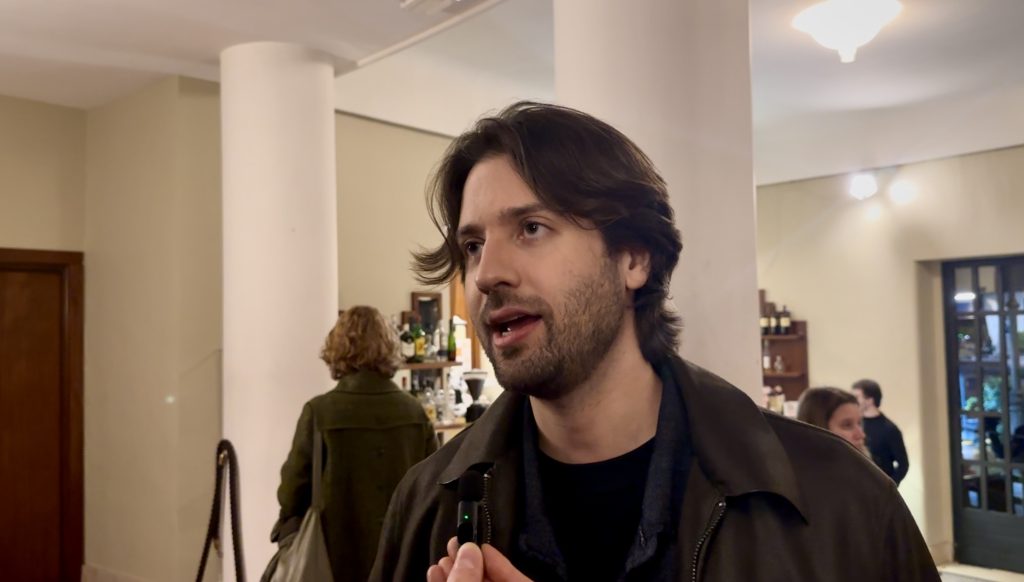
In a post-show interview, Strippoli elaborated: “I love horror so much, and I chose to tell stories through this genre because I strongly believe it makes them even more effective.” He continued, explaining the core of his work: “It’s about exploring who the individual is today in contemporary society, starting from their fears and obsessions. In the end, the monsters are the ones we don’t see: they are the spirits within us, the demons we try to exorcise.”
However, the show went far beyond the guests’ artistic work, delving into broader socio-political realities in contemporary Italy. Nikki began by exploring the country’s fascist past, asking what role and relevance monuments from that era should hold today. Levante reflected, “we can’t delete our past, it’s impossible,” while Margherita added, “today they are just buildings.” The discussion highlighted that tearing down these structures would do a disservice: erasing them would not undo history, but rather disrespect those who suffered. Remembering and confronting the past, rather than pretending it never happened, is essential.
Another topic addressed was Giorgia Meloni, Italy’s first female prime minister. The debate centred on whether there has been significant progress in women’s rights, to which Levante responded concisely: “It doesn’t matter if you’re a woman, because you can be a woman and not be a feminist.”
Continuing the conversation on the intersection of social debates and art, Nikki referenced Pope Leo XIV’s description of artists as “pilgrims of imagination”. Margherita expanded on this, saying she sees young artists as pilgrims of imagination, fuelled by the fire in their souls when they are just starting out, paving new paths. When asked, Levante took a moment before naming Francesca Albanese as a pilgrim of imagination to thunderous applause from the audience, explaining that she embodies this role as a UN Special Rapporteur on the occupied Palestinian territories, “fighting against the genocide in Gaza.” Nikki responded with a note of caution: “We have to mention that the term ‘genocide’ is contested.”
With a full house, the evening in Rome showcased how The Arts Hour on Tour bridged individual creativity with wider cultural and social currents shaping Italy today. Through music, film, comedy, and thoughtful discussion, the guests offered insights into their art, their connection to the city, and the societal challenges they engage with, from confronting history and gender dynamics to reflecting on the role of imagination in inspiring change. The live show proved that art is not only a mirror of society but also a space for dialogue, reflection, and the collective questioning of the world around us. “We are the conduit to tell other people’s stories,” Bedi said. “It’s not about the BBC doing this. It’s about us being able to be the culture courier.”