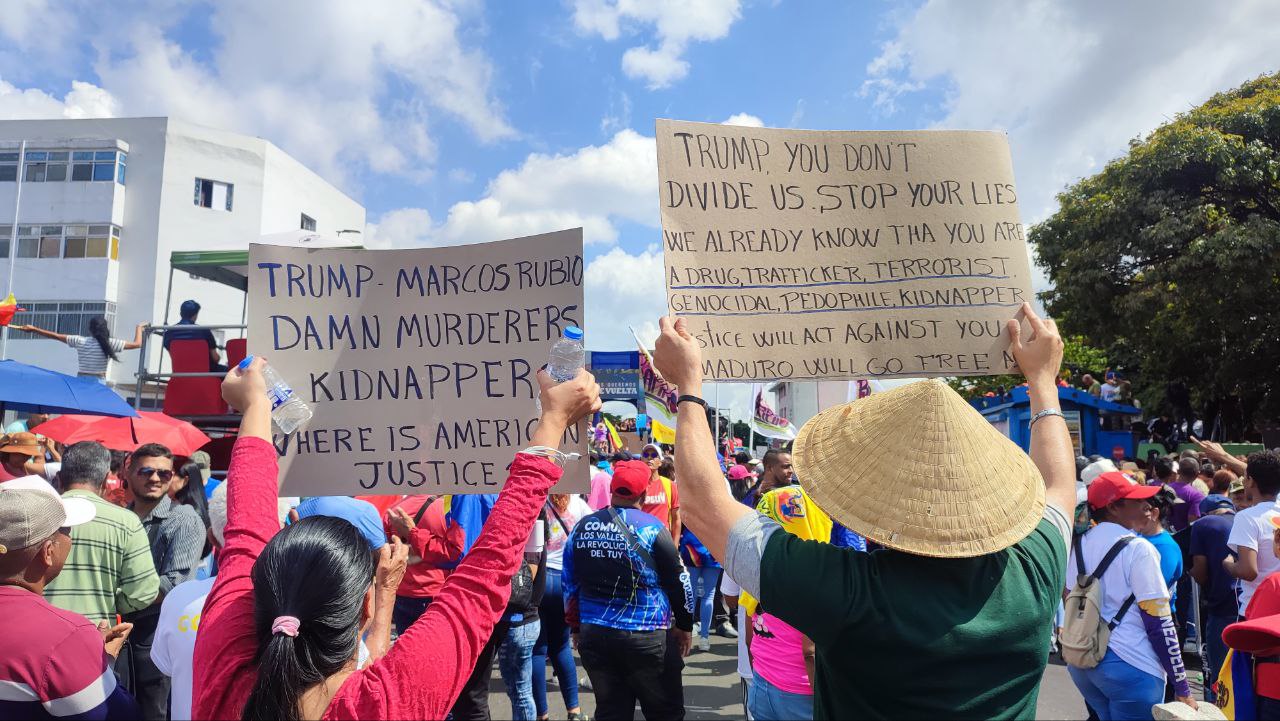

“There is a very strong organised popular power, a movement that is widely underestimated from the outside”, says Venezuelan journalist Andreína Chávez Alava from Caracas. A network of community organisations has gradually consolidated in the country, supporting entire populations from the bottom up. Chávez explains that these groups have organised food production, essential services and defence networks, enabling communities to withstand years of sanctions and now find themselves at the forefront of Venezuela’s response to foreign interference.
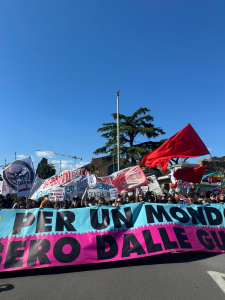
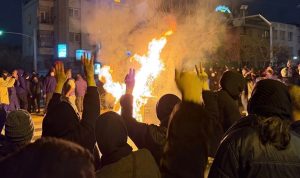
Chávez says that the morning after President Nicolás Maduro was captured by the United States, she was calm: people stayed at home or stocked up on food and water in the face of an uncertain future, before calm gave way to popular mobilisation. Thousands of people filled the streets of Caracas, waving flags as they headed towards the Miraflores Palace, the seat of the Venezuelan government. The crowd advanced united, denouncing “the bombing, the military aggression and the fact that a sitting head of state had been kidnapped, which is contrary to international norms and the United Nations Charter”.
The mobilisation was supported by the organisational strength of the Venezuelan communes, grassroots structures recognised by the Constitution and based on assemblies, which claim to have strengthened their resilience against a decade of US sanctions. Moving from dependence on imports to near food self-sufficiency, they run networks such as “Pueblo a Pueblo” (“From people to people”), which distribute affordable food throughout the country.
Chávez added that the community movement was already resisting what he describes as an illegal naval blockade imposed by President Donald Trump. “Most people in Venezuela are part of some kind of popular organisation. That’s why mobilisation happens so quickly: there is already a network of communication between them.”
It is precisely the internal Venezuelan voice that, according to Chávez, is being silenced. “It is rather dishonest on the part of the international media to project the idea of a jubilant diaspora and ignore what is happening inside the country”, she pointed out. The diaspora celebrated by the media “does not represent everyone” and many outside the country have written to her: “We are not all the same.”
One of the false narratives is that of the existence of a transitional government. “It suits the Trump administration to claim that it has removed Maduro and initiated a transition of power. But this is not true: the political authority, including Delcy Rodríguez, remains the same as in the Maduro era.”
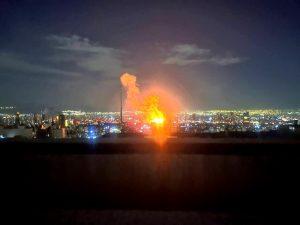
Despite the continuity in leadership, after Trump’s threats to interim president Delcy Rodríguez, Venezuelans fear a worse fate for her than for Maduro. “The country has already been bombed once, we know they are capable of doing it, we know there are threats to do it again. There is no choice but to negotiate.”
Yet Chávez describes the administration as capable of maintaining calm and effective governance, involving the agricultural, industrial and community sectors. People can live normally, go to work, run their businesses and take their children to school. “Normality is a way of reclaiming the peace and security we felt as a nation before the events of 3 January.”
She draws a parallel between Venezuela and other countries where the United States has intervened, such as Iraq and Libya, where many initially celebrated. “There were people who thought that any change would be better. Today, there is strong anti-Americanism in Iraqi society. No country that has been invaded and occupied by the United States expresses gratitude for what they have done. Because we already know how it will end.”