
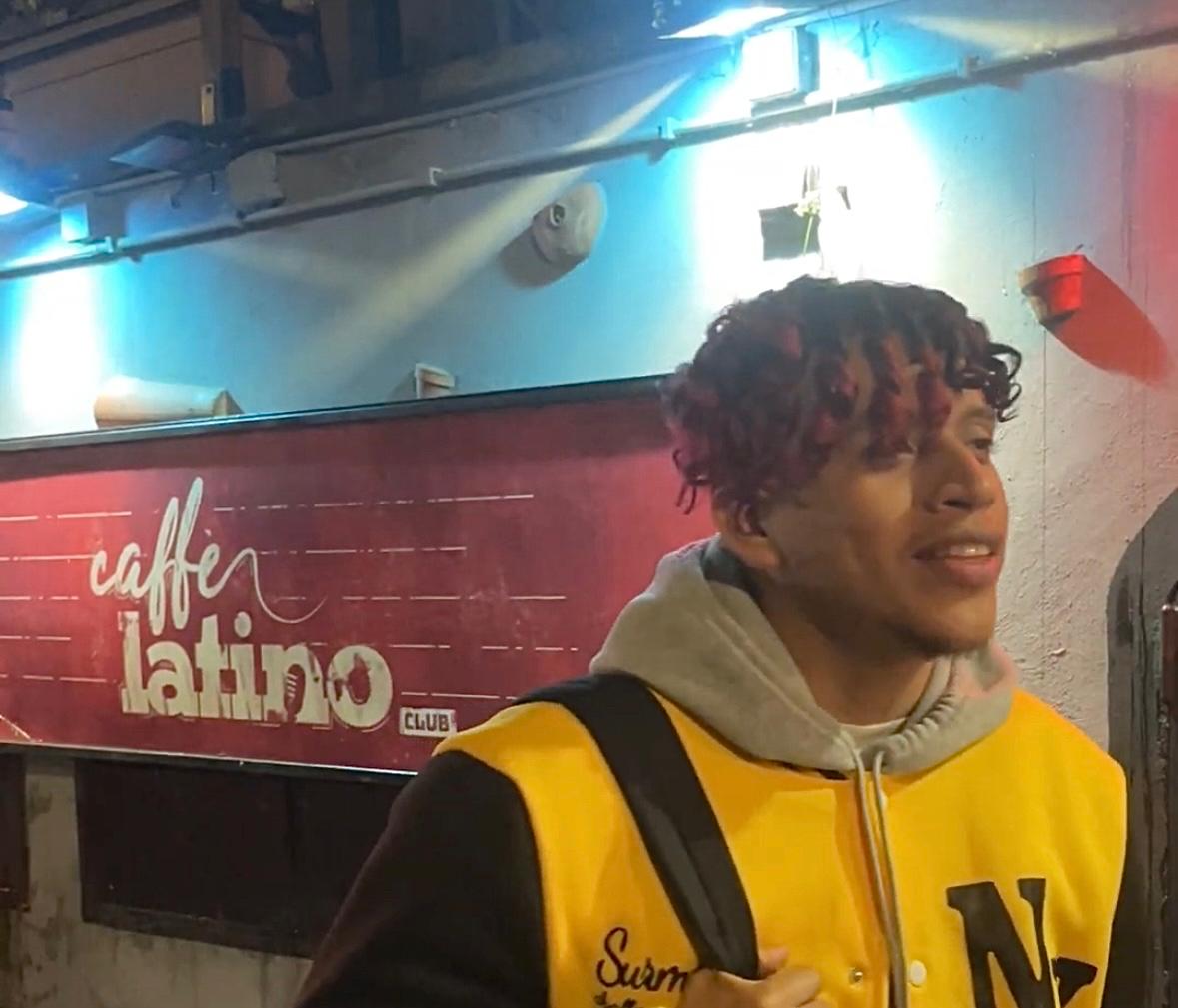


Under the glow of red and blue lights in a corner of Testaccio, a neighbourhood in Rome, a sign reads “Caffe Latino,” an important venue for Reggaeton and a central meeting point for Latin Americans across the city. At night, it comes alive with dancing bodies, moving to the reggaeton beat and swaying hips to the occasional bachata.
Last week, Rome’s Latin American community descended to “Caffe Latino” to celebrate a turning point for Hispanic culture on the global stage. Benito Martínez Ocasio, widely known as Bad Bunny, won the Grammy for Best Album of the Year on February 1 for his album “DeBÍ TiRAR MáS FOToS” (I Should’ve Taken More Pictures), the first Spanish-language album to win the award. One week later, on February 8, Bad Bunny performed the Super Bowl half-time show, the championship game of the National Football League in the U.S. that draws in more than one hundred million viewers every year.
“[The Grammy award] is a prize that artists fight for, and for a Latin American to have won it is something spectacular,” beamed Gilberto Espino, stage name Gilberto Latino, who teaches many genres of Latin American at a local Rome dance school.
The album brings up memories of home, he said, like going to your grandparents house, cafecitos and lively streets. Espino taught dance for 11 years in Venezuela, but a year ago, one of his friends called him and told him there was a position for a dance instructor at Cosa Si Balla in Rome. So, Espino moved halfway across the world to a city with a different language and culture to teach about his own.
Despite needing to work on his Italian, Espino said he’s found a home away from Venezuela in his dance studio. With the rising popularity of Spanish artists like Bad Bunny, more people have shown an interest in reggaeton music and engaging with Latin American culture. The latest Bad Bunny album in particular is a favorite of Espino as a dancer because of its diverse music types and beats, from salsa to bachata to dembow, and he uses different songs in each of his classes.
“I think that people will be more curious to know what it means, and I’d be happy for people to know more,” adds Espino, who uses his lessons to teach Italians about the cultural differences between Hispanic dances.
Espino recounts how “People see me do a danzón choreography (a partner dance) and they tell me ‘Look, that’s reggaeton,’ and I say, ‘No, it’s danzón.” Reggaeton is a fusion of Latin and Afro dance music originating in Puerto Rico, while danzón, which is often confused with reggaeton, originates from Cuba. Espino suggests that “an artist should project themselves for diverse audiences, not just for one audience, but for whichever audience.”
Bad Bunny’s ascension to the top of the Italian music charts marks a shift in the broader national consciousness towards reggaeton. “People who usually dislike reggaeton music in Italy love Bad Bunny because they connect to his songwriting”, explains Patrizio Ruviglioni, a music journalist for La Repubblica.
Bad Bunny’s latest album “DeBÍ TiRAR MáS FOToS” represents a break from classical reggaeton by promoting cultural homage to Puerto Rico and opting for live instrumentation over club-focused electronic production. “Italians appreciate his very strong relationship to his native country,” notes Ruviglioni.
For decades, Reggaeton struggled to convert the Italian audience into devoted fans. Ruviglioni points out that this stems from contrasting cultural approaches to making and enjoying music. “Reggaeton is connected to communities with dance, with bodies – it is a party music”, he says, whilst Italian music is “historically very different, focusing on belcanto” and emphasising great, operatic voices. The “party-music” prejudice helped peddle the narrative in Italy that Reggaeton is only connected to summer hits.
Listen to the Bad Bunny Super Bowl performance playlist
Bad Bunny’s album flipped this script as it carries an “important message to people – a message of peace, a message of equality”, explains Ruviglioni, one which transcends the language barrier and is lacking from our popular discourse. Ruviglioni adds that, much like Kendrick Lamar addressed the Black American experience in 2025, “Bad Bunny will use the halftime show to send a message to the Latinos in the USA.” Indeed, Bad Bunny followed the phrase “God Bless America” during his show by listing all the countries making up the American continent, primarily Latin-American countries.
Despite the anti-immigration rhetoric that has been growing in Western democracies, Espino points out that “immigrants are the ones that are supporting the growth of all the countries.” The NFL’s halftime show gave the Latin community a platform to celebrate the strength in diversity and celebration of different cultures.