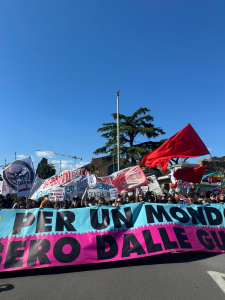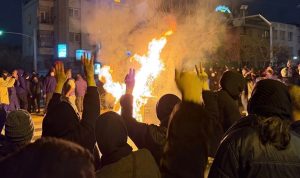
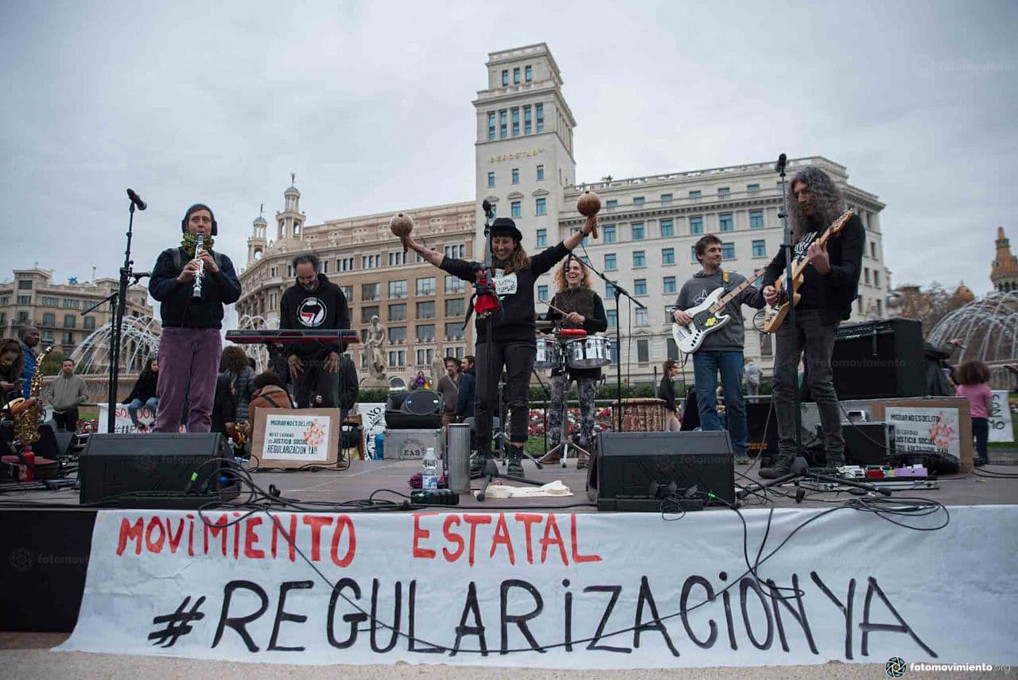

RegularizacionYa, a migrant collective founded in Spain, has sparked a grassroots movement. In January 2026, it achieved its goal of passing a royal decree that will regularize 500,000 undocumented foreigners. They will not only gain the right to work and access healthcare and education, but something more profound: they will no longer live in constant fear, and will have the chance to return to their loved ones and their roots.
During the COVID-19 pandemic, many undocumented migrants were essential workers. However, their status excluded them from social safety nets. The lockdown prompted migrants to connect online with other migrants throughout Spain. “One of the great achievements was to bring together so many people in irregular situations, allowing us to share the problems we were facing,” says Silvana Cabrera, one of the spokespersons for RegularizacionYa.
Cabrera’s experience explains why the presence of migrants was essential to launching the movement. She arrived in Spain from Bolivia in 2009 and regularized her status thanks to her grandfather, who fled during the Spanish Civil War, through the third-generation citizenship program promoted by former Prime Minister José Luis Rodríguez Zapatero.
Despite having documents, she faced the difficulties that many migrants know well. “I experienced how difficult it is to bring your family over, facing the brutal bureaucracy of reunification: square meters of housing, income, contracts, requirements never asked of a Spanish person. I was unable to bring my sisters or my parents over. I witnessed abuse and violence firsthand, and that anger was a driving force to fight.”
She turned her unease into a force for change, placing migrants at the center of the movement. Cabrera emphasized the need for this, stating, “We know what it means to be in an irregular administrative situation, the profound suffering it inflicts on so many people and families.”
The movement turned to the Iniciativa Legislativa Popular (ILP), a direct democracy tool that allows citizens to propose laws to Congress by collecting 500,000 signatures. RegularizaciónYa mobilized 14,000 volunteers and 900 organizations in 30 cities, collecting over 700,000 signatures. Cabrera attributes this extraordinary result to the protagonism of the migrants themselves.
The campaign faced immense challenges, including limited time and precarious conditions. “No one in the movement received a salary for their activism. It was fierce militancy. We organized ourselves into 18 committees and mapped out all the autonomous communities to see how we could be present.”
The collective engaged ordinary citizens, addressing widespread ignorance about immigration law and countering narratives of criminalization. Outreach in universities and schools engaged many young people in the process.
After collecting the necessary signatures, the ILP became a royal decree, marking a turning point in Spanish democracy and a sharp contrast to the European and North American trend toward securitization of migration policies. Although often attributed to political parties and Prime Minister Pedro Sánchez, Cabrera insists that “this regularization comes from the grassroots and would not have gone this far without the perseverance of the RegularizaciónYa movement.”
The decree not only authorizes people to live and work in Spain, but also offers mental relief. “Our communities go through a bureaucratic ordeal of racism and mistreatment. Imagine if your father or son died and you couldn’t go back to bury them.”
“Being in an irregular situation is like being in an invisible prison. You live in constant fear of being stopped because of racial profiling or ending up in an immigration detention center,” says Lamine Sarr, Cabrera’s spokesperson and colleague.
She held back tears as she reflected on what they had achieved. “All of this was built from scratch, with the migrants themselves demanding to be treated as human beings, without being criminalized based on our origin, our accent, or the color of our skin.”
But for RegularizacionYa, the fight continues. Cabrera outlined that the focus is now on implementation. The Royal Decree must be broad, simple, and accessible, with clear multilingual information and well-resourced offices to avoid delays. The campaign’s role is to inform and support the community, ensuring high fees don’t block families from accessing the process. For Cabrera, the stakes extend beyond immigration policy: “Grassroots activism and the fight against racism are essential today. Without an anti-racist and anti-colonial perspective, progress in other struggles is simply not possible.”