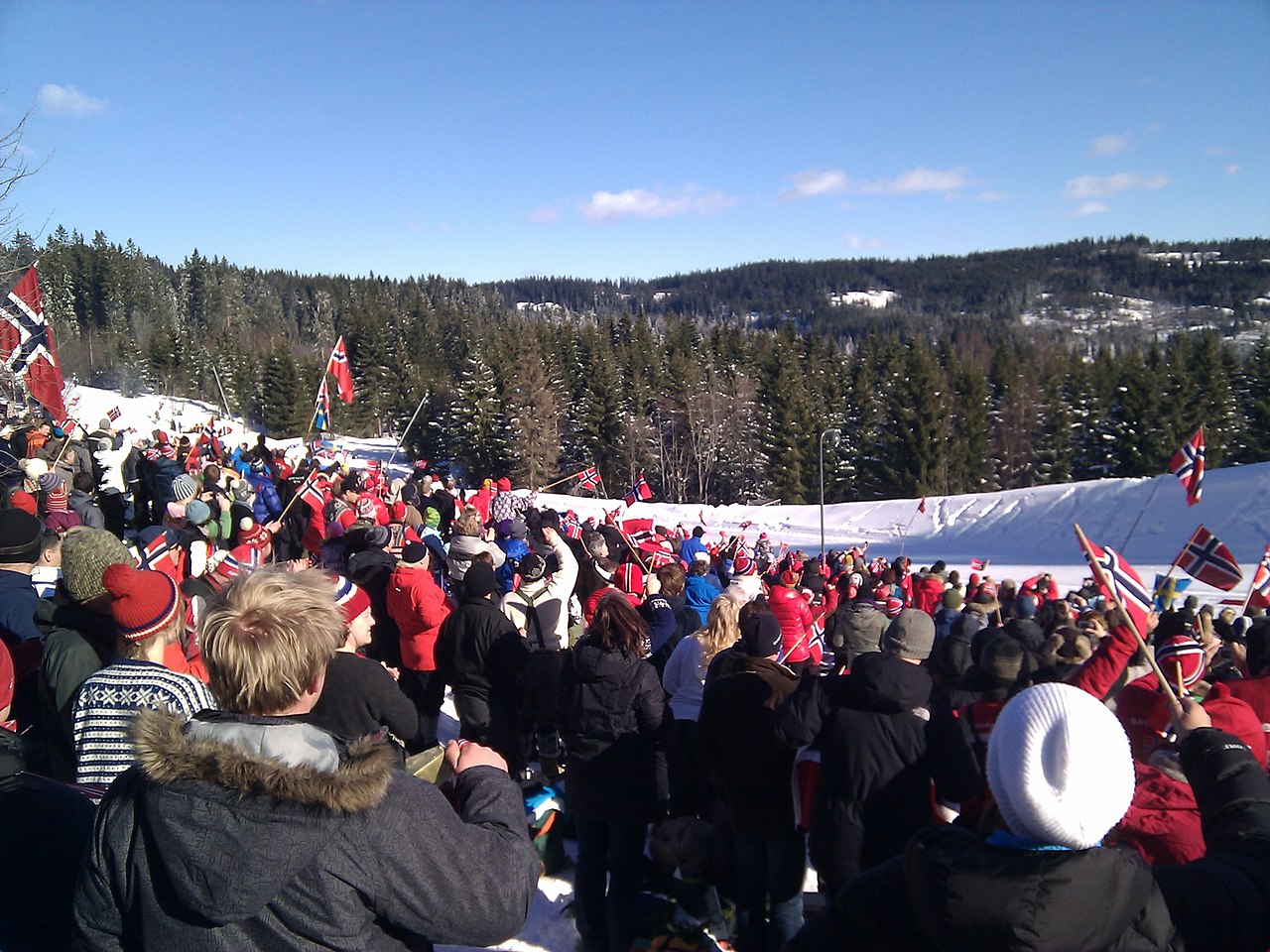

As the Olympic flame was extinguished in the Verona Arena in February 2026, the final medal table confirmed a familiar, yet staggering, reality. Norway, a nation of just 5.7 million people, had once again outclassed the world’s sporting superpowers on the largest stage of winter athletics. With a record-breaking 18 gold medals and 41 total podium finishes, the Scandinavian country stood alone at the summit, leaving the United States – a nation with sixty times its population – and the host-nation Italy in its wake.
To the international observer, this dominance is often dismissed as a byproduct of a snowy climate. However, the success of Milano Cortina 2026 is the result of a deliberate political and cultural choice – a “socialist method” also in the world of sports that prioritizes joy over prizes and community over commercialism.
The Norwegian triumph in 2026 was powered by historic individual performances, most notably the unprecedented achievements by cross-country skier Johannes Høsflot Klæbo, who secured six gold medals in a single Games to bring his career total to 11. Yet, behind the precision of elite athletes like Klæbo and three-medal speed skater Ragne Wiklund lies a complex institutional framework and a historical legacy.
The statistical gap between Norway and its competitors at the 2026 Winter Games was striking. Norway’s 18 gold medals represent the highest total ever achieved by any nation at a single Winter Olympics, surpassing its own previous record of 16 set in Beijing 2022. This achievement placed Norway at the top of the medal table for the fourth consecutive Winter Olympics.
The depth of Norway’s success across disciplines was decisive. The nation claimed 21 medals in cross-country skiing, 17 in biathlon, and four in speed skating, suggesting a system that facilitates talent across diverse physiological requirements. The 2026 results confirm that Norway’s per-capita efficiency is unparalleled in modern sports history. This efficiency is rooted in what observers call the Norwegian Model, a philosophy that begins long before an athlete ever steps onto the Olympic arena.
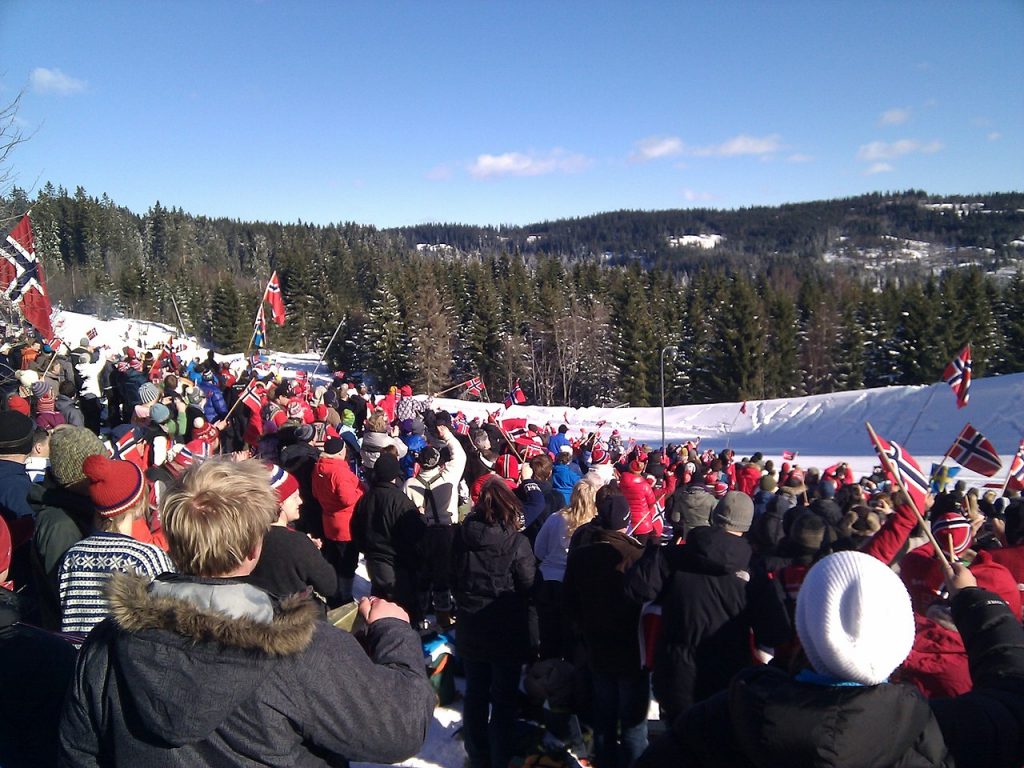
The secret to the Norwegian Model is institutionalized through a unique framework known as “Children’s Rights in Sport” (Norwegian: “Bestemmelser om barneidrett”). First adopted in 2007 and revised as recently as 2019, these provisions regulate competition for youth to ensure that the “joy of sport” is not extinguished by early specialization or performance pressure. This document is a formal declaration that underpins the entire ecosystem of Norwegian sports, placing the needs and participation of children at the centre of all activities. Under this framework, children are legally protected from being scored, ranked, or timed until the year they turn 11. From the year they turn 11, scoreboards, tables and rankings may be used if it is considered appropriate. The objective is simple: encourage participation among younger people in sports for as long as possible by focusing on personal development and masterly experiences rather than outcomes.
Oddvar Brå, whose career as a cross-country skier spanned five Winter Olympics from 1972 to 1988, emphasizes that this “cautious” approach is critical for sustaining long-term talent. Brå argues that the system is designed to keep “the most people involved for as long as possible”. He notes that early selection is often a fallacy: “It’s not certain that the 10-year-old who is good then will be the best as a junior or senior”. This philosophy allows for the “late bloomer” to remain in the system, avoiding the premature filter of talent that characterizes high-pressure academies in other nations.

Norway’s success in the Winter Olympics is closely linked to its strong culture of multi-sport participation. Wiklund highlights how the Norwegian Model allows more “talents to surface” because children are allowed to “try and fail in different things until you find what fits”. This allows athletes to develop a broad physiological foundation and a deep-rooted motivation that survives the inevitable hardships of elite competition. Wiklund exemplifies this composite athletic identity. She practiced orienteering as her primary sport at WANG Elite Sports Upper Secondary School and only joined the national speed skating team late in her studies at WANG. Furthermore, she observes a clear difference between her path and that of her Dutch competitors: “The girls I compete against now, I was also competing against when I was 12. They used to beat me with 10 seconds on the shorter distances. Back then, I hadn’t started betting on speed skating yet, while they were betting completely on one sport”.
In recognition of such versatility, Norway awards the Egebergs Ærespris, its highest award for athletes who has made outstanding achievements in one sport and has also excelled in others. Both Wiklund and Brå have been awarded this prize; Wiklund in 2023 for her composite background in speed skating and orienteering, and Brå in 1988 for a career in both cross-country skiing and athletics.

Brå reflects that in his era, “psychological relaxation” was found in switching environments. He describes his track and field training as a mental battery charger: “I enjoyed being in a different environment, and running a race in athletics was somehow mentally relaxing for me”. He argues that the current trend toward early specialization might hinder long-term performance by narrowing the athlete’s mental and physical adaptability.
Another evident contrast between the Norwegian system and the global Olympic machine is the financial structure. With regards to the Milano Cortina 2026, host-nation Italy awarded approximately €213,000 for every trip to the top of the podium. Singapore and Hong Kong offered even more, with bonuses reaching about €650,000-€670,000. Norway, on the other hand, awards its champions zero euros in prize money.
“Norwegian athletes are awarded scholarships instead”, Wiklund notes, arguing that the absence of prize money reflects a concern with funding grassroots sports rather than focusing primarily on elite-levels. Instead of focusing on paying for the destination, Norsk Tipping, the Norwegian state gambling company, allocates 50–60% of its annual revenue to sports infrastructure. In 2025 alone, nearly €400 million was funnelled into sports, funding everything from local illuminated ski trails to the elite performance facilities at Olympiatoppen, Norwegian elite sports performance organization.

Brå is sceptical that massive cash bonuses act as a primary driver for success. He argues that inner power and motivation is required to sustain the 365-day-a-year training schedule needed for greatness. Money is useful only if it allows an athlete to focus 110% on their sport, but it cannot replace the drive to achieve. He reflects on a sharply ironic aspect of his own life: “I was at the World Championships in Oslo in 2011, where I gave several lectures. I made more money in 2011 than I did in 1982 when I was the world’s best.”
Despite the equality-oriented foundations of the Norwegian Model, Brå issues a troubling aspect about the rising cost of participation. While the state funds infrastructure, the burden of specialized equipment falls increasingly on the families. “One of the biggest pressures on Norwegian sports is that some of the sports are extremely expensive. We see that the best athletes come from relatively good financial circumstances.” Brå highlights the risk of cross-country skiing becoming a “rich man’s sport”. The entry price – such as €600 for top-tier ski boots, of which an athlete may need multiple pairs – is too high for many families. This creates an economic threshold that may exclude potential talent, contradicting the “socialist method” that underpins the national success. “There is no doubt that some athletes in Norway could never be in a position where they practice top-level sports, due to limited finances”, says Brå.
Furthermore, Brå distinguishes the Norwegian approach from the rigid, coach-led systems historically associated with Eastern Europe. In the Norwegian model, the athlete carries the primary responsibility for their own training and development, supported by a team, rather than being reduced to a “strategic asset”. “In the Norwegian model, you take responsibility yourself. In other nations, the coach has the responsibility. You are just a ‘piece’ that trains”, Brå explains. He believes this culture of autonomy is ingrained in the “bone marrow” of Norwegian sports. This sense of ownership fosters a resilience that allows athletes to endure the psychological burden of elite performance.
Among the methods used to “recharge,” some extend beyond the sports arena. For athletes like Wiklund, intellectual stimulation acts as a form of recovery. While competing at the highest level, she is completing a master’s degree in data science at NMBU in Norway. “When I’m at the university, I’m not a speed skater; I’m just a student like the rest,” she explains. She describes her studies as a “forced” way to recover which contributes to the quality of her physical workouts. This holistic development mirrors Brå’s belief that the mind requires diverse stimuli to stay “charged” for the physical demands of competing at elite-level.
Norway’s dominance at Milano Cortina 2026 suggests that excellence is not merely the result of early intensity, but of long-term exploration, variation and joy. By protecting childhood and separating medals from money, Norway has built a system where potential is allowed to emerge naturally and survive the inevitable hardships of elite sport.
The integration of the “Norwegian Model” with the contemporary success of athletes like Klæbo and Wiklund reveals a system that succeeds by making sports sustainable for the human soul. However, as Brå warns, the escalating financial barriers to participation represent a critical crossroad for the nation. To maintain its supremacy, Norway must ensure that its “socialist method” continues to protect the entry of talent from all economic backgrounds.
In Norway, the celebration is not just for the medal; it is for the fact that the person wearing it is still having fun. The 18 gold medals of 2026 are not merely trophies of physical superiority, but artifacts of a culture that believes sport’s greatest prize is the enduring joy of the journey itself.