

“Quite simply, the message I’d like to get across is that I, as a student — and I think the majority of the population — am tired of the silence, the active and passive participation of our university institutions with Israel,” says Leonardo Pisa, the coordinator of University Sapienza’s Student Union militant of the student group ‘Sapienza Contro la Guerra.’
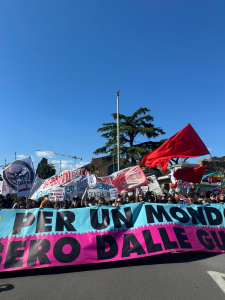
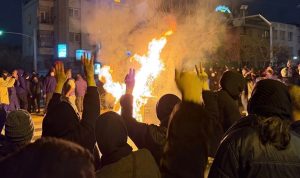
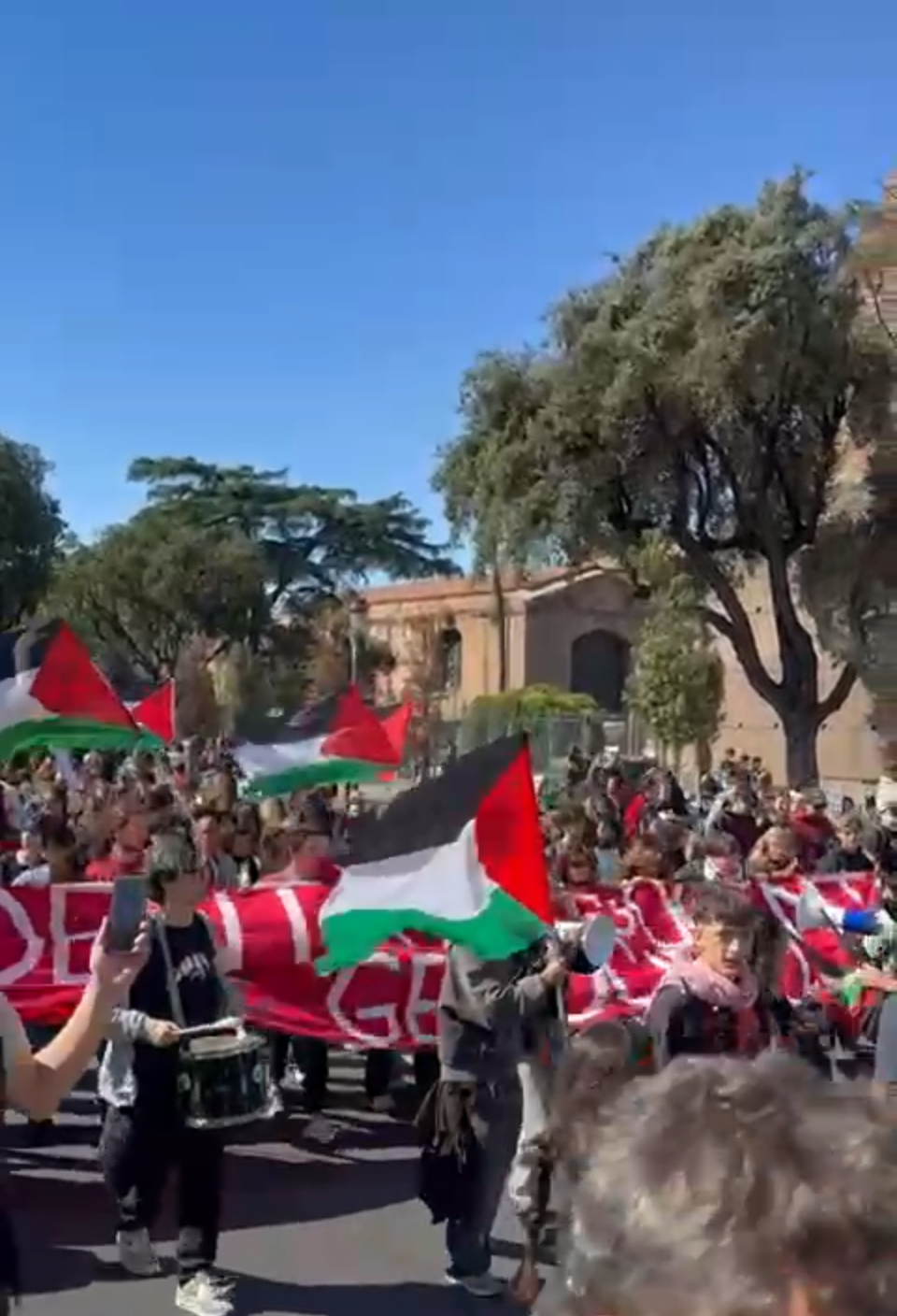
Rome was brought to a halt on Friday by a national strike and a march in support of the Gaza Sumud Flotilla, stopped on Wednesday October 1st by the Israeli Navy. Students, workers’ unions, citizens, and old militants from 1968 gathered in plazas to protest Israel’s interception of the boats delivering aid to Gaza.
The march was organized by Sapienza’s student body, which has gained media attention for its support of Palestine and opposition to international complicity.
On October 1st the Political Science department was occupied by students, ready to take action if the Sumud flotillas were blocked by Israeli forces; “If they block the flotilla, we block everything” becoming one of the students’ central slogans.
The demonstrations and the university’s campus are an echo for Sapienza’s voices to take hold in this humanitarian crisis.
“Instead of taking a position and rethinking the ideas they’ve expressed over the years, they prefer to talk about something else, to blame the participants — who, let’s remember, make up 70–75% of the population.” Leonardo commented on Prime Minister Giorgia Meloni’s reluctance to recognize Palestine, unlike France and the United Kingdom, and the shifting of blame onto protestors.
He explained that the protests have been largely peaceful, with only a few confrontations across Italy. However, he emphasized that in a context where the government restricts dissent, the responsibility for escalation lies with the state. “This is yet another way the government tries to exploit things that happen, to claim political protagonism that, in reality, doesn’t exist. It’s another attempt at a form of political caesarism.”
Despite the strained rapport with state officials, protestors are fuelled by the coalition formed by people from different backgrounds united by a common cause. “It’s a plaza filled with workers, both men and women. It includes all social groups and every age — and that’s the most beautiful thing of all.”
This sentiment was reiterated by Omer, a postgraduate medicine student. Despite some unease about confronting the government as a foreigner, he said his decision to participate, joining the humanities department, stemmed from a love for humanity, a respect for the value of life, and an inability to stand by.
“The situation in Gaza makes stones weep, makes walls cry silently, yet no one seems to turn their gaze toward them.” Omer said the ongoing violence has affected him deeply. “My heart is destroyed, for the children and families, all the people they’ve lost.”
Read: The protests for Gaza Flotilla in Rome
He also shared an Arabic proverb: “It’s impossible to clap with just one hand,” expressing that collective action is necessary for change. He said he felt gratitude for the Italian population and their support.
While many students made strong public statements, others chose silence. Today the Political Science department was not occupied, as students joined the march. Some students on campus said they no longer wanted to speak publicly. They described the earlier occupation as something that needed to happen, a necessity that came from within.
A student shared that in these striking moments, he finds himself in a state of reflection and introspection. Some students openly express their stance, while others use silence as a quiet form of resistance, a pause to process pain and regain strength.
Despite frustration with the government’s silence and narrative control, students said they are empowered by the wave of solidarity across Italy. As Leonardo emphasized, “It definitely gives me a lot of hope because, according to a statistic from this morning, about 75% of Italians support the flotilla, which essentially means they stand with Palestine and are aware of what is happening in Gaza. This gives me hope for the future because, ultimately, it’s the protests in the streets that truly reveal what’s really happening in our country.”