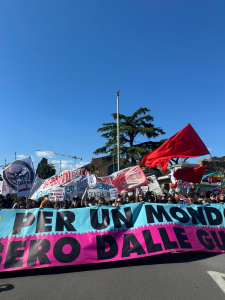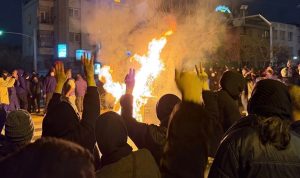


The sound of chants like “Free Free Palestine,” music blaring on speakers and group organizers on megaphones filled the air along Via Tiburtina as Friday’s procession of pro-Palestinian protesters passed by Tiburtina Station at about 2:30 p.m. Friday, waving Palestinian flags and donning keffiyehs.
As they approached the station, police in riot gear met them in front of the station, the crowd stopped as they approached the around 100 meters from the police for a moment, making their voices heard heading down a small side entrance, weaving through dozens of officers, army officers, and law enforcement vehicles.
The march proceeded along Via Tiburtina skirting the station before spilling onto the urban stretch of the A24 motorway between the Tangenziale Est and the Tiburtina entrance.
“We are all anti-Zionists!” they shouted. “Governments are not caring about Palestine. We have to wake them up,” said a man over a megaphone. One protester using a megaphone announced that there were 200,000 people in the procession.
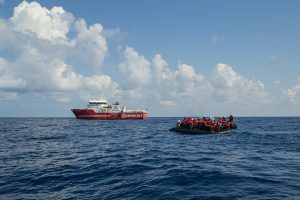
The street demonstrations and day-long strike that delayed or canceled public transportation occurred across Italy in protest of Israel’s sea blockade that blocked an aid flotilla headed for Gaza. The procession was set to end at Porta Maggiore.
Protesters also carried signs criticizing Prime Minister Giorgia Meloni’s support for Israel. At a conference of the European Council in Copenhagen on Wednesday, Meloni suggested that the strike was an excuse to have a long weekend and that it would not help Palestinians.
Davide, a protester in the procession, said Meloni’s comments offended hundreds of thousands of workers. He said “workers want both bread and roses,” and he welcomed the long weekend in addition to his support for the strike.
“I am here because it is a moral duty to show solidarity with those who have put their own safety at risk for such a great cause as human rights and opposition to the terrible genocide that is taking place,” he said, refering to the aid flotilla. “And also because it is important to reaffirm a general opposition to our government.”
Inside Tiburtina Station, an employee at the Numbs Bakery Cafe said the turmoil over missed trains began Friday morning as passengers desperately tried to board trains before the strike delayed and cancelled them.
Read: From Protest to Paralysis
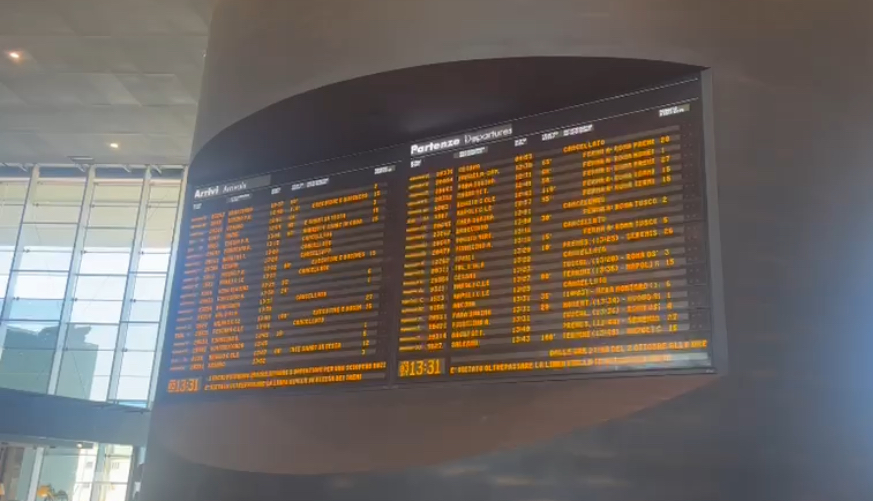
By 1:30 p.m., most trains, regional, local and highspeed, had been canceled. While some trains were still guaranteed to take off on Friday, even these trains were not spared by hours-long delays.
While the cafe worker said the strike did not largely affect business Friday afternoon, he was critical of the demonstration. He said the army removed some suitcases that had been left unattended because of possible safety concerns, and he believed were left by protesters deliberately. “You don’t damage anyone’s image with these actions except that of the protest itself,” he said.
Frustrated passengers had already formed long lines at the customer service stations for Trenitalia and Italo two hours before the procession arrived. Others stood in the middle of the station staring at the board displaying the arrival and departure times as more and more train times were changed to “cancelato.”
Eduardo Roba, a Spaniard, was waiting in the customer service line for Trenitalia at around 1 p.m. to change his 1:30 p.m. train back to Madrid that was canceled. He said he came to Italy to visit Rome and Naples, and he had booked his train tickets a month in advance.
He said he learned about the strike Friday morning, the day of his train ride back, and he got to the station with ample time before his train to buy a new ticket. Despite the cancellation, Roba said he was only “a little upset” and said he is used to strikes and protests like this one delaying public transportation in Spain.
“Well, look, it’s fine for them to express their opinions,” he said about the protesters. “The best thing would be for them not to bother other citizens who don’t think like them; that’s what would make the most sense to me. But hey, it is what it is, and we have to accept it, and that’s it.”
Public transportation returned to its normal schedules on Saturday, though Romans can expect more pro-Palestians demonstrations over the weekend.