Twenty years of neglect have allowed climbing plants and ancient rivers to reclaim the former General Markets in Rome’s Ostiense district. Now, 90,000 square metres of public land are about to change their appearance. But it is not the people who live in the neighbourhood who are deciding. It is an American real estate fund from Texas.
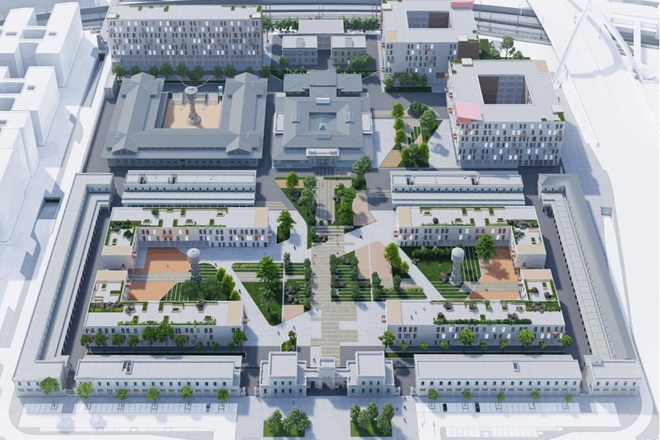
The former General Markets, for decades the hub of the city’s food logistics, have become a battleground between the municipality and local communities over the priorities of urban transformation. A 2025 agreement granted Hines, an American real estate fund, a 60-year concession to build the “Città dei Giovani” (City of Youth) project, consisting of luxury university residences, while the alternatives proposed by residents – parks, services, community facilities – were shelved.
Built in 1921, the former General Markets operated until September 2002, when activities were transferred outside Rome. After the closure, participatory round tables, forums where residents, neighbourhood committees and municipal representatives meet, had envisaged a conversion in which 60 per cent of the area would be used for cultural activities.
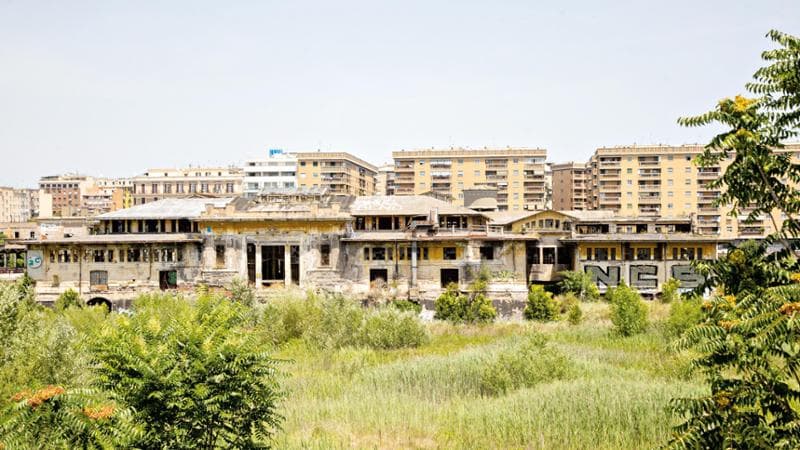
That project never materialised, and for twenty years rusty gates isolated the area. In 2024, Mayor Roberto Gualtieri’s administration relaunched the plans, presenting the operation as a way to “heal” an urban wound.
At the end of November 2025, the agreement between the Municipality of Rome and Hines allowed for a €380 million investment for 2,056 beds, mainly for luxury university residences, commercial spaces, a gym and limited cultural facilities. Hines would finance the construction and, in exchange for a 60-year concession, pay the Municipality an annual fee of €165,000 – approximately 0.04 per cent of the total cost of the operation – while the company estimates revenues of €32 million per year. Critics see this as a prime example of the “financialisation” of public land: a collective asset transformed into a source of stable income for a private entity.
“The fee is inadequate given the enormous impact of this construction,” says journalist Giuliano Marotta, who has been following the story for the local online newspaper Cara Garbatella. The rents for the rooms, Marotta warns, “will increase rental prices in the area”: €1,200 per month for a single room and €600 for a double. Even the “affordable” units in the project – 25% of the total at €500-€600 per month for a shared room – remain out of reach for most students. Classification as “student housing” would also allow rentals during the summer tourist months.
The agreement has attracted widespread criticism. Civic committees speak of “the transfer of public sovereignty to private individuals” and question whether the promised cultural functions are really designed for Ostiense and Garbatella. Fratelli d’Italia, the party of Prime Minister Giorgia Meloni, has called the plan speculative, speaking of “a disconnect from market prices”.
The municipality’s response has been clear. “There will be no cost to the administration and the project incorporates contributions from residents,” said Ornella Segnalini, councillor for public works.
But critics dispute the idea that citizens were actually consulted. “This project was not shared before approval,” says Claudio Romanelli of the cultural association Controchiave, pointing out that citizens only discovered the terms of the agreement after it was signed.
“Urban planning should be done by the administration, not by private individuals according to their own interests,” says urban planner Rossella Marchini, “it is necessary to redesign a system of parks, protected areas and ecological corridors to ensure the connection between green areas, rather than continuing to build.” According to Marchini, defining the area as “empty, abandoned and degraded” serves the administration to legitimise its entrusting it to private individuals.
The participatory round tables, promised for January 2026, represent a last chance for residents to influence the project before construction begins, scheduled for 2027. To date, however, no date has been announced. With the process effectively frozen, residents continue to protest outside the walls with a demonstration organised for 28 February in front of the former General Markets. The outcome will set a precedent far beyond Ostiense: whether Italian cities will prioritise ecological resilience or whether public land will continue to serve private interests.
Caption and credits:
Cover image – Protest at the former General Markets: “No to speculation, let’s save public value”. (Source: Facebook – Former General Markets – BASTA Speculation).

