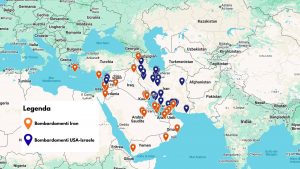

When the United States and Israel began their bombing of Iran on February 28th, the aviation industry stood still. Videos surfaced on social media of people stranded in Dubai International Airport, unsure of when or if their flights would take off. The travel hub even came under retaliatory fire in the first days of the conflict. The effects of this war are affecting multiple industries across the world, but aviation, particularly for the Middle Eastern carriers, is one of the most acutely exposed sectors.
Middle Eastern airlines such as Emirates, Etihad and Qatar Airways have come to dominate the market for travel between East and West. This is in large part due to the fortunate location of their hubs in Dubai, Doha and Abu Dhabi, right at the junction between Europe, Asia and Africa. The ideal location of these airlines has caused the trouble they currently find themselves in.
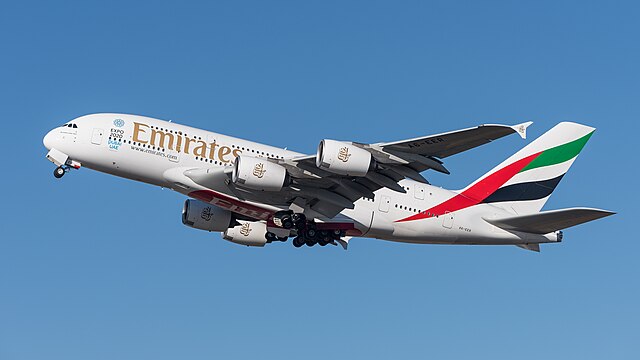
The bombings of Iran and subsequent retaliations resulted in the airspace above these nations being closed or severely restricted. The effect of this was immediate and widespread. Emirates, the flagship carrier of Dubai, has seen massive cancellations due to frequent airspace closures. While limited services have resumed, this remains to be a volatile situation with frequent closures and reopenings of the airspace. While these carriers must prioritise safety, it is complicating operations and increasing the expenses of the airlines.
The rise in oil prices is having a profound impact on the aviation sector. The price of jet fuel has risen by over 60% from $87 per barrel to 150$-200$ per barrel, according to The International Air Travel Association’s (IATA) Jet fuel price monitor. The problem of jet fuel supply expands to the whole industry, with Europe being particularly exposed as it receives 25- 30% of its supply from the Middle East, according to IATA. For the carriers in the Gulf, the problem is twofold. The flights that are running are taking significant detours to avoid airspace closures, increasing the amount of fuel needed for these flights. This is adding between two and four hours onto flight times. The need for extra fuel and the higher cost led to a significant increase in operating costs. A four-hour detour can add roughly $30,000 to $45,000 to the cost of one flight, according to IATA:
Aside from these acute consequences, there is also a risk that the Gulf could lose its standing as a global travel hub. Other important hubs, such as Singapore, are absorbing a lot of the business that would have gone through the Gulf. As of the 13th of March, Singapore Airlines has announced 15 more flights to Europe for the second half of March. They are also swapping in larger aircraft on high-demand routes to increase capacity.
Singapore Airlines is also capturing high yields as well as passenger volume. The average ticket price between Singapore and London Heathrow has tripled since the conflict began, according to the trends on Google Flights. They can operate routes that completely bypass the conflict zone, and passengers are willing to pay a premium for this peace of mind and reliability. The consequences of this conflict are vast and are affecting aviation worldwide. With high operating costs and thin margins, aviation is particularly vulnerable to any geopolitical instability. The carriers based in the Gulf are facing the brunt of this and are facing long term instability.