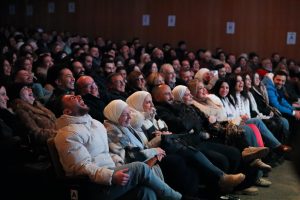

An Argentinian lived for 46 years under a stolen identity. On 14 March 2026, sitting at the Nuovo Cinema Aquila in Rome, hand in hand with his biological sister and his children, he watched his story come to life on the big screen. The man is Daniel Santucho Navajas, one of around 500 babies abducted during the Argentine military dictatorship. Today, on the 50th anniversary of the coup d’état, the documentary Identidad (2025) brings his story to the public’s attention. Co-director Florencia Santucho emphasises the urgency: “These stories must continue to circulate, because these dynamics still exist, not only in Argentina but all over the world.”
The documentary marks the directorial debut of Florencia Santucho, who co-directed alongside filmmaker Rodrigo Vázquez-Salessi. For her, making this film meant navigating the fine line between the roles of director and witness, as she is Daniel’s biological sister. Identidad follows him from the moment, in July 2023, when he was identified as “Grandson 133” by the Grandmothers of Plaza de Mayo, the human rights organisation that has for decades been searching for children abducted during the dictatorship between 1976 and 1983.
“This story aims to show young people that there is no distance between the past and the present. Unfortunately, we are reliving situations of war and genocide. The only way to resist is to keep the memory alive,” Florencia said after the screening.
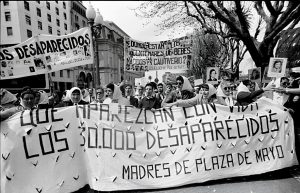
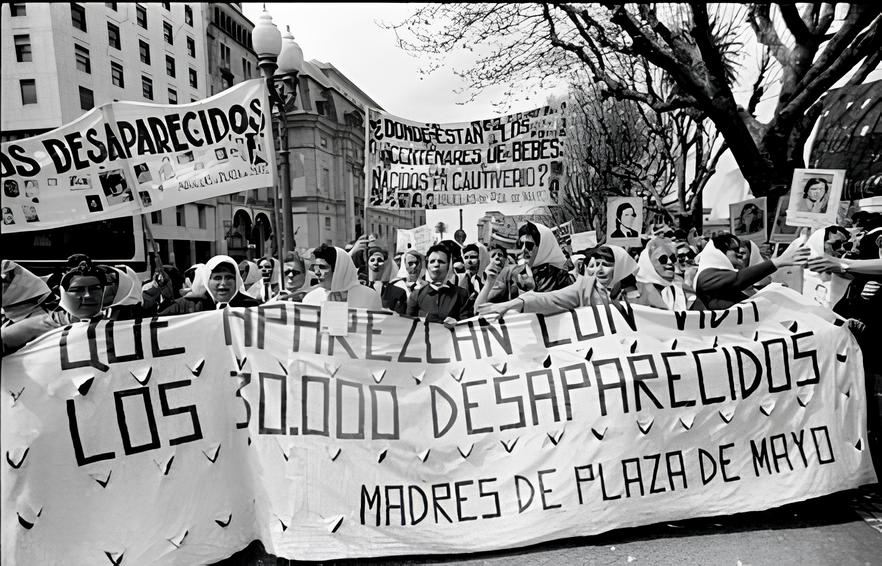
The Argentine dictatorship under Jorge Rafael Videla was a product of the Cold War’s ‘containment’ strategy. The United States prioritised “stability” over democracy, supporting a regime that suppressed civil liberties and committed mass atrocities. One of the many injustices was that of the desaparecidos: people detained in secret, tortured and killed, whilst their children were placed with families linked to the regime. Daniel Santucho Navajas was one of those children.
Today, that memory must be defended. President Javier Milei is attempting to rewrite history, declaring that “there were not 30,000 victims” and describing the dictatorship as a “war” with some excesses. Far-right parties resort to historical revisionism to delegitimise the democratic order and present the authoritarian past as a supposed defence of national identity. Among the younger generations who did not experience the dictatorship, this narrative finds fertile ground.
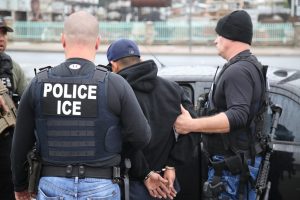
For Florencia, the problem is not confined to Argentina: “Today, the right to identity is still being violated. Children in Gaza write their names on their arms to be identified, whilst those who die in the Mediterranean risk becoming the new desaparecidos.” It is a reality young people are called upon to confront, and Identidad portrays it without filters.
At the start of the film, Daniel leafs through family photo albums with his father, learning the names of relatives he never knew, who were killed. The figure of 30,000 desaparecidos may seem abstract. Yet the documentary brings that reality to the fore in a visceral way.
The most heart-wrenching scene comes when Daniel and his family visit the Pozo de Banfield, the clandestine detention centre where he was born. A piercing sadness overwhelms him at the thought of the suffering his mother endured there, yet he finds a fragile comfort in knowing that it was also the last place she held him in her arms.
Daniel told the audience that he was driven to make the documentary “to free myself from all that pain, from all the anguish of a life lived in lies. It is a way to heal and transform this pain into love.”
As a child, he used to watch Televisión por la Identidad, the TV series about children stolen during the dictatorship. Unbeknownst to him, the desire to know the truth had already been born. Identidad hopes to do the same for a new generation: to speak to young people, whilst the history it preserves is being challenged and rewritten.
“Cinema and culture plant a seed,” said Daniel. “Years later, the truth may emerge.”