
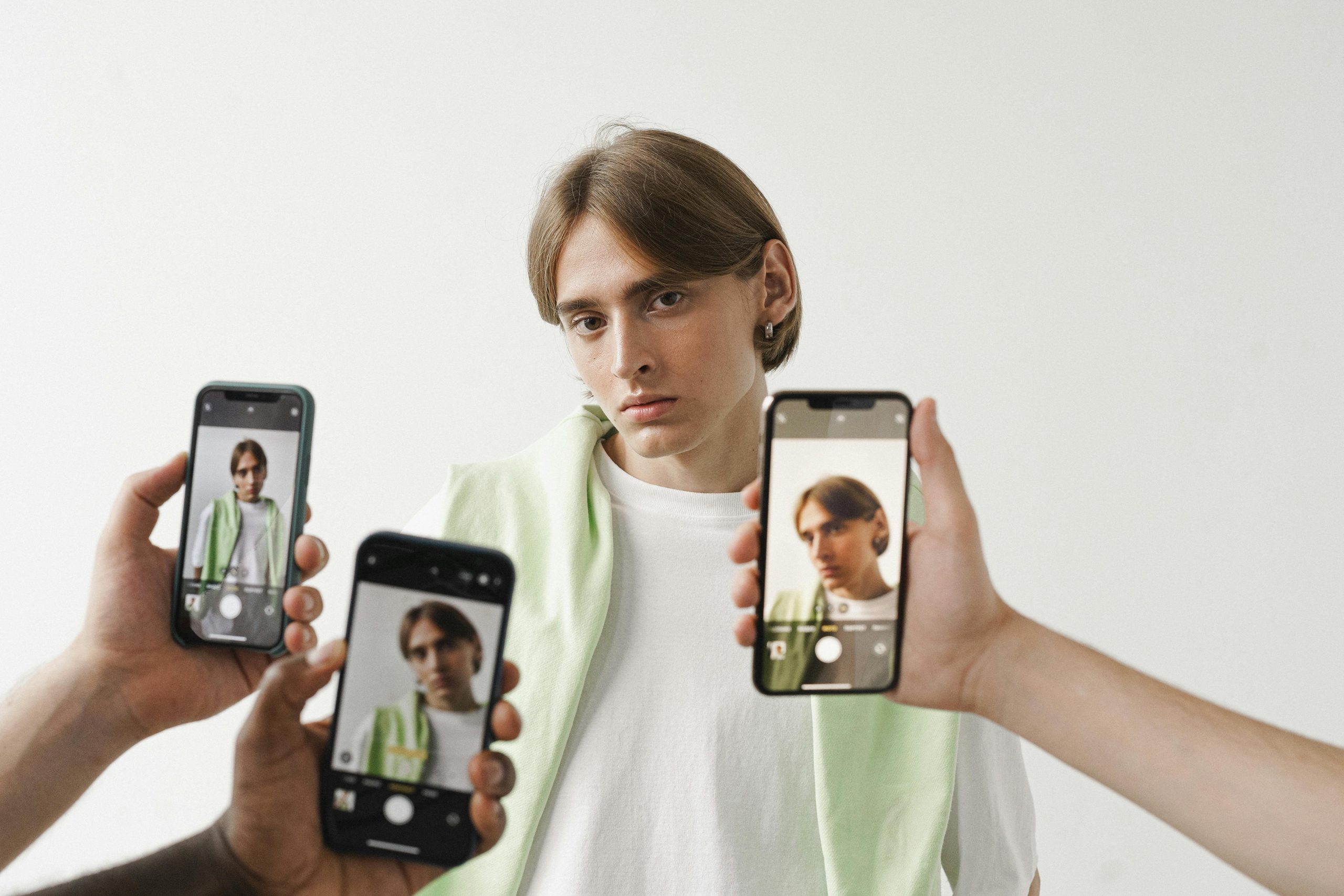

Gabriel Charur’s interest in self-improvement first began at the age of 15 when he started following social media influencer Brett Maverick. Maverick, an online fitness coach with over 1.8 million YouTube subscribers, was the one who introduced Charur to “mewing”—a technique that involves pressing the tongue against the roof of the mouth to create a more symmetrical facial structure. Fascinated by its potential, Charur adopted mewing as the first “looksmaxxing” technique in his routine—an online trend that pushes young men to maximize their physical appearance according to aesthetic standards promoted on the web.
“I just saw it as a natural way to develop my physique,” Charur explains, adding that “being more attractive gives you more opportunities in life.” Charur describes how “softmaxxing”, low-risk changes such as skincare or postural exercises like mewing, can serve as a gateway to more extreme practices. Among these is “hardmaxxing,” which includes cosmetic surgery and “bone-smashing”—an exercise where young men deliberately strike their facial bones with blunt objects to fracture them in hopes of achieving a more chiseled look.
In recent years, the looksmaxxing community has experienced significant growth. What was once a niche corner of the internet has tripled in size, now recording six million unique monthly visits. At the heart of looksmaxxing lie two pillars: “ascension” and “sexual market value,” which promote a version of Western masculinity where beauty standards for young men are dictated by male influencers and validated by other men online, not by women.
A gaze that was once directed toward women has now turned inward, leaving men trapped in an echo chamber and encouraged to distrust women. Members of the community “justify the harm men inflict on one another and make women appear to be the enemy,” explains Michael Halpin, an associate professor at Dalhousie University in Canada. These factors combine to keep young men seeking validation within the community.
This online community ritual is now being automated through AI apps and algorithms. Instead of posting selfies on forums to receive ratings and feedback from other men, users can upload their photos to apps like Umax, Best of You, and Moggr. These applications assign an attractiveness score using a “PSL” matrix—a classification system born in incel forums based on white, Western beauty standards.
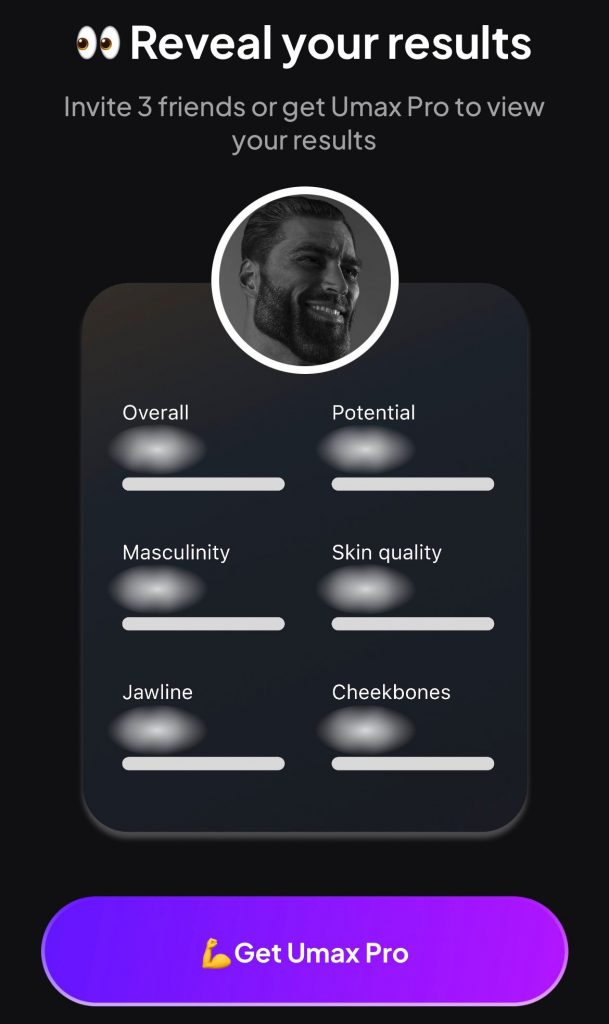
“Race is completely integrated into looksmaxxing,” says Michael Halpin. “The most common interventions suggested to men of color are those that make them appear ‘whiter,’ such as skin lightening or altering their hair.” The apps claim to offer consistent and objective evaluations through AI analysis, examining features like skin quality, eye symmetry, and jawline. Those with the highest levels of attractiveness earn the title of “gigachad,” a term associated with the image of a dominant white man.
Kaarel Lott, a researcher in Digital Media Studies at the University of Tartu in Estonia, argues that these apps “make the entire evaluation process more accessible, allowing people to get immediate feedback on their appearance.” Lott adds that “this fosters the emergence of new anxieties that users might not have even been aware of before,” anxieties that can ultimately lead to cosmetic surgery.
Studies based on the Rosenberg self-esteem scale have found that using Facetune2, a photo-editing app, directly increases users’ inclination to consider cosmetic surgery without actually improving self-esteem scores—a sign that the damage occurs beneath the surface of standard psychological measurements. Lott observes that AI-based apps represent the automation of a literal “affective racketeering” within the online community, generating anxiety about men’s status and appearance only to monetize the solution.
Yet, regardless of how many techniques or procedures they adopt, most young men find themselves trapped in a dilemma—a “Goldilocks paradox” where too little looksmaxxing makes them “ugly,” while too much makes them appear “gay” or “over-the-top.” The masculinity of looksmaxxing pushes young men to chase an elusive beauty ideal that recedes further the more one tries to reach it. Charur, now older and more detached from the community’s most extreme elements, has reached his own conclusion: “I took the best parts and discarded the worst,” he says. “But many younger kids are still completely immersed in every single aspect.”
Halpin’s proposed solution is simple: treat lookism like any other form of prejudice, questioning the white, Western beauty standards embedded in every evaluation and extending body positivity to boys with the same urgency it was extended to girls. Looksmaxxing presents itself as a mirror, but its standards are never objective. They are the digital megaphone for existing societal biases, which the algorithm simply amplifies and legitimizes.