

When the lights came up at the 2025 Cannes Film Festival, a prolonged standing ovation for Affeksjonsverdi (internationally titled Sentimental Value) signalled more than just a successful premiere. It marked the moment Joachim Trier transitioned from a respected European filmmaker to a global one. Now, with a historic nine Academy Award nominations, including Norway’s first-ever nod for Best Picture, the film has become a national phenomenon that challenges the traditional boundaries of Nordic cinema.
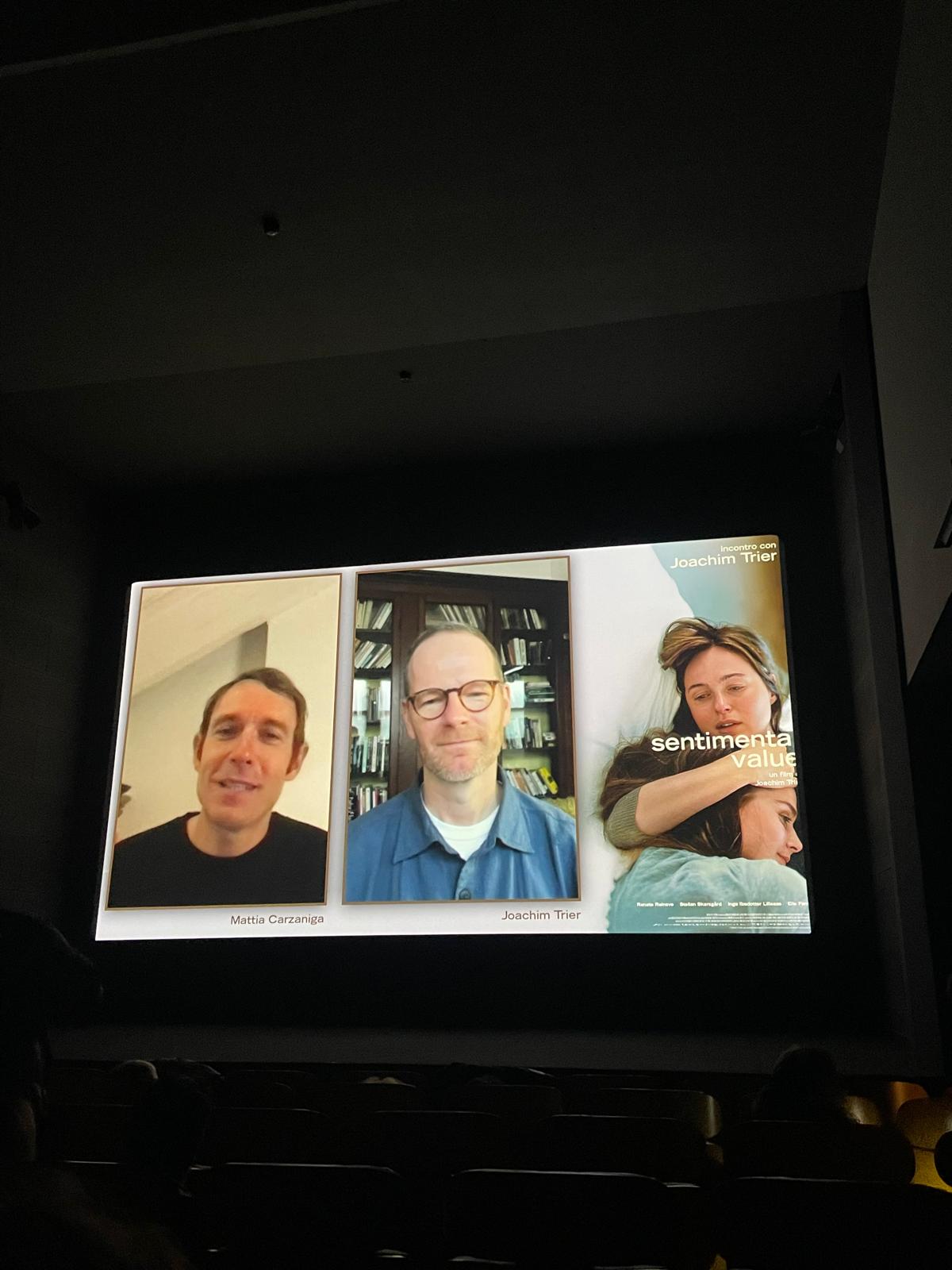
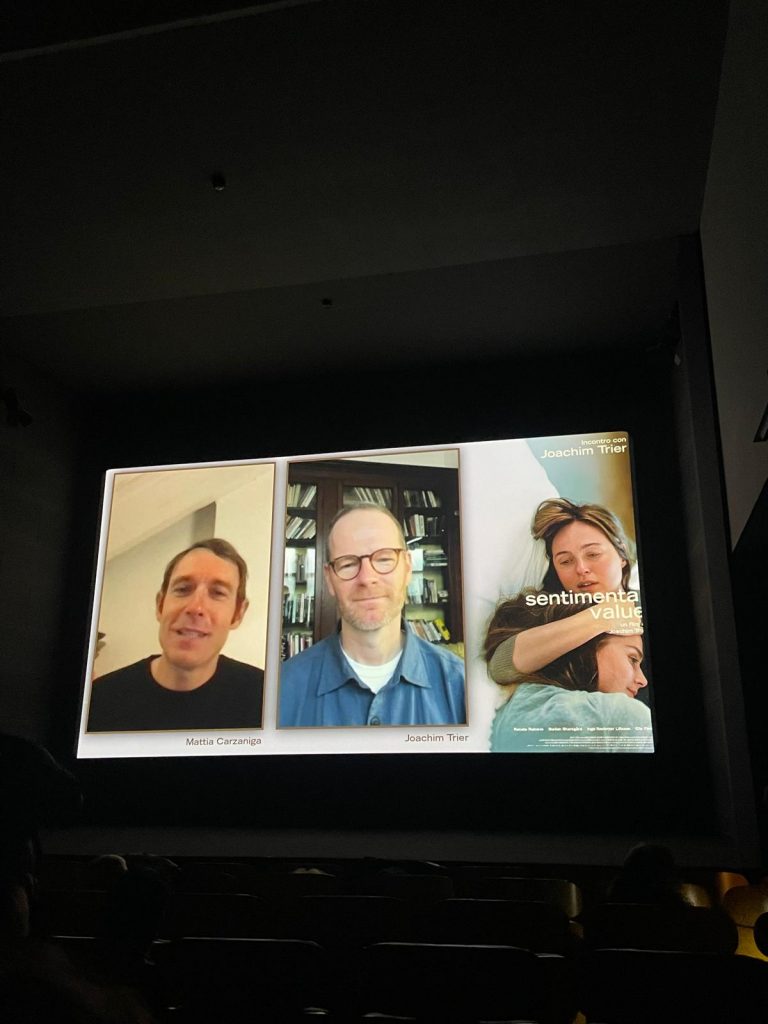
For director Joachim Trier, this success is the culmination of a twenty-year long journey alongside co-writer Eskil Vogt. Sentimental Value is their sixth feature, a pace Trier consciously maintains. As he explains during a conversation with journalist Mattia Carzaniga broadcasted at cinemas across Rome on the 6th of February: “I make one film at a time like a writer of books. I’ve only written six screenplays with Eskil Vogt and I directed six films. So, I try to make it personal every time”.
This deliberate approach allows him to infuse each project with deep personal resonance and diverse influences. While rooted in Oslo, Trier admits: “I’m very inspired by Italian cinema”. He specifically cites the works of Italian directors as pivotal inspirations: “I love Fellini’s perspective on the human experience in Otto e mezzo. I also admire the way Ettore Scola uses continual perspective on space in La Famiglia and Le Bal“.
The power of Sentimental Value rests on a casting strategy that balances the presence of “local” actors to provide emotional depth and intimacy, with “global” stars to provide the international prestige and “gravity” needed to break through on the world stage. Renate Reinsve, who previously won Best Actress at Cannes for Trier’s The Worst Person in the World, returns as Nora Borg, an actress battling debilitating stage fright. Trier, who has worked with Reinsve since 2011, describes her rare presence: “Renate has a way of being in front of the camera which is maybe the freest that I’ve ever seen. She kind of unhinges herself”.
Opposite her is Stellan Skarsgård, the veteran “craftsman” of over 150 films who Trier admits he “begged” to join the project. The director’s admiration for Skarsgård is profound: “He’s in my view one of the most accomplished actors in modern cinematic history; he’s very playful and childish in a beautiful way”, notes Trier. The addition of Elle Fanning as a Hollywood starlet provides the necessary “outside perspective,” acting as a catalyst for the family’s reconciliation.
Historically, Norway has been a steady but quiet participant at the Oscars, with only six International Feature nominations since 1957. While films like Kon-Tiki and The Pathfinder achieved recognition, they remained confined to a single category.
Sentimental Value has shattered this trend. By securing nominations in all four acting categories and the “Big Three” (Picture, Director, Screenplay), it has moved Norway into the elite level of global filmmaking. In its home country, the film is a cultural milestone, dominating the box office with $22 million in earnings and receiving near-perfect reviews from major outlets like the Norwegian Broadcasting Corporation (NRK).
Trier defines Sentimental Value as a “soul movie,” likening its structure to soul music where a sophisticated narrative supports raw human emotion. According to Trier, the film’s resonance lies in its willingness to be vulnerable: “In this film I’m trying to do my most ambitious structure of narrative, but in the core of it, it’s a human story carried by the characters and the actors who were taking the biggest risks in front of the camera. The shame of being simple, you know, saying it straight and seeing if it has artistic merit and quality to it”.
In an era of cynical detachment, Trier argues that honesty is the ultimate challenge: “It’s easy to remove yourself and be cool and smart, but to be very straight is sometimes the most difficult. And to me that’s soul music”. For the Norwegian industry, this isn’t just a successful awards season; it is the beginning of a new chapter where local stories speak a universal, “soulful” language.