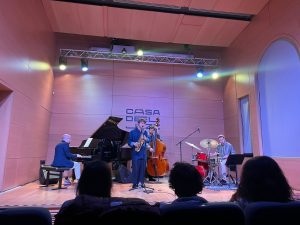
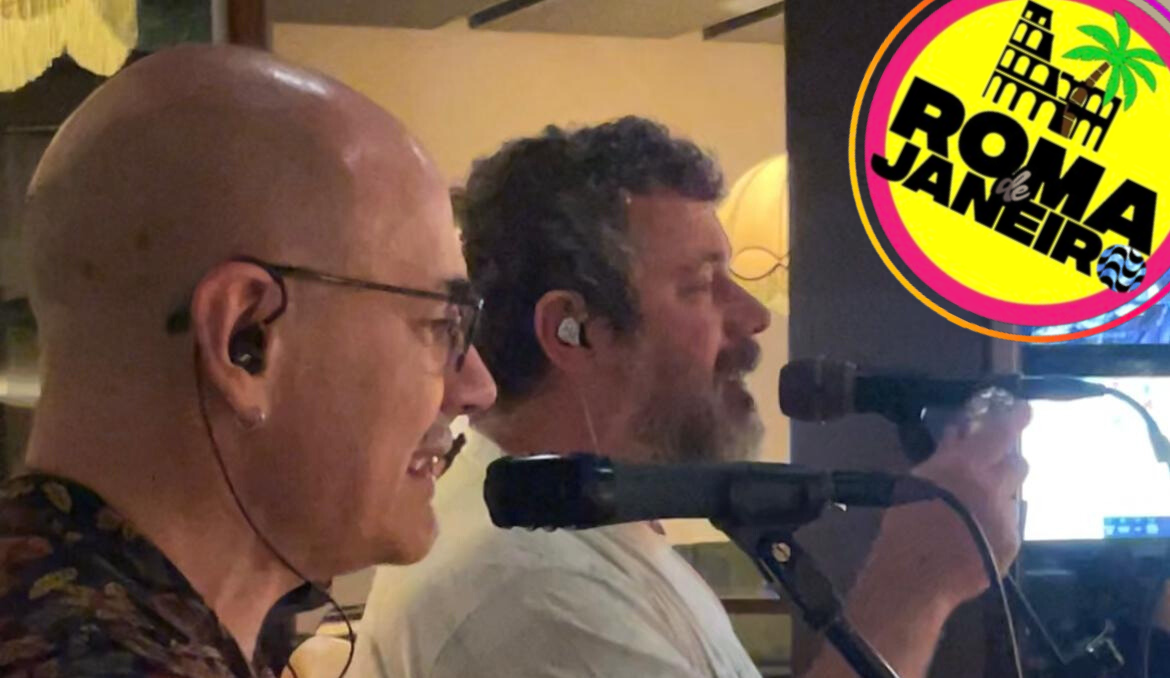

In the heart of Rome, the mellow sound of a Bossa Nova escapes through a crack in the heavy, glass door of Riserva bar, spilling out into the narrow, cobblestone streets of the centre. On a Tuesday night, the collective Roma de Janeiro is at work. By bridging Italian and Brazilian musicality, they adapt the spirit of Rio for a local audience, transforming a typical Roman corner into a temporary sanctuary of saudade and syncopation.
A uniquely bittersweet longing for something or someone absent, lost, or never to return, Saudade is a cornerstone of Brazilian identity, particularly in Bossa Nova and Samba. It may then come as no surprise that Roma de Janeiro was founded during the COVID-19 pandemic by a group of Italian musicians, a time when social distancing measures made people yearn for a simpler, more familiar past.
Aldo Verducci, the lead singer of the group, explains how he was always passionate about music from different cultures, having been fascinated by Irish music after living in Dublin. “Then along came Brazil with its different rhythms and complex harmonies,” he says, “and little by little, I began to understand the lyrics, which are incredibly popular and poetic.” All group members share this connection — each has found their own path to Brazil, whether through travel or music.
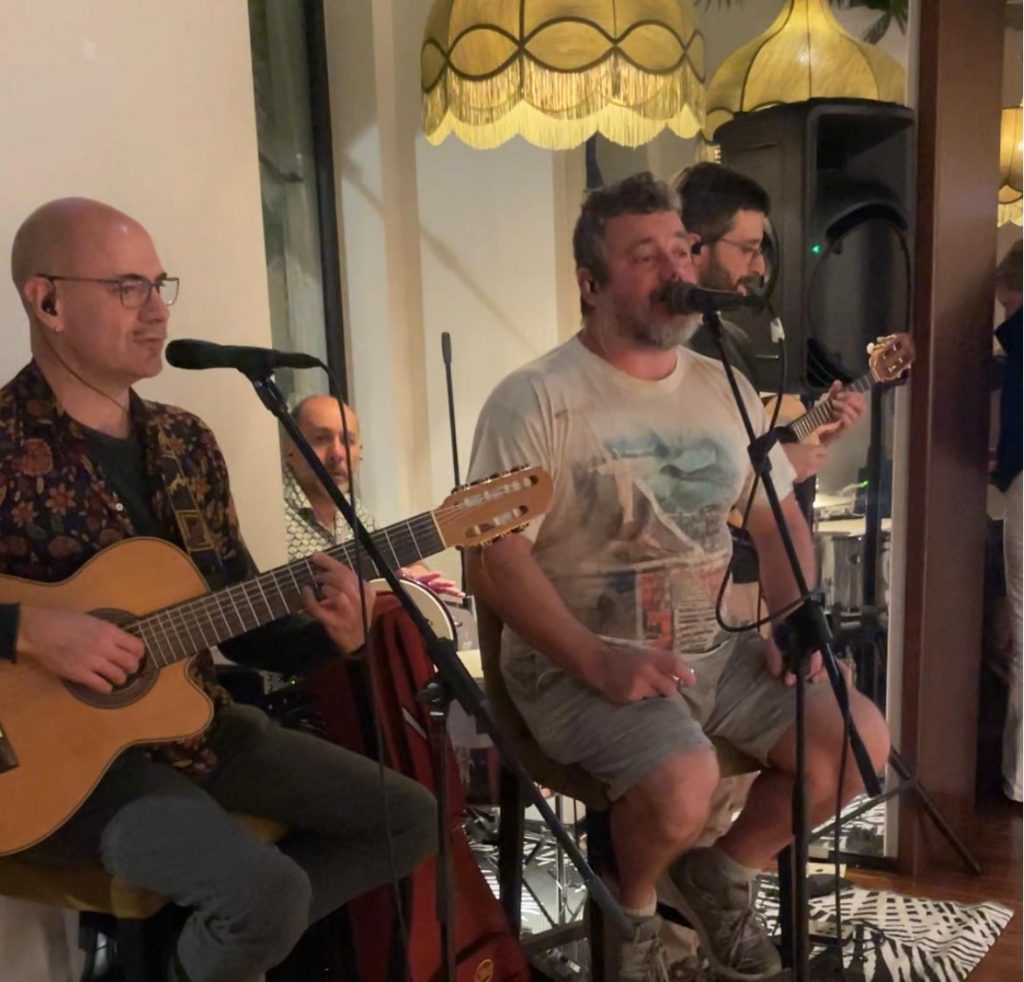
Over the years, the collective has developed an extensive library. Their repertoire reflects the rich heritage of Brazilian culture, not only including songs from different genres but also from different regions. Aldo explains that “if someone comes from the northeast and prefers forró, we go in that direction; if someone’s from São Paulo, we adapt.”
The group, composed of four musicians, must also adapt to the physical setting of each gig. Each space possesses a unique acoustic profile, resulting in a “sonic migration” where the expansive, airy rhythms of Brazil are compressed and sharpened by the dense, historical architecture of Rome. To navigate this tension, the group invested in a digital mixer and in-ear monitors to improve how they hear themselves and are heard by others.
“There is a sense of serenity and balance among the percussion and lovely Brazilian Portuguese pronunciation,” noted Giulia Rinaldi, who enjoyed the concert while sitting at the bar. “Brazilian music fills me with a lovely philosophy: maybe things in life aren’t perfect, but we are here and alive, and we will enjoy that.”
Brazil and Italy share more than a love of rhythm; a long cultural affinity between the two countries has made Brazilian music a natural fit for Roman ears. While Roma de Janeiro plays well-known Brazilian pop songs, such as Sérgio Mendes’ Mas Que Nada or Amiga da Minha Mulher by Seu Jorge, the group has experimented with a fusion of different genres to better cater to their domestic audience.
“By studying Brazilian music deeply, we realised that some Italian folk songs and rhythms can be adapted,” explains Aldo. Roma de Janeiro further emphasises the sonic migration to Italy by blending in their native culture to make it more accessible. Aldo adds that “it’s more about bringing Brazilian influence into our framework,” with their creative spark leading them to record the track “Quella che pensa la gente” in the Rome dialect and covering songs of famous Italian singer-songwriters Fabrizio De André and Pino Daniele with Samba rhythms.
For Roma de Janeiro, success isn’t measured in crowd size or setlists. “The greatest satisfaction,” says Aldo, “is when you can do a concert or a samba circle without being forced to play pop songs to attract people.” In a city built on centuries of borrowed and reinvented culture, perhaps that’s the point — Saudade doesn’t dissolve when it crosses an ocean or echoes off travertine. It just finds a new home.