
“In Macron’s France, people can no longer even afford to feed themselves”, recounts Camille, a French citizen based in Paris, “and it makes sense they would steal from major supermarkets and luxury stores, since those are the ones with the highest resale prices”.
On Saturday 17 October, people in Paris took to the streets in what was the largest mobilization since protests began last month in response to poor educational conditions and rising living costs. According to the authorities, approximately 550,000 people participated, while unions and organizers estimated that around 800,000 had joined.
While most demonstrations have remained peaceful, clashes between protesters and the police during some of Saturday’s demonstrations led to the arrest of 1,200 people. As images of looting and violence dominated coverage of the protests, the reasons behind the movement risked being pushed into the background. However, as Camille explains, “what happened locally was different from what was depicted [in the media]”.
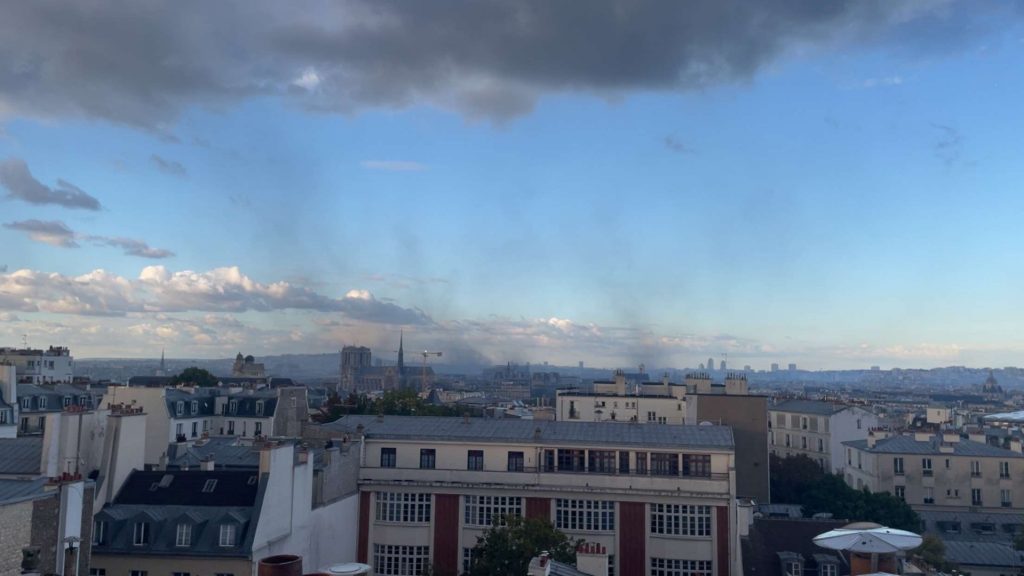
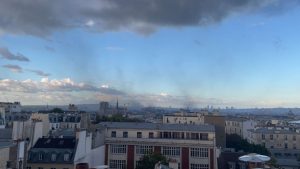
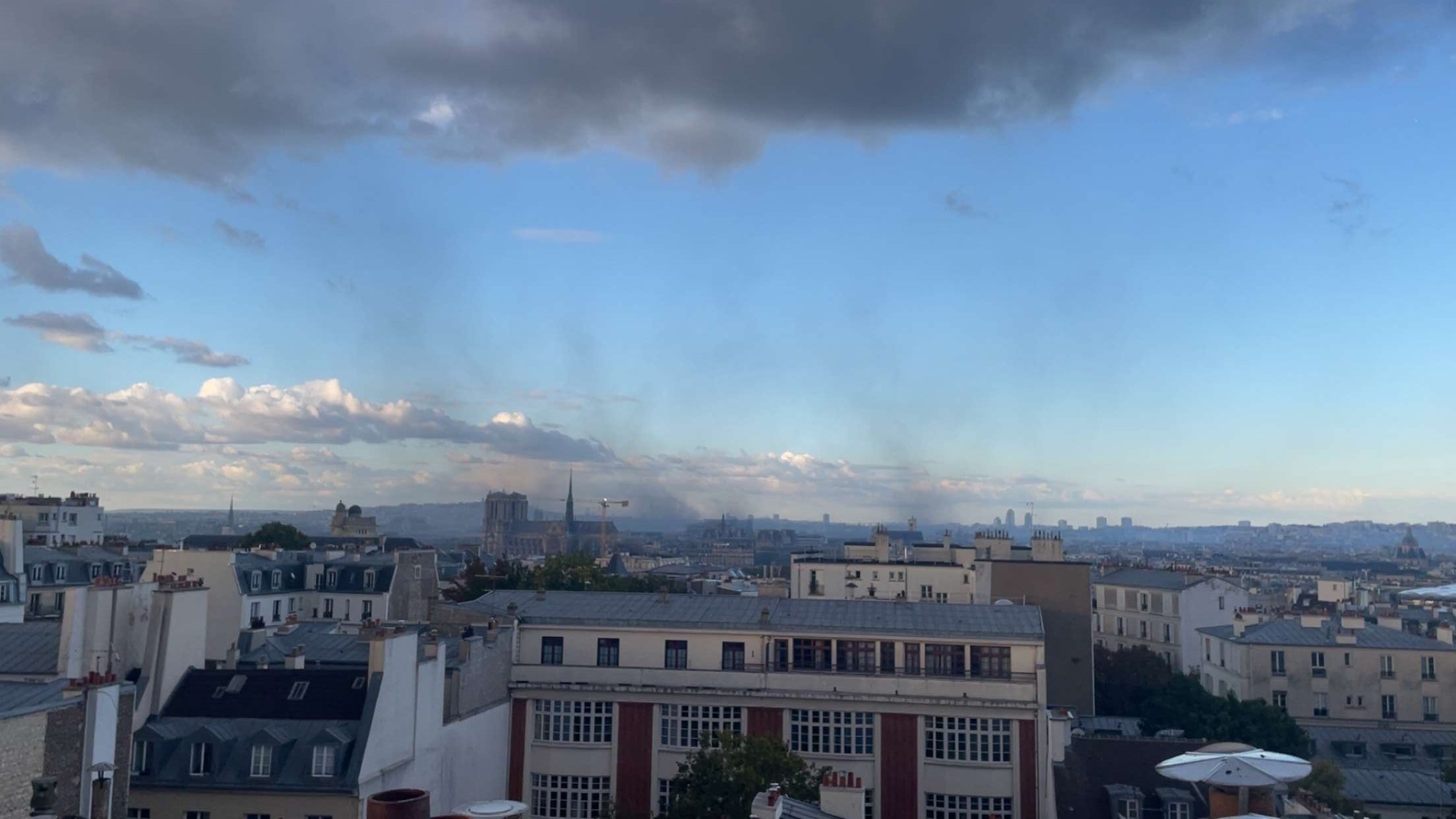
The view from Camille’s window, taken around 6 pm. Two smoke columns can be seen, one from Bastille and another from République
Although they condemn the use of violence against the police – which, according to the French Interior Ministry, has left around 1,000 police officers injured – Camille draws a distinction between protesters and those who saw the demonstrations as an opportunity “to create chaos, rather than because they believe in the demands of the movement”. They refer in particular to those who looted small, independent businesses, for whom the shops may represent their only source of income.
For Camille, however, the media’s focus on looting and violence overlooks other aspects of the demonstrations. While trash cans were set on fire, metal barriers were used to block streets, and shops were broken into, they describe how protesters who had erected barricades took them down to allow fire brigades and first-aid services to pass, while the remaining demonstrators “formed a guard of honour and applauded them”.
While Camille did not personally participate in the protests, they recount how some of their friends “got tear-gassed and had to run away from the police on multiple occasions; otherwise, they tried to stay safe”. These accounts form part of a broader debate over police conduct, with the French Police Inspectorate (IGPN) opening 36 investigations into alleged police violence since the protests began.
For Camille, however, condemning the violence witnessed during Saturday’s protests without addressing what led to it fails to resolve the underlying problems. “People sleeping under bridges during the winter months: that is violence. People not eating because of living costs: that is violence”. Violence, Camille argues, “must be condemned in all its forms – not only when it erupts during protests”.
In response to the looting and violence, President Emmanuel Macron addressed the nation on Sunday evening, declaring that “nothing justified” the “unbridled” violence witnessed during the protests. He also pledged “full transparency” regarding the police response.
When asked about Macron’s remarks, Camille is sceptical: “He condemns violence, yet his government passed a law that gives law enforcement the presumption of legitimate use of their arms.” They continue: “To be fair, I don’t think anything will change, and that is just the textbook reaction of a president trying to reassure the population but failing.”