
When the United States and Israel began their attack on Iran on February 28, 2026, everyone was glued to their phones seeking updates on the war. When Iran started to retaliate and hit U.S. air bases and allies, many videos surfaced online of explosions and drone strikes happening in the cities of the Gulf. We saw strikes in Dubai, we saw expatriates in fear, and we saw chaos in Dubai International Airport. Then we saw nothing. Organic videos on social media of what was happening began to dry up.
Suddenly, what was posted by the influencers of Dubai seemed to have the same tone. Instead of fear and uncertainty, an image of calm and security appeared. This very specific type of social media content is a symptom of a well-known strategy in the information space, astroturfing.
This deceptive practice of creating a false ‘grassroots’ movement online to promote a specific agenda. In other words, astroturfing creates the impression that a specific opinion has widespread public support. According to the human rights organisation Detained in Dubai, ‘public discourse is limited and influencers are closely aligned with official. The government uses state-aligned content creators to amplify pro-regime material, framing a very specific narrative of safety and success. This is a top-down campaign that mimics spontaneous online discussion, or a trend.
The ‘aren’t you scared?’ trend among Dubai-based influencers is what brought this to light. These followed a very specific formula of the influencer posing in a random setting with the caption, ‘You live in Dubai, aren’t you scared?’ then cutting to an image of Sheikh Mohammad Al Maktoum, with a caption of ‘No, because I know who protects us.’
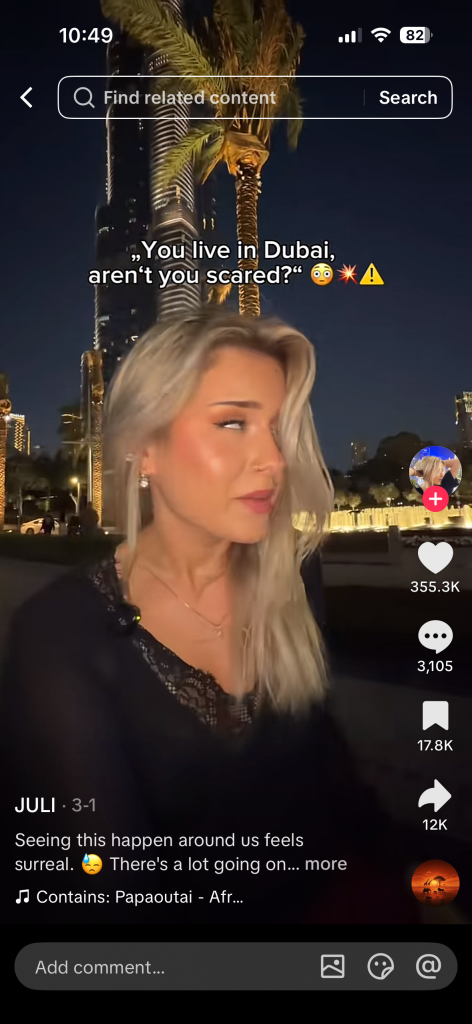
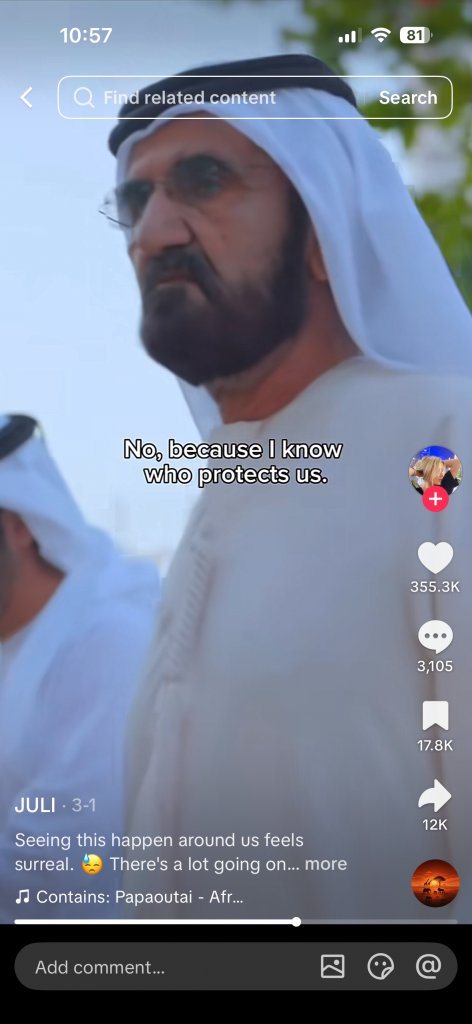
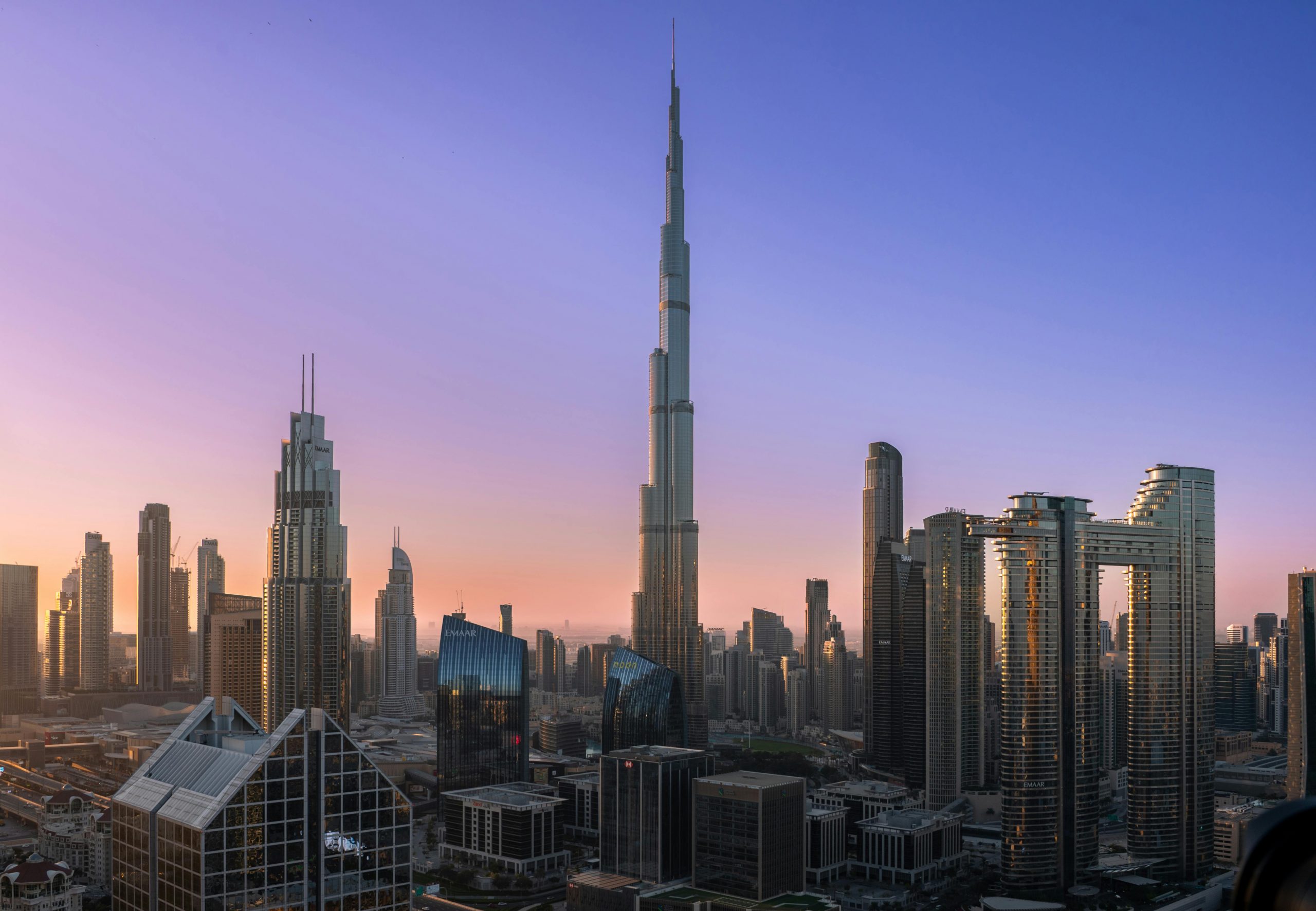
Many videos as such appeared in the same format on the accounts of multiple Dubai-based influencers. With so many examples of the same video, it is clear to see that this is a coordinated effort. It spreads the message about Dubai’s leadership as strong and infallible. What’s more, it separates the reality of this regional conflict from the luxurious Dubai lifestyle, the brand on the back of which the city is success is built. Meanwhile, according to Detained in Dubai, there has been an increase in a cybercrime campaign to target people who shared or discussed content linked to the missile strikes.
This coordinated trend comes after the influencer landscape in Dubai had some significant administrative changes. As of the 1st of February, this year, the UAE Media Council requires content creators in the country to hold a valid Advertiser Permit for any promotional content. There are steep fees for not having these permits and without one of these, an influencer effectively cannot earn. This provides a level of pressure to promote certain content, as these influencers could lose their privileges if they do not comply with such directives.
The UAE also offers a specific ‘Golden Visa’ for content creators, offering a 10-year residency without the need for a local sponsor. While this is a good incentive and creates a supportive environment for influencers to work in Dubai, it ties their digital output to their residential status. This creates a need to toe the line, even if it is not publicly disclosed.
On top of the pressure, there is also a legal framework that prevents the spread of videos depicting the attacks. Article 52 of the UAE federal decree prohibits the spread of rumours and ‘fake news’ but it also includes a clause that prevents the sharing of material that creates ‘panic’. In the context of the current conflict, this was interpreted to include any videos of explosions, smoke, or people fleeing the site of an attack. Essentially, it bans footage of anything that interrupts Dubai’s image as a peaceful haven in the Middle East. This has resulted in numerous arrests made in the UAE for posting videos of Iranian attacks on the country. This censoring, paired with the false narratives being promoted on social media, makes for a rather skewed digital representation of how this conflict is affecting Dubai.
The digital dimension of conflict in the Gulf, specifically in the UAE, exposes censorship and astroturfing across the board. The consequences of the country’s digital policy are drastically affecting the vision of this war. Aside from the pressure to portray a certain image online, those who have breached these rules have been met with steep legal consequences.