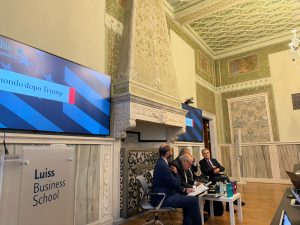
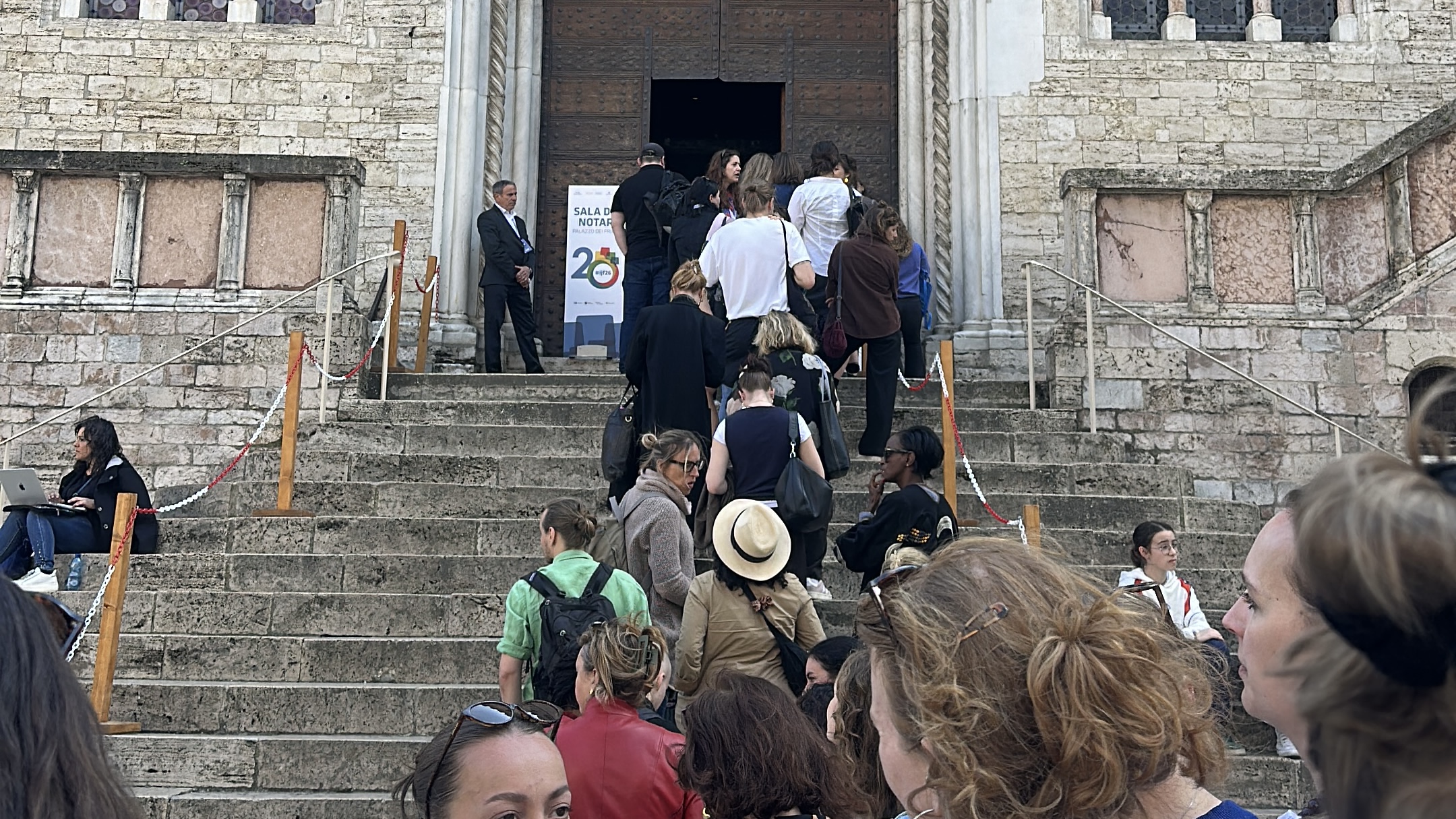

Despite the picturesque cobblestone alleyways and aperol spritzes in the town of Perugia, the 20th annual International Journalism Festival’s agenda this year focused on the multiple international conflicts, human rights disasters and disruptions by emerging tech facing the world today, with many panelists addressing different facets of conflict and human rights reporting and combatting the spread of misinformation and disinformation.
The festival ran from April 15 to April 18 and included more than 500 hundred speakers, some of them senior executives and editors from news organizations such as Sky News, The Associated Press, The New York Times, the Pulitzer Center and more. The more than 200 panels were a mix of Italian and English sessions, and every event was free. “I really like the idea that it’s free so that everyone can attend, the democratic aspect of it,” Siren Henschien, festival attendee and journalist for TV 2 in Norway, told Zeta. “But mostly, it’s the storytellers that attract me.”
On the last day of the festival, The Guardian visual forensics lead Manisha Ganguly spoke to Alexa Koenig, director of the Human Rights Center at University of California Berkley, who worked on the CBS 60 Minutes investigation on the conditions of El Salvador’s CECOT prison, where several immigrants in the U.S. were deported to by the Trump administration. The report “Inside CECOT” was then pulled by CBS before it was set to air by the new editor-in-chief Bari Weiss, founder of the conservative-leaning independent news site The Free Press, who called the analysis “strange” in an internal memo.
“There might’ve been an attempt to silence this story that is so damning of these men’s experiences,” Koenig said. She spoke on how recent media company mergers, like that of CBS and Larry Ellison’s recent acquisition of Warner Bros that includes CNN, point to how Trump’s overhaul of the federal government is affecting media ownership. “This might all be tied to the fact that they need the Trump administration’s approval to allow any further purchases.”
Another prominent speaker was Amy Wallace, co-author of Epstein victim Virginia Giuffre’s memoir “Nobody’s Girl.” Wallace spoke on her years recounting Giuffre’s story and the painstaking reporting and fact-checking behind painting the picture of Giuffre’s life to not destroy her credibility. Giuffre was told by journalists in the past to change small aspects of her story to protect herself, and she wanted Wallace to tell all the correct details once and for all. “You cannot write well without good reporting. You cannot write without that richness.”
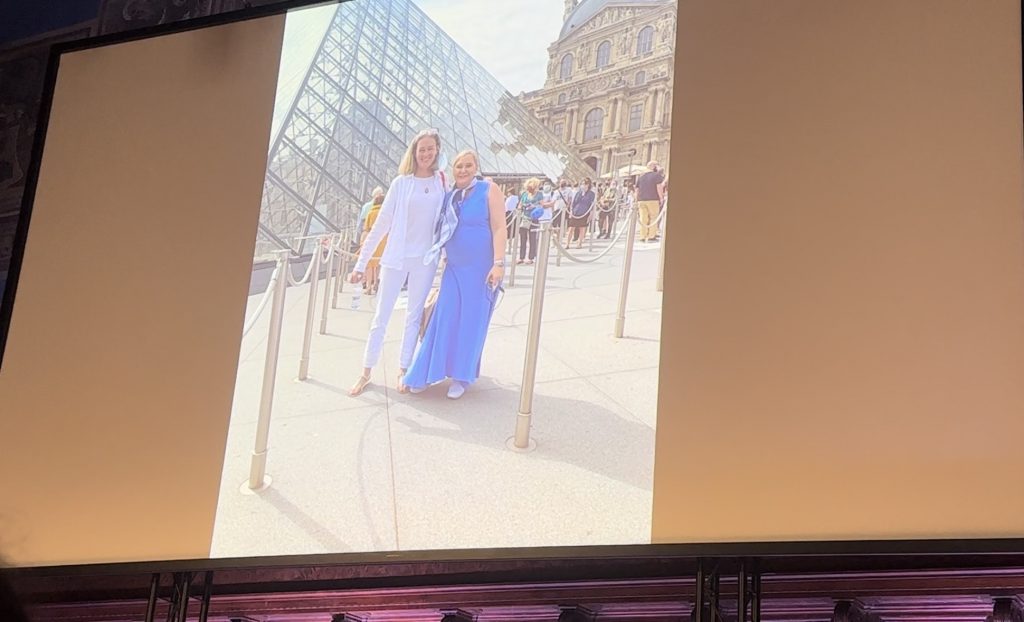
Wallace’s face became solemn when talking about Giuffre’s death and the task of finishing writing her story after she took her own life. “We both bursted into tears,” she said about her and her husband after they got the news. But her drive to tell Giuffre’s story helped her push through. “Never underestimate the value of your own individual outrage.”
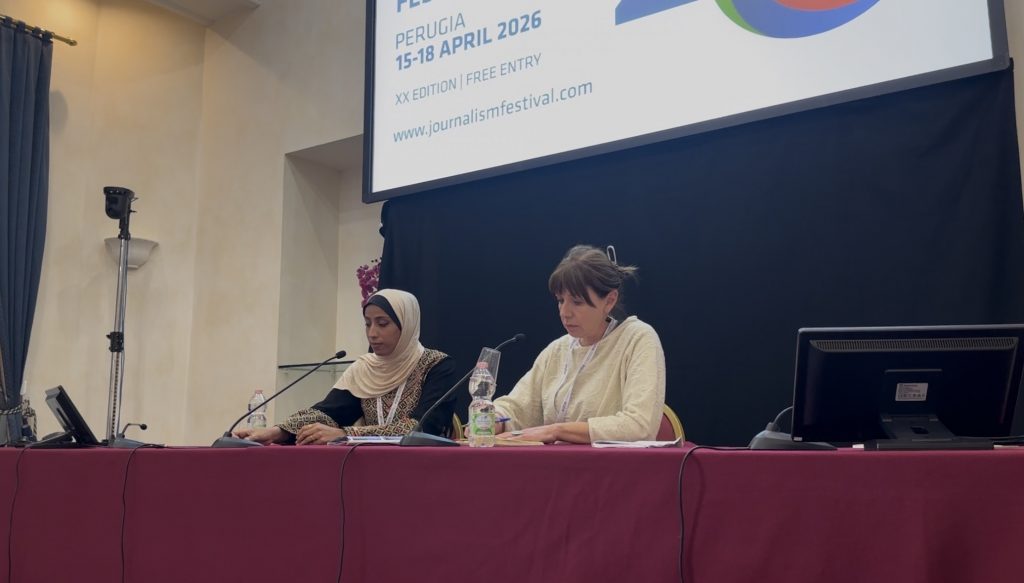
Later that evening, guests heard from Palestinian journalist Ruwaida Kamal Amer, who reported on the war in Gaza throughout the two years of war. She spoke on her childhood experiencing war in the strip before the two-year war beginning in 2023, as well as being displaced from her home while being a journalist. “If they asked us to leave our homes, I cared about my laptop and my mother. If I focused on what was happening around me, the targeting everywhere, displacement every moment, I would lose my mind.”
Moderator and Italian translator Francesca Caferri asked Kamal Amer about Israeli targeting of journalists on the ground in Gaza, something she recounted happening to her colleagues, including a filmmaker of a documentary she was working on who was hit by a bomb in his car. Kamal Amer also knew Maryam Dagga, freelancer for the Associated Press, who was killed in a strike at Nasser Hospital in Khan Younis.
“I was crying too much,” she said while audience members sniffled and wiped away tears. “The journalists lose everything during the war. She was killed during the war without hugging her son. She was telling us ‘I want this war to finish because I want to see my son Ghaith.’”
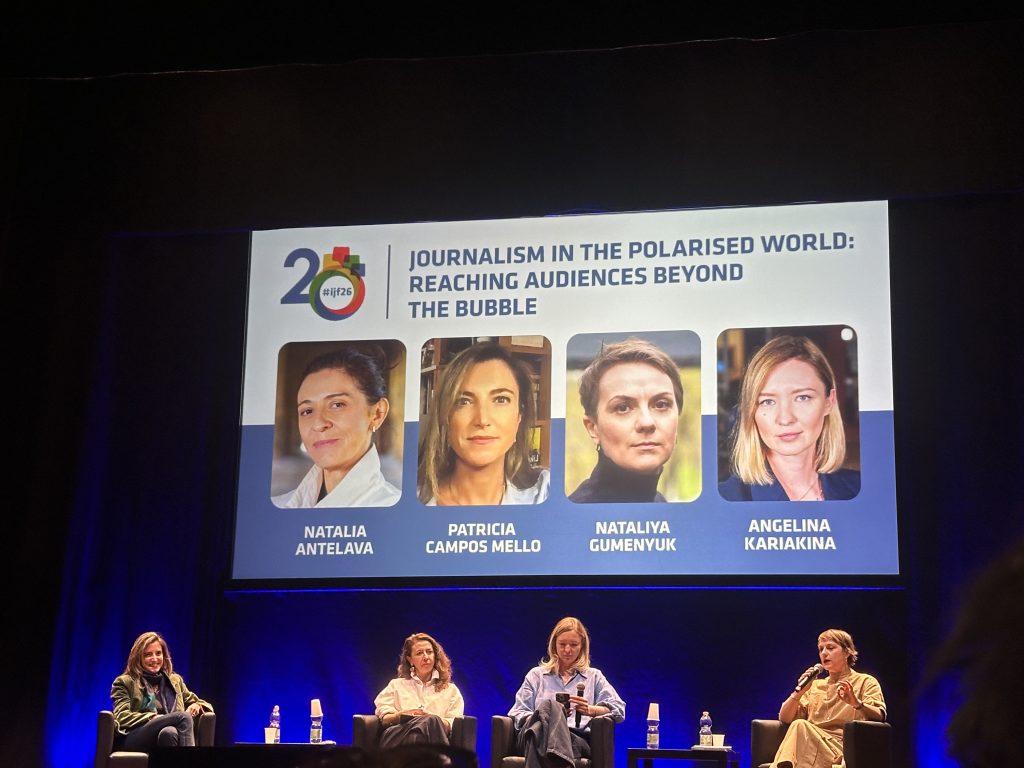
Nataliya Gumenyuk, Ukrainian war correspondent and CEO of the Public Interest Journalism Lab, told Zeta she enjoys participating in the festival because it delves into different facets of the larger issues. This is her third time speaking, this time moderating a panel of three other journalists from various countries on reaching audiences in a polarized world.
“Here in Perugia, people care. They’re not having curiosities about some general topics, but what are the dilemmas in that newsroom, and what public interest media can do for their audiences.”