

Less than 1% of all girls born in Italy in 2003 were given colour names: according to Istat’s name counter, the most popular ones were Viola, Rosa, and Bianca. But it was the least popular that sparked controversy: when Blu Domini’s parents went to the registrar in Bologna, they found a confused officer telling them it was not a girl’s name and therefore not appropriate – even mentioning that, if they went ahead with their choice, public authorities could have asked them to change it. They insisted anyway, and Blu is glad they did.
This was not the only dispute surrounding her at such an early age. Her parents got her a secular baptism, meaning that the ceremony was celebrated in the city hall, with no involvement of religious institutions: the local church in Bologna did not appreciate the move, prompting a debate within the municipality.
It was her family’s determination that inspired Blu’s confidence that she can – and should – win every battle. “We are quite a competitive family, and I am quite a competitive person”. For her, competitiveness seems always to be linked to having fun and connecting with people: this might mean, for instance, taking the risk of skiing off-piste with her friends, even at the cost of injuring her knee: “Of course I kept skiing for the rest of the trip after that; I could not miss it just because of an injury!”
It might also mean challenging her relatives on who picks the best mushrooms every fall: “Of course I won”, she clarified, showing me the picture of two porcini, both the size of her head. “It is a longstanding family tradition that only works when we are all together”.
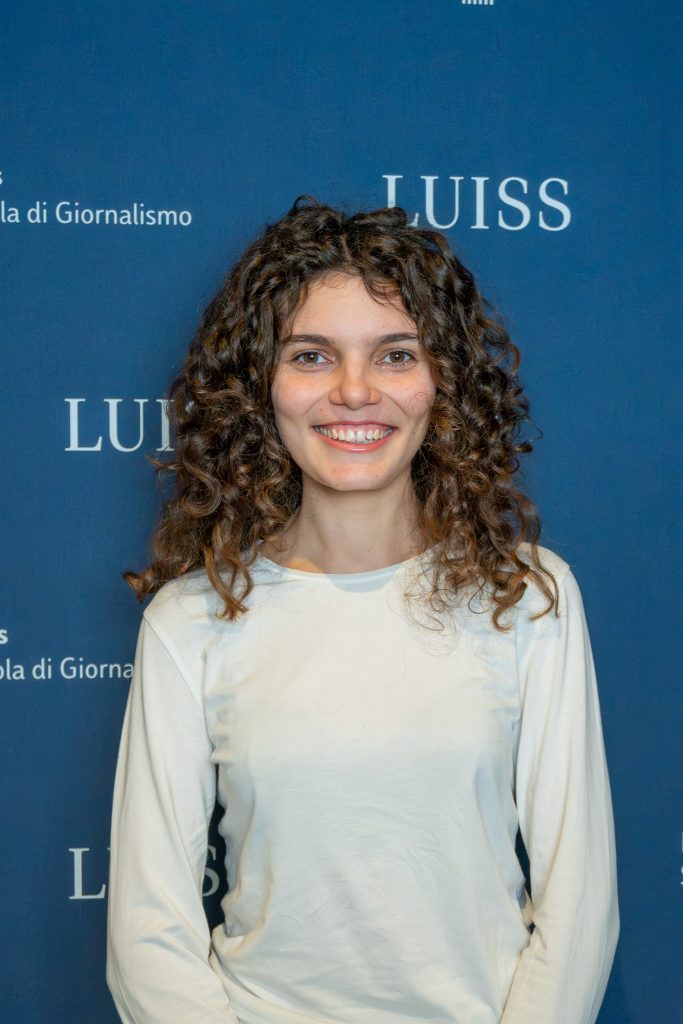
Her tenacity is what keeps her grounded and tied to the places she loves. She remebers the times spent in the breathtaking landscapes of the Italian Alps, back when they were not so popular with tourists, and the memories of Bologna, her hometown, when the city centre was still full of historic bookstores and antique shops. “These are the things that make a place authentic, that shape its identity”, she said with a hint of sadness in her voice, “but now the world has changed, and it has changed for the worse”.
Her perseverance almost wavered when she spoke of the challenges she sees in the areas she loves, including overtourism, ineffective urban planning, and a general lack of awareness of how to care for the local environment. However, she immediately regained her enthusiasm when asked what could be done about it: “Being informed, absolutely, and being more aware. You need to know that you can make your reality better, and how to do it”.
This is the role she wants to take on as a journalist: “With my articles, I want to give people a beacon of light: to show my audience that there are actions to be taken, solutions that work, right here or elsewhere”. She has gained some recognition for her ability to do so when her articles were featured on the front page of the Italian outlet Il Fatto Quotidiano, and she realised this could be her mission. She believes that critical thinking, curiosity and media literacy are the most important tools for this generation.
However, there seems to be no place for the media in her retirement dreams: “My life in 50 years? I want to live in a chalet in the mountains with two dogs, no cell phone and a Jeep to get around”. Rather than a contradiction, this feels to her like a return to her rootedness. After all, if she were a mushroom, she would be a chanterelle: bright and yellow, found almost everywhere because of its adaptability. “And it is also delicious!”