
On June 12, 2026, the European Union begins a new approach to securing its borders as the Pact on Migration and Asylum officially takes effect. Conceived in the ashes of the 2015 refugee crisis, this legislative overhaul aims to replace a fragmented, reactive system with a more centralised framework. Yet, as the implementation deadline hits, the agreement is drawing sharp criticism from across the political spectrum, exposing deep ideological fractures over sovereignty, human rights, and border enforcement.
The Pact’s activation officially renders the previous Dublin Regulation defunct, transforming how Brussels assigns primary responsibility for arriving migrants. Previously, frontline Mediterranean states like Italy and Greece bore the exclusive administrative and logistical brunt of arrivals. While these frontline states remain responsible for initial registration, the new framework introduces a system of “mandatory solidarity.” Inland member states must now either accept a mandatory relocation quota of asylum seekers or pay a financial contribution of approximately €20,000 for each individual they reject.
Human rights organisations have raised misgivings over the Pact’s legal mechanics. Beatrice Pistola, a migration researcher from Sant’Anna Scuola Superiore in Pisa, said that while the Pact aims to streamline the process, “a lot of that efficiency comes at the expense of safeguards for asylum seekers.” The Human Rights Watch has highlighted the use of a problematic framework where individuals undergoing border screening are not officially recognised as having entered EU territory, effectively jeopardising their right to legal remedy, among other civil rights. Furthermore, the agreement allows detentions of up to six months to facilitate rapid processing and fast-track deportations.
This mechanical shift has triggered an intense domestic backlash in nations geographically insulated from the Mediterranean. In Ireland, the decision to opt into the Pact has become a point of contention for both far-right groups and the centre-left opposition party, Sinn Féin. Sinn Féin leader Mary Lou McDonald warned that the framework fails to provide a robust solution, arguing it ‘won’t provide respect, dignity, and a human rights-based response to those who flee war and persecution for safety.’
Further to these concerns, the issue of migration has been exploited by right-wing politicians in Ireland to perpetuate stronger anti-immigration narratives. For Pistola, the proposition of this Pact also fuels the idea of a migration crisis and so “has become a political framing that often justifies increasingly restrictive policies.” The far-right community has harnessed this sentiment and has led demonstrations and group discussions focused on this migration pact in the capital and across the country.
For Italy, the Pact represents a hard-fought diplomatic acknowledgement that migration is a shared European burden rather than a regional penalty. Yet, while Rome officially backs the deal, Giorgia Meloni’s government is aggressively moving beyond it. They are pioneering externalised processing agreements and offshore “return hubs” in third countries like Albania to bypass European legal bottlenecks entirely. The Pact aims to improve cooperation, but its real-world implementation reveals the divide between the central administrative system and actual border protection.
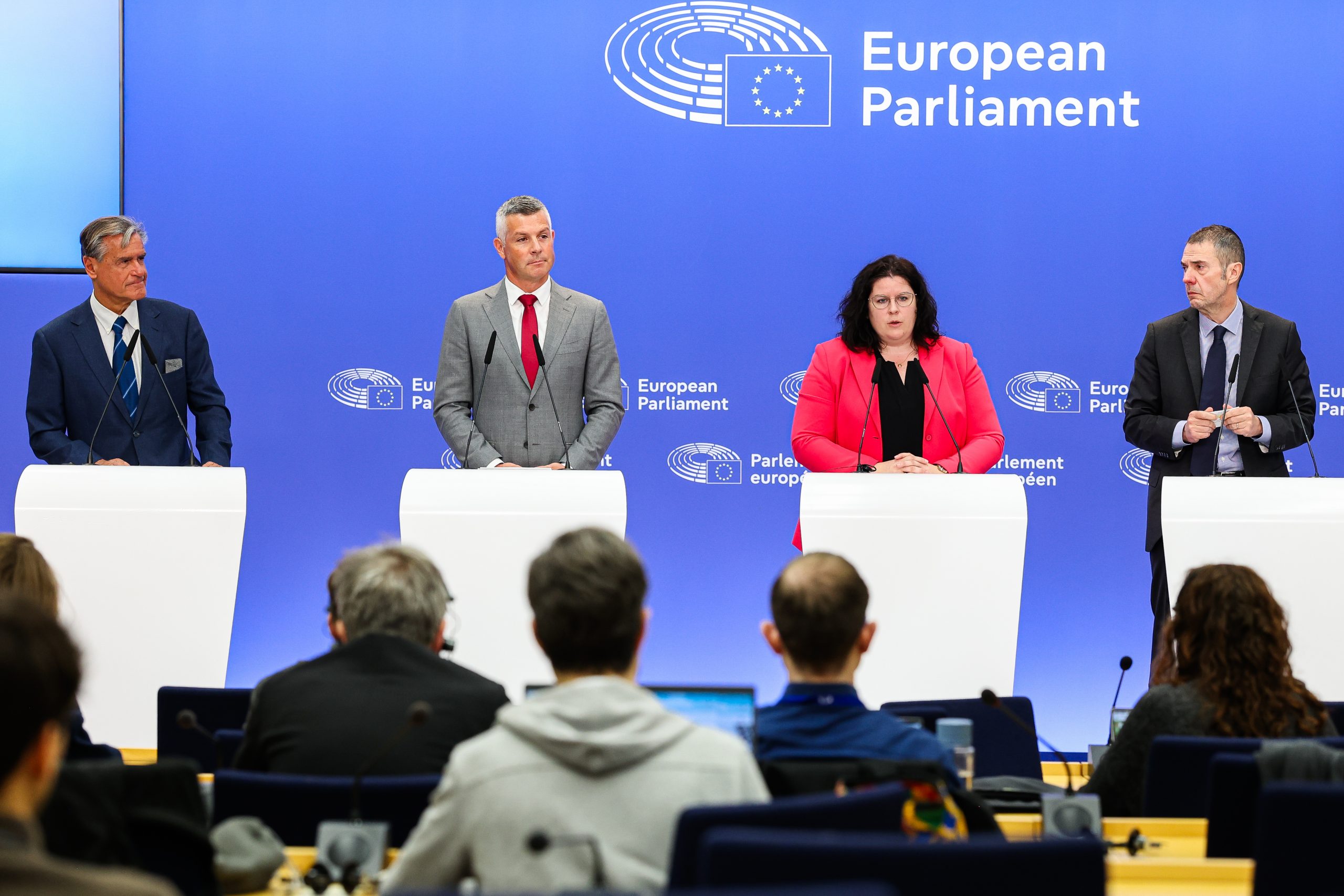
Photo: Press conference on Migration Pact. Credits: © European Union 2026 – Source : EP