
Mara Land only shops local produce and grows her own medicinal plants as an herbalist in the Town of Somerset, New York. The riverside 3,000-person town is dotted with fruit farms and wineries, and the «right to farm» enshrined in the town’s code offers a communal lifestyle where anyone can cultivate their own land and own livestock.
«I need chicken, I call up my neighbor Tina. I need eggs, I call up my neighbor Wang».
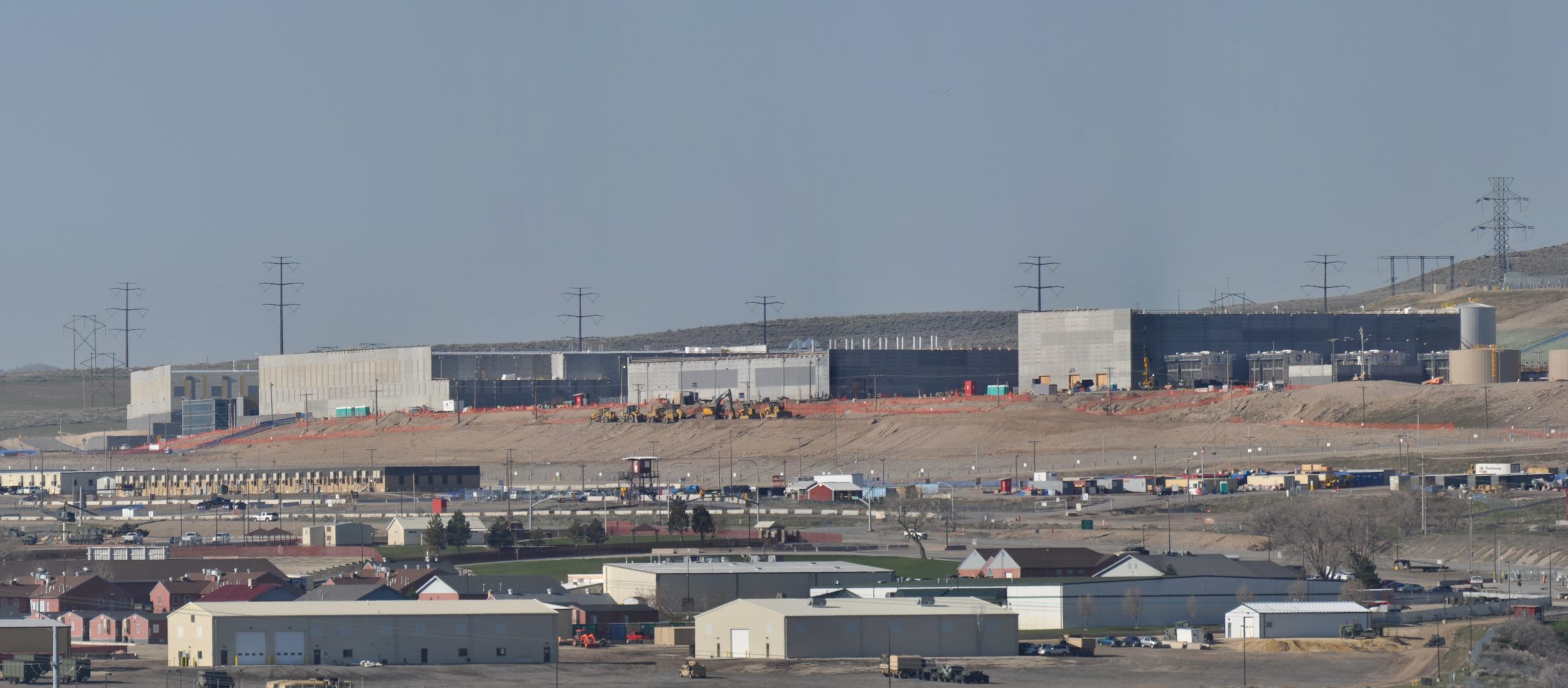
The music of birds singing is now interrupted by the whir of a hyperscale data center. Developer TeraWulf’s Lake Mariner Campus started as a cryptomining facility in 2022, but that changed in 2024 when the site expanded into an AI computing facility. TeraWulf partnered with Fluidstack, an AI computing platform, bolstered by a $3.2 billion investment from Google, to build a multi-building data campus. Four of the seven planned AI facilities are now operational.
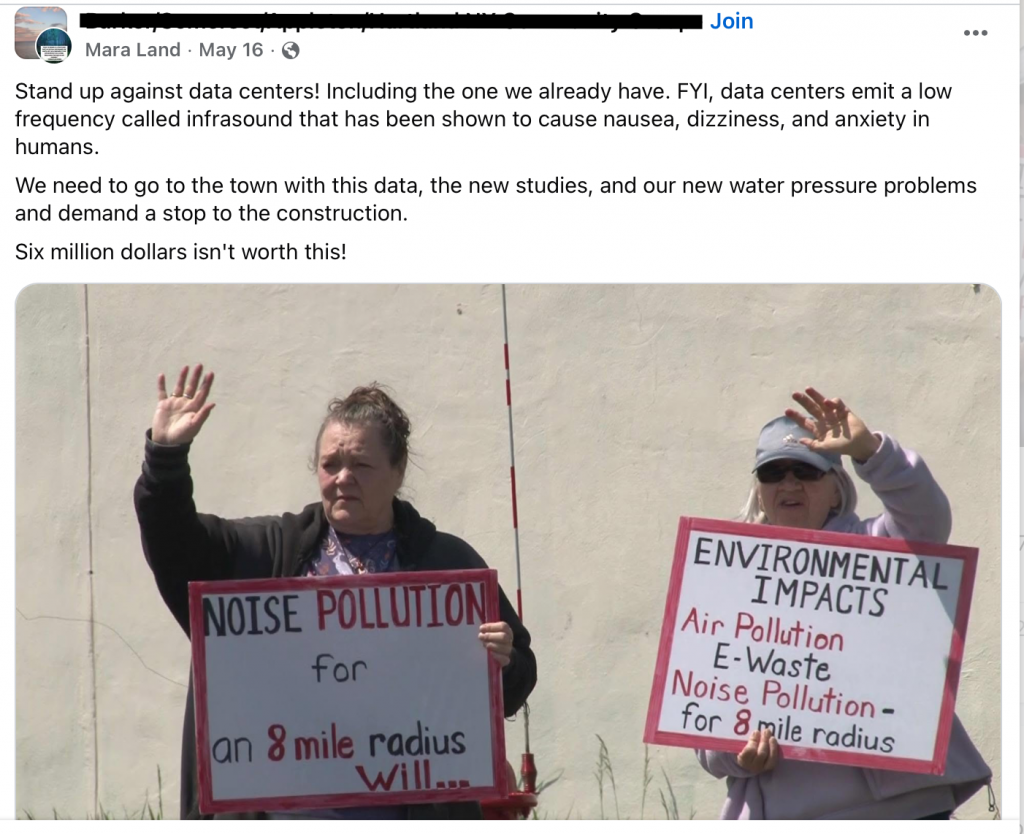
The neighbor who lives across the street complains about the lights staying on at night. The lack of traffic lights on the roads around the construction resulted in multiple traffic accidents. Residents in a local Facebook group ask why their water pressure is low now, wondering if the data center is to blame. Land worries about the likelihood of a fire at the center that can’t be stopped by a volunteer fire department, and she checks the air quality index frequently, noticing that it’s gotten worse than it used to be.
The construction has torn down parts of the forest around it, where bald eagles live, and destroyed the road along the edge of Lake Ontario. «It used to be my favorite road. Now I kind of cut around and I get on the lake road after the data center because I just don’t want to look at the ugliness».
The U.S. plans to compete in the race for AI dominance has meant a rapid rise in data centers, particularly hyperscalers. A data center tracking map from the FracTracker Alliance found 49 operating hyperscale and mega campus centers, with 83 additional ones approved, permitted or under construction.
Pew Research data from April 2026 showed that 67% of planned centers are in rural U.S., whereas 87% of existing ones are in urban cities, as defined by the U.S. Census. Rural areas have less than 2,000 housing units or less than 5,000 people.
Robert Harrington, a rural growth strategist who is now the city adviser to Mount Vernon, Mississippi, said in an email exchange that data centers present a huge economic opportunity for small-town U.S. The property tax revenues, utility taxes, franchise fees and more from such large investments could generate substantial money for small municipal governments, giving them an opportunity to modernize infrastructure and improve public services.
«Communities are finally able to address deferred maintenance projects that local taxpayers alone could never have funded», Harrington said.
Tech developers are attracted to the large, undeveloped spaces next to these towns, but the complex facilities require «highly customized planned development» zoning districts. Harrington said small towns are eager to take advantage of the initial influx of cash by easily granting contracts, but they can fail to negotiate concrete performance standards and community benefits.
Rick White Snake, resident of the 650-person Town of Carlisle, Indiana, is in a unique zoning situation that is ideal for incoming hyperscalers like Heartland Industrial Park, a $65 million data center in the first phase of construction under the developer Potentia, Inc. Snake said the second phase has been undisclosed, though talks indicate Fluidstack will acquire it, with Google investing $5.7 billion, according to New Project Media.
Carlisle is in Sullivan County, which has had no zoning laws since Snake’s ancestors settled in the county in 1803. Land owners can buy and sell land as they please without government approval. «Nobody wants to zone,» Snake said, but the appeal of selling farmland far above market value to data centers has led to multiple proposals and fast approvals. The county is also at the intersection of high-capacity energy transmission lines running in both directions.
«I know the one was offered $40,000; I’ve heard $50,000 an acre», he said. «On a good day at a farm auction, I might get $12,000 an acre».
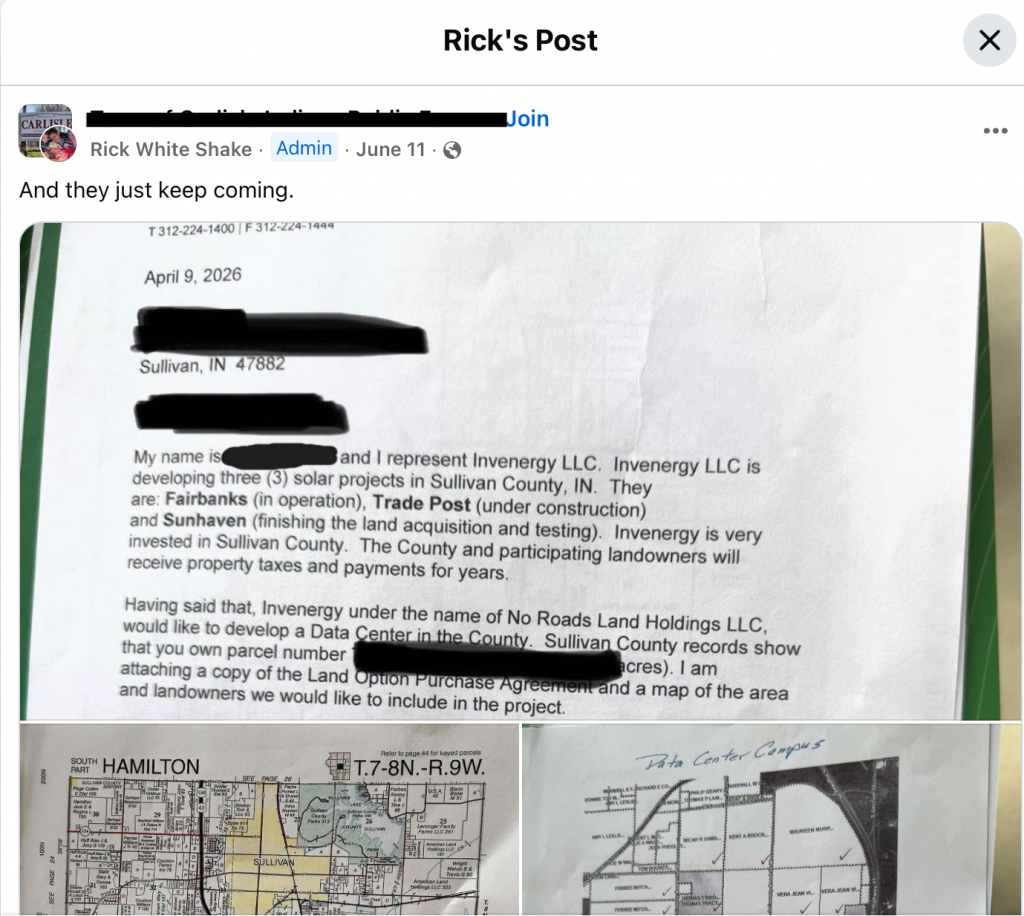
There is little the government can do to encourage transparency from companies, unless the developer goes to the Redevelopment Commission to ask for a tax abatement. Heartland Industrial Park did not (Although, the project is poised to build its own energy infrastructure).
Harrington noted that while hyperscale operators are some of the largest private purchasers of renewable energy, solar and wind cannot generate enough power alone without «massive storage investments». Hyperscalers use 100 or more megawatts of energy a year, enough to power more than 700 homes. Lake Mariner will have a 520 megawatt total capacity when finished.
In New York, energy grid infrastructure is lacking compared to demand, causing rate hikes. Land said. She said her electric bill has gone up by about 20%. «It was 91 degrees [33℃] yesterday and I told my son, “I’m sorry but I can’t afford to turn on the air conditioner”», Land said. «It’s May. What am I going to do in June? What am I going to do in July?»
There’s also concerns about water usage. The average data center uses about 10 million gallons of pure water per day, mostly for liquid cooling the high-energy centers, according to a study in the Advancing Earth and Space Sciences journal. Although many centers use closed-loop system, they still need an influx of fresh water. The Heartland facility plans to use 60,000 gallons per day of fresh water despite a closed-loop system.
Residents are worried about data centers draining their water resources and releasing contaminants into the water. Snake said a data center proposed in Sullivan County wants to pump water from its underground aquifer, and he’s worried Potentia will do the same. Although TeraWulf said it will not pump water from Lake Ontario, Land is worried contaminants will seep into the lake.
«That’s going to taint our land, and once our land is tainted, our fruit is tainted, our vegetables are tainted», Land said.
Harrington said municipalities should take the time to negotiate contracts that incorporate renewable energy, have updated cooling technologies, preserve green spaces and offer long-term sustainability. «Communities that benefit most will not simply be the communities that say “yes” the fastest. They will be the communities that negotiate the smartest».
Lisa Moyer Rice keeps the residents of Fort Meade, Florida updated on a clash between an approved data center and the state. After the town of a little more than 5,000 people fast-tracked approval of the Project Stonebridge hyperscaler from the developer Florida Ecopark LLC before securing the proper permits, Florida Commerce Secretary J. Alex Kelly sent a letter to the mayor calling the project «fundamentally flawed» and «far from approved».
Rice said the town’s river has «run dry» so the town is protective of the water it receives from the Floridian aquifer. Secretary Kelly’s letter cited a prior correspondence from the Southwest Florida Water Management District saying the center’s projected 50,000 gallons per day of water use did not appear to be enough for a four-million-square-foot facility.
«Commissioner Kelly spanked them and said, “Your people told you this. Why were you not listening?”» Rice said.
Fracktracker Alliance’s resistance map shows 227 sites with resistance to data centers and 90 petitions circulating against them. In Fort Meade, the municipal government meetings had to change venues to accommodate the amount of people attending municipal meetings since February to speak out against the project. Rice and other residents sent letters to the Florida Department of Environmental Protection as Project Stonebridge applies to secure environmental permits.
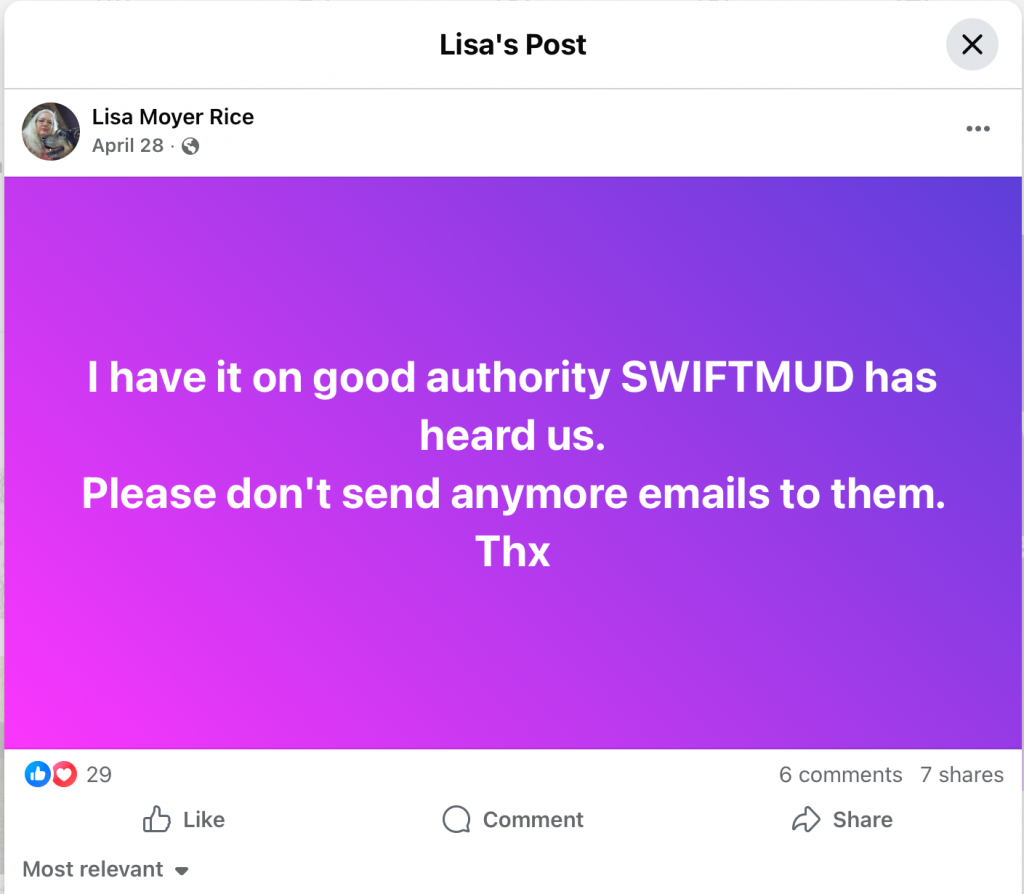
Both Snake and Land run Facebook groups to incentivize public discourse and promote resistance, but many doubt they can bring about change. «It’s just blindly accepted that it is coming», Snake said. «They’re like, “Well, it’s a little too late. You know, what are we going to do now?’ But that’s a defeatist attitude», Land said.
For Harrington, public input is key for a community considering building a data center. «Public trust erodes quickly when residents feel excluded from the process». But with environmental effects not fully understood yet, small-town dwellers want to preserve their way of life for generations to come.
«I do see the good part. I really do, but it’s not worth the tradeoff of our future generations,” Rice said. «It’s going to destroy the town».