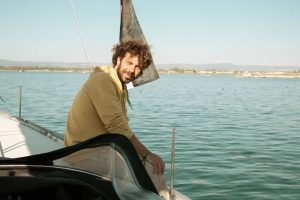



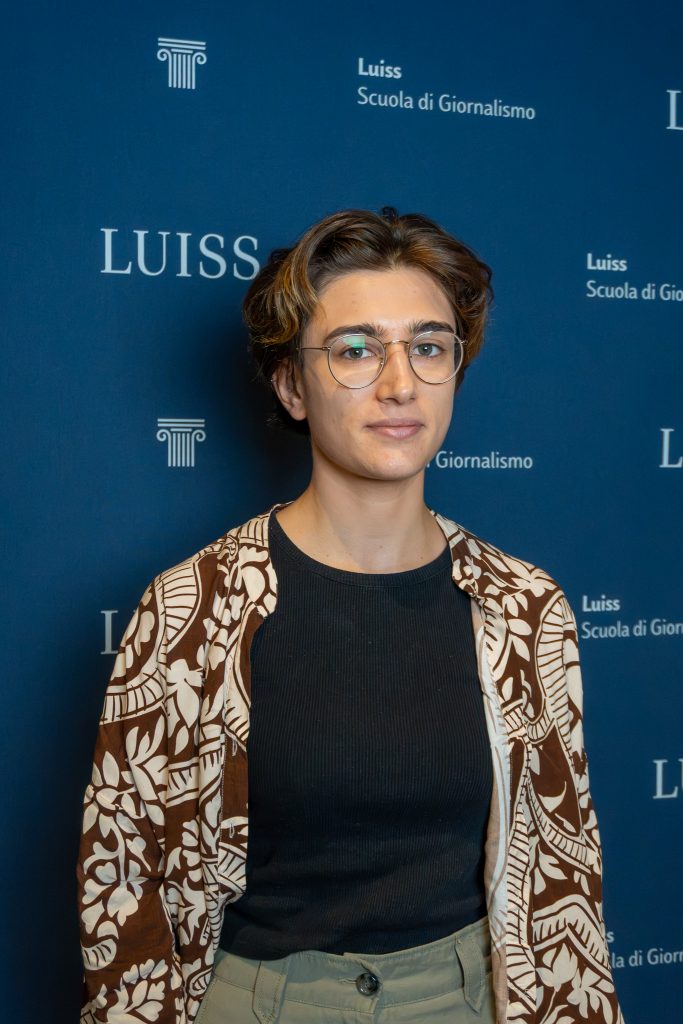
A small town on the northeast coast of Italy called Rimini is where Nicole Mauri grew up, and countless travels across Italy and France are an integral part of her academic and professional background. Yet when asked “Why Rome?”, she smiles and replies “Because it feels like home”.
Nicole explains that it isn’t a lack of warm feelings toward other cities that distinguishes Rome in her mind’s eye. Studying in the Italian city of Trento and Aix-en-Provence in France, as well as interning in Paris, she gained invaluable insight into two fields she intends to set her focus on during her journalistic endeavors: political science and international relations. Similarly, Rome added to her understanding of these topics, especially through her experiences with Luiss’s dynamic international community.
Academic and practical knowledge are not what sets Rome apart from such beautiful areas. Instead, it’s the idea that Rome “as a city, treats you like a family”. Nicole maintained that people of the other areas were kind, but reflected that Rome offers a certain sense of belonging, whether that be with new friends or daily encounters with strangers as simple as a chat at the coffee bar.
Another aspect of a ‘home’ is what parts of the past are brought to it. Nicole loved living by the sea growing up. From a very young age, she worked at her father’s restaurant set on a beach. From that experience, she “learned a lot of her work ethic working there” that set the foundation for her ambition and drive.
During a high school course, she discovered something that made her feel “really alive”. Her philosophy professor would split the class into two sides and subsequently hold debates. These discussions went into a variety of directions shaped by different political and philosophical theories, which helped her realize her calling toward international relations and political science.
The work of Hannah Arendt presented in the course particularly resonates with Nicole today. As a philosopher, Arendt wrote about the Holocaust. Nicole explained that Arendt posited that “totalitarianism comes from a sense of meaninglessness and isolation” and commented that she believes this idea connects “with what we’re experiencing with the current democratic backlash”.
This is not the only course material that continues to impact Nicole’s view of the world. She describes a phrase the professor would often say as something along the lines of “Words are not merely performative; first and foremost, they are formative, in the sense that they shape our personality”.
Since realizing the power choice of words holds, she is increasingly interested in bringing awareness of misinformation and the effect of algorithms to her audience. She is especially looking forward to presenting her work in the form of journal publications and podcasts.
Coincidentally, Nicole has past experience with such forms of media through Luiss. A collaboration of Luiss students in the form of a journal titled Hortensia the Post offers a variety of articles, including Nicole’s, with a transfeminist approach. “Land of Fires: Environmental Injustice as a New Frontier for Human Rights” is just one of her evocative titles that the beating heart of the publication is compiled of.
Looking back at her involvement with Luiss during her first years in Rome, she is satisfied with her work but draws a lesson from it for the future. While she enjoys being committed to projects directly connected to academics like this, she wishes she had explored more of Rome outside of university sooner. Whether her future lies in Rome or not, thoughts like these will stay with her on the road ahead.