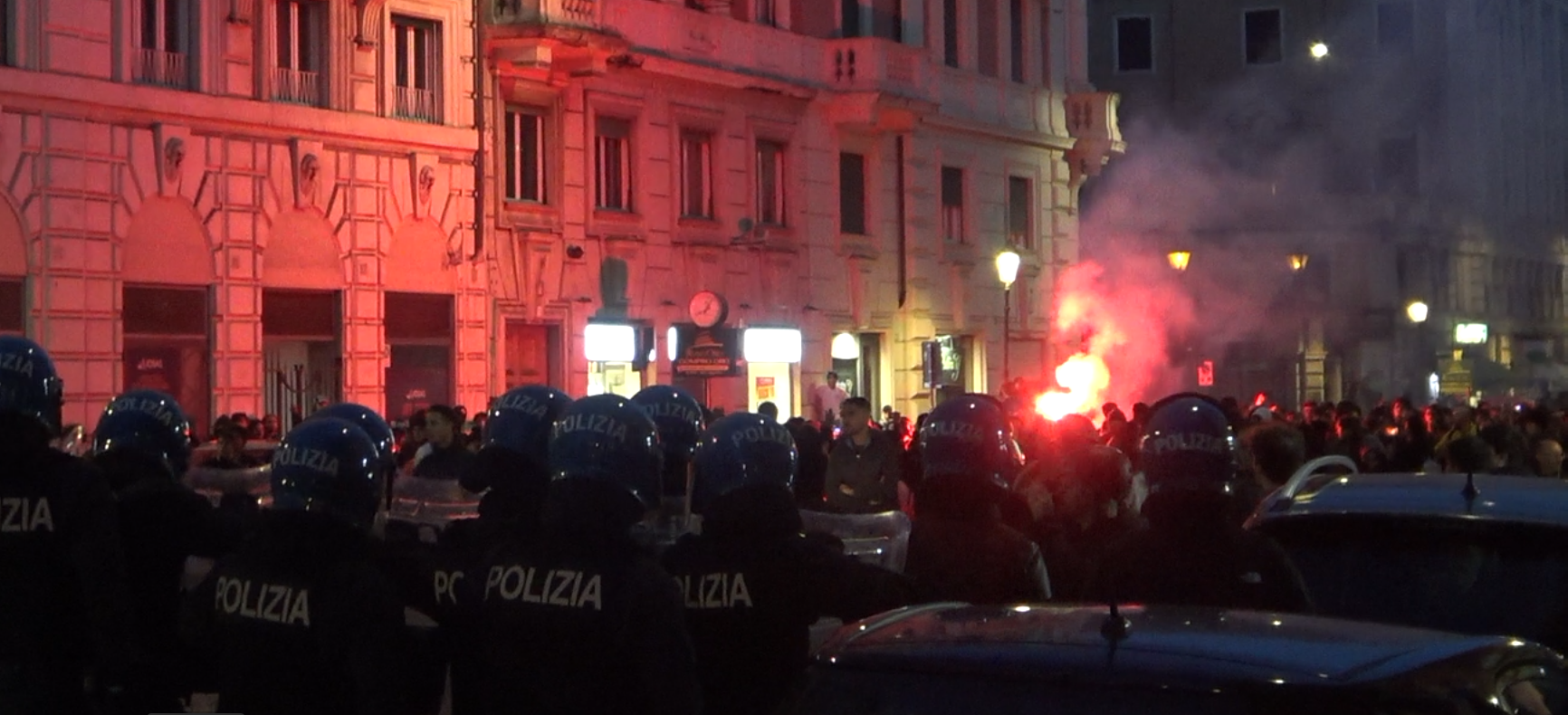

Italian police failed to shut down an unauthorised protest in Rome after the alleged organiser of Movimento 17 Ottobre was arrested in Milan last Saturday, resulting in violent clashes.
Youssef Siher, 30, a second generation Italian academic researcher, is being prosecuted for incitement to commit crimes through social media, organised violence and terrorism charges.
Siher, who was the owner of the Instagram page of the Movimento 17 Ottobre, is alleged to be the head of a movement inspired by the riots that followed the cost of living protests in Milan, which threatened to degenerate into violence in Rome too.
On his Instagram page he allegedly announced weekly protests until the current government falls, posted antifascist slogans and messages against rearmament such as “Money for the neighbourhoods, not for war.”
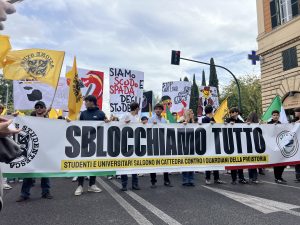
After Siher’s arrest on October 24, instead of scrapping the demonstration altogether, crowds gathered at the Coliseum just at the end of the authorised perimeter of a separate anti-war and anti-rearmament protest which was supposed to terminate in via Cavour.
They briefly broke into the monument, set up barriers to delay a police response, and headed on a march towards government buildings while changing route multiple times to circumvent police blockades.
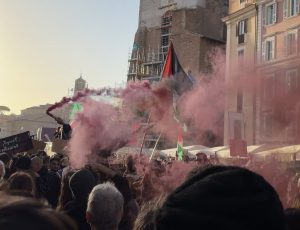
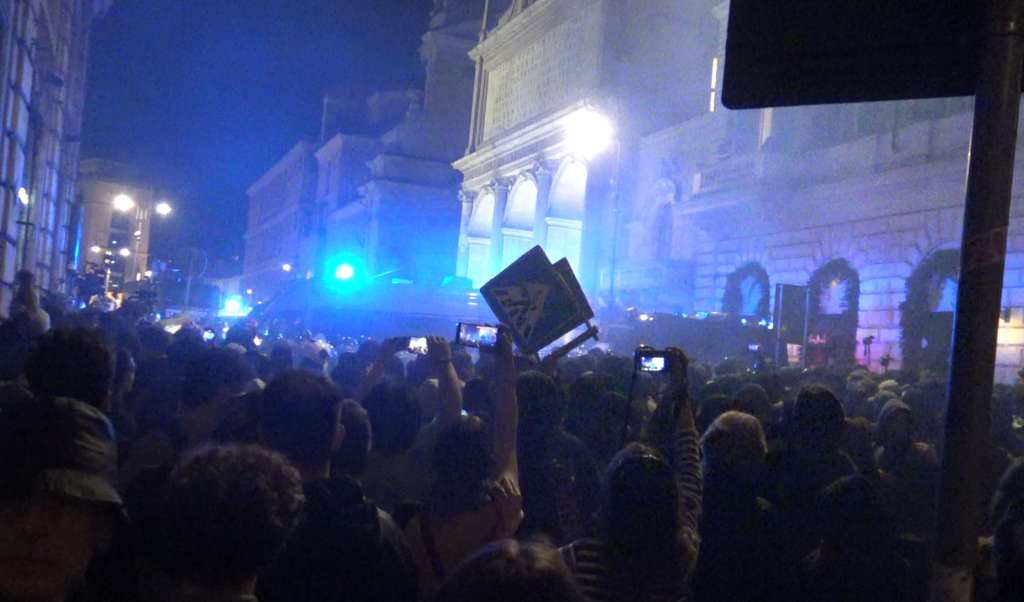
After a few standoffs with police, the march proceeded past Rome’s main railway station, stazione Termini, and around 7pm thousands reached Piazza della Repubblica where they ran into a final police blockade, where the original anti-war protest met up initially. There clashes erupted and police had to use shields, batons, teargas and deployed the watergun to ward the crowd off.
According to La Repubblica, organisers of Movimento 17 Ottobre had instructed their followers on Telegram to turn the movement “fluid,” meaning to abstain from preannouncing meet ups and not to adhere to a specific announced protest, to obfuscate countermeasures and complicate police preparations.
Ahead of the protests, the anti-war and the cost of living related protest, the government deployed over 1,500 police agents across the city and many stores were boarded up.
While the first segment of the anti-war protest was peaceful within its authorised perimeter, the march became more chaotic once it surpassed it. The course of Rome’s protest shows that authorities have to rethink how to prevent the escalation of protests, as crowds displayed the capability to improvise and reorganise communicating on encrypted social media platforms like Telegram.
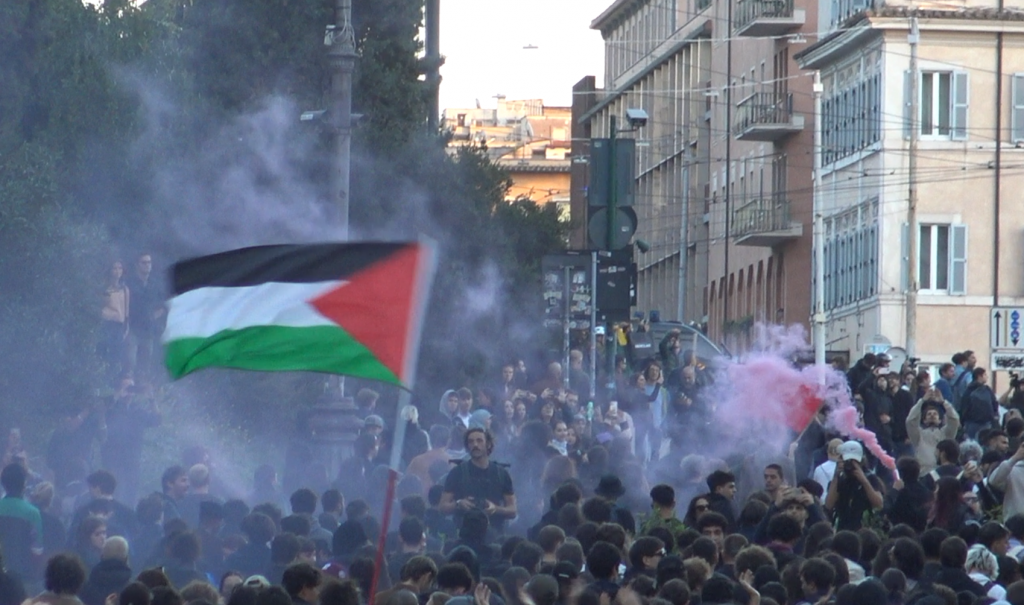
The initial march had a clear theme: no to rearmament and denounce wars. Yet as the march surpassed the assigned boundaries it assumed a more general antifascist character, with protesters singing “Bella Ciao” and many waving Palestinian flags.
The crowds thus grew along the walk, picking up people along the way towards Termini, in a march whose only common denominator was an opposition to the Meloni government by the time it went full circle, and once more reached Repubblica, the dozens of initial protesters now multiplied into a massive crowd.
The contribution of Movimento 17 Ottobre to the march remains unclear, and it isn’t verifiable unless the movement itself takes credit, as the strategy of improvisation isn’t restricted to logistics: the movement keeps its causes and motives vague and flexible enough to reorganise on the spot in case of a police shut down.
The clashes at Repubblica resulted in 96 people taken to police headquarters, 28 preventive stops and 11 people reported to prosecutors.