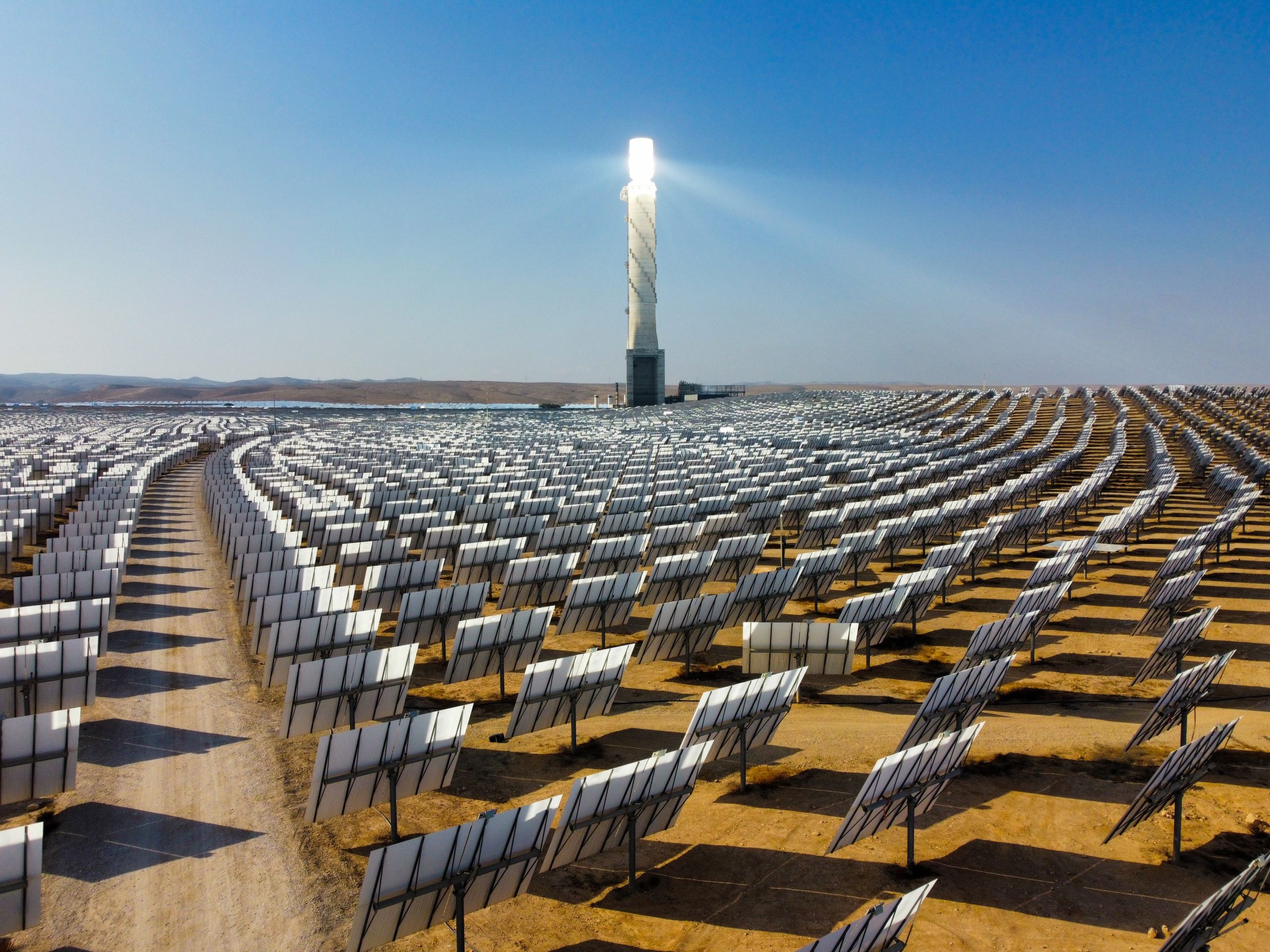

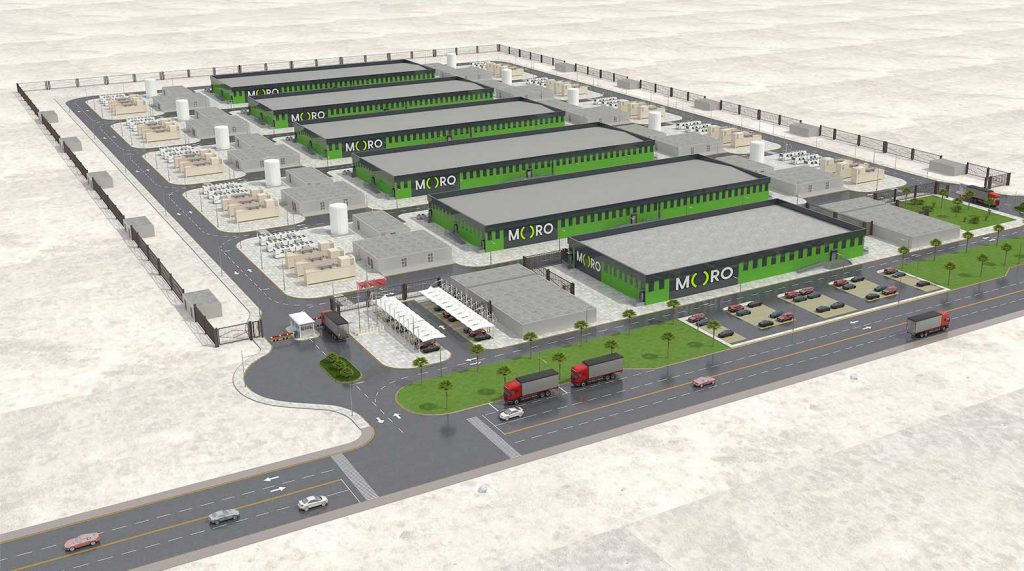
In the desert of the United Arab Emirates, with Dubai’s skyline visible on the horizon, one of the world’s largest solar parks stretches across the sand. The energy it generates powers a data centre at the heart of the global AI race. Built by Moro Hub, a subsidiary of the Dubai Electricity and Water Authority (DEWA), it pairs the modular infrastructure of Huawei, the Chinese telecommunications giant, with the computing power of Intel, an American chip manufacturer whose expansion has been subsidised by Washington. The UAE’s strategy of sourcing from both sides of the US-China tech divide is drawing scrutiny beyond the business world.
Covering over 33,000 km², Moro Hub’s Warsan facility holds the Guinness World Record for the largest solar-powered data centre and is already expanding. In January 2026, DEWA’s CEO endorsed a second phase of a projected ten-phase build-out, scaling from 6.5MW to a hyperscale 100MW. At its centre are two suppliers from rival geopolitical blocs. Huawei, banned from US federal infrastructure since 2018 on security grounds, and Intel, a 10% US government-owned beneficiary of the CHIPS Act.
“This is not just a commercial decision,” says Ludovica Favarotto, Research Fellow at Milan’s ISPI. “It is a response to the growing polarisation of the global digital ecosystem.” For Favarotto, the logic goes beyond procurement. “It is also about how Middle Powers seek to remain relevant as China and the US compete for technological influence.” But the strategy only works while the global system remains divided.
While UAE’s projection as a neutral “free zone”, a Switzerland for capital, logistics, and now data, has drawn investment from both Washington and Beijing, it has also drawn scrutiny. US lawmakers have grown increasingly vocal about the security risks of Gulf states operating as transit hubs for technology that could reach China, and the pressure has begun to show results.
In May 2025, Donald Trump’s first post-reelection state visit to the UAE produced public commitments to technological and strategic coordination. By January 2026, those commitments led to the UAE signing Pax Silica, an agreement signed among 16 countries that goes beyond trade to align the Emirates with a US-led digital architecture. For Favarotto, the conclusion is clear: “the UAE is already aligning itself with Washington.” But closer ties to the US may come at the cost of the UAE’s carefully maintained neutrality.
For international technology firms weighing investment in regional AI infrastructure, environmental credibility has become essential, and the UAE’s answer is carefully constructed. Moro Hub claims 100% solar power and a Power Usage Effectiveness of 1.3, placing Warsan among the world’s most efficient facilities.
Arianna Crosera, a legal scholar at the European University Institute specialising in data centre regulation, is not convinced the credentials hold under scrutiny. The more fundamental problem, she argues, is structural: “the rhythm of growth that AI demands is not compatible, at the moment, with a complete offset with on-site energy plants.” As Moro Hub scales toward 100MW across nine further phases, the gap between what solar can genuinely supply and what AI workloads consume will widen. Energy certificates are increasingly used to compensate for that gap.
In the Gulf’s desert heat, the world’s greenest data centre may yet prove to be its most contested. As the Middle East’s AI infrastructure boom accelerates, the next phase of Moro Hub’s expansion may reveal whether the UAE can continue balancing between Washington and Beijing, or whether the AI race will eventually force a choice.