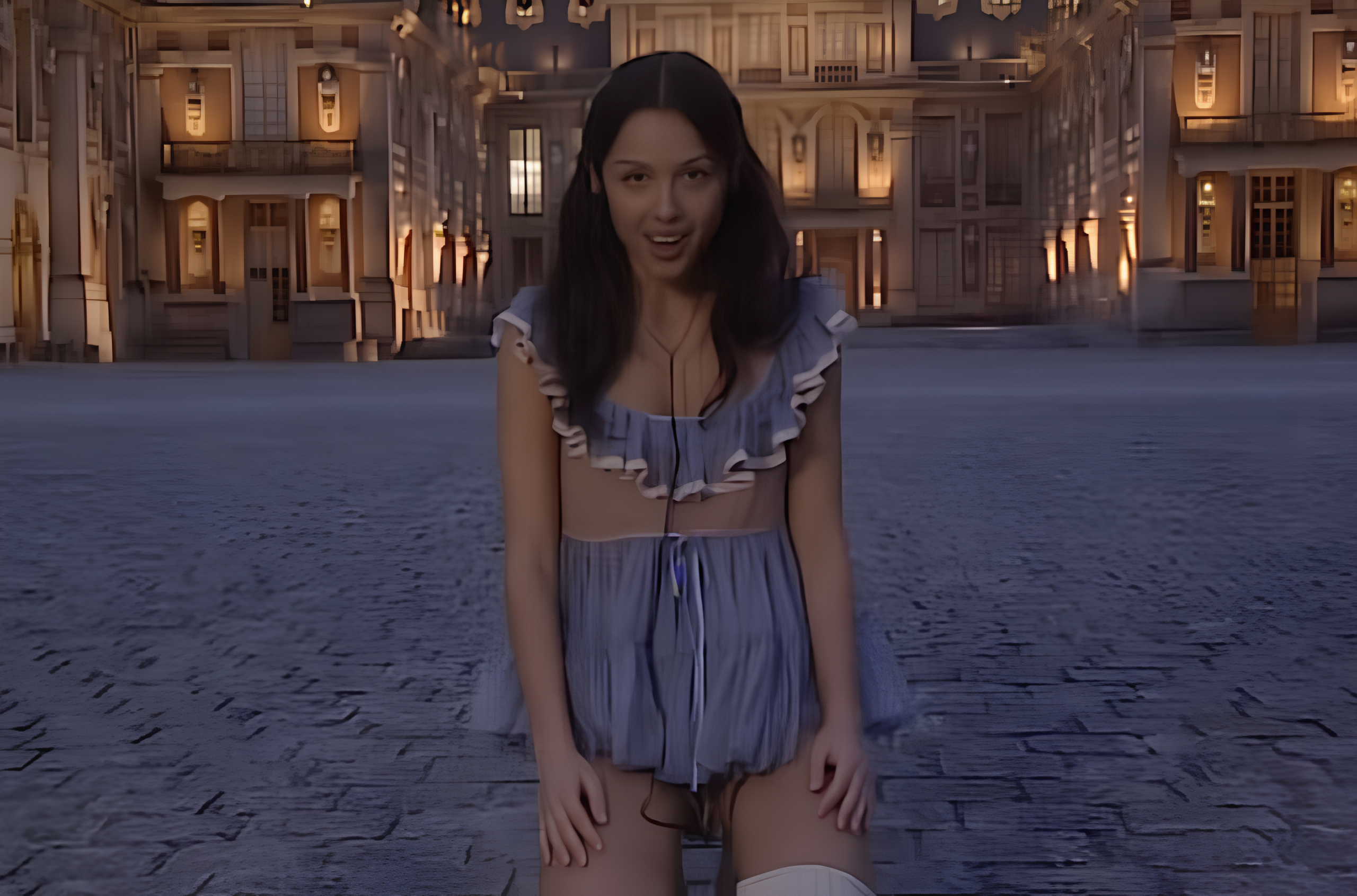

“What’s really disturbing is I’ve been on stage in a sparkly bra, little shorts, and that wasn’t ‘inappropriate’. But me fully covered up in a dress that people deem childlike was inappropriate”, says singer Olivia Rodrigo in the New York Times’ Popcast, addressing controversy around her babydoll dress worn during her performance of Drop Dead at Barcelona’s Teatre Grec on 8 May 2026.
The short, loose-fitting dress with a high waist and flared skirt, usually ending mid-thigh or above the knee has been criticised by some as infantilization. In music videos for her new album You seem pretty sad for a girl so in love, Rodrigo wears a frilly light-blue babydoll dress with silk bloomers and knee-high socks. On TikTok and X, the look was labelled “pedo-core” and “sexy baby.” She defended her styling on Popcast, saying: “it shows how we really normalize pedophilia in our culture. It’s this rhetoric that we’re fed as girls since we’re so little, ‘Don’t wear that because then a man is going to sexualize your body and it’s your fault.’”
Paola Cacianti, fashion journalist and cultural commentator, argues the babydoll dress “represents a return to the infantilization of women.” She also points to everyday language, such as partners calling women “my little girl,” describing a tension between affection and control: “On the one hand, there is control; on the other, there is the tenderness that all ‘baby-like’ beings tend to inspire.”
From the Enlightenment and Victorian eras, children were seen as a distinct, innocent stage of life, which led to clothing styles separated from adult dress and associated with purity and non-sexuality. Over time, these protective associations became unstable, as cultural texts such as Vladimir Nabokov’s Lolita (1955) introduced the “nymphet” trope blurring childhood and adulthood. Since then, hyper-feminine styles like frilly dresses have been read both as symbols of innocence and as sexualised codes. The clothing that once meant to safeguard childhood innocence has increasingly become a site where infantilization and sexualisation are projected onto the same aesthetic.
The babydoll dress style in particular, first gained prominence in the 1950s not as infantilizing but as a feminist symbol. Evolving from 1940s lingerie designs by American designer Sylvia Pedlar, designers like Cristóbal Balenciaga and Hubert Givenchy reworked it into trapeze silhouettes meant to free women from corsetry. In the 1990s, it resurfaced in grunge culture through artists like Courtney Love and Kim Gordon, who paired it with edgy styling to challenge ideals of femininity and docility.
Cacianti situates the return of the babydoll silhouette as a form of sexuality shaped by American romantic comedies that is “protective, and therefore controlling,” balancing innocence with regulated desirability. She is sceptical the babydoll trend will last, linking it to nostalgia-driven cycles in a “culturally confused era” that recycles archives in search of novelty.
As fashion journalist Katherine Singh notes, “society has a long history of monitoring what women do with their bodies and using it as a metric for their worth, morality, and safety. This constant policing means women are always caught in a catch-22, forced to navigate the impossible standards of a culture that simultaneously demands their sexualization and punishes them for it.” Singh argues that women’s bodies remain subject to patriarchal policing, leaving them to bear responsibility for systemic issues. For many critics, the goal is a culture where a woman’s clothing is not treated as central to judging others’ behaviour.
Tune in to the latest Fuorigiri episode exploring the babydoll aesthetic