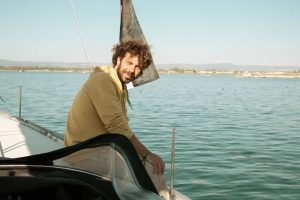



Luciano Canessa was born and raised in El Salvador, a country often called “the little thumb of America” because it is the smallest country in Latin America, it has remained relatively unnoticed. Luciano spent most of his childhood and teenage years at the same private school, surrounded by the same classmates and friends. Looking back, he describes those years as living “in a bubble”: a familiar environment that shaped him but made his move abroad a bigger step.
He grew up watching football with his father. While his friends were watching cartoons, Luciano was analysing matches and asking his father to tell him stories about different teams. For a country of its size, only a few Salvadorans have managed to become internationally known. One of them is Fernando Palomo, the Salvadoran journalist and ESPN voice who is Luciano’s biggest reference. Luciano once dreamed of becoming a footballer, but eventually realized that “my strength was not in playing the game, but in understanding, analysing, and explaining it; in fact, I want to become for future generations what Palomo was for me: proof that someone from El Salvador can reach the biggest stages of international sport”
Italy had already begun to feel familiar. Among his large family, Luciano declares: “I’ve always felt like the most Italian”. He studied Italian and read Italian football newspapers in El Salvador. When Luciano felt ready to leave, he chose Genova, where his great-great-grandfather came from, and said: “It felt like a return to where everything started.” Luciano later moved to Turin to study communication science. The university system was not easy: he had never had an oral exam, was not used to large classes, and had never lived alone. The challenges forced him to become more independent.
During the 2024 Turin ATP Finals, he interviewed Marcelo Arévalo, the Salvadoran tennis player who was world number one in doubles. It was a turning point: “I realized I could do this for real”. In February 2025, he travelled to interview a Salvadoran female football player at Sassuolo. It was his first long interview in English, teaching him that opportunities have to be created and pursued.
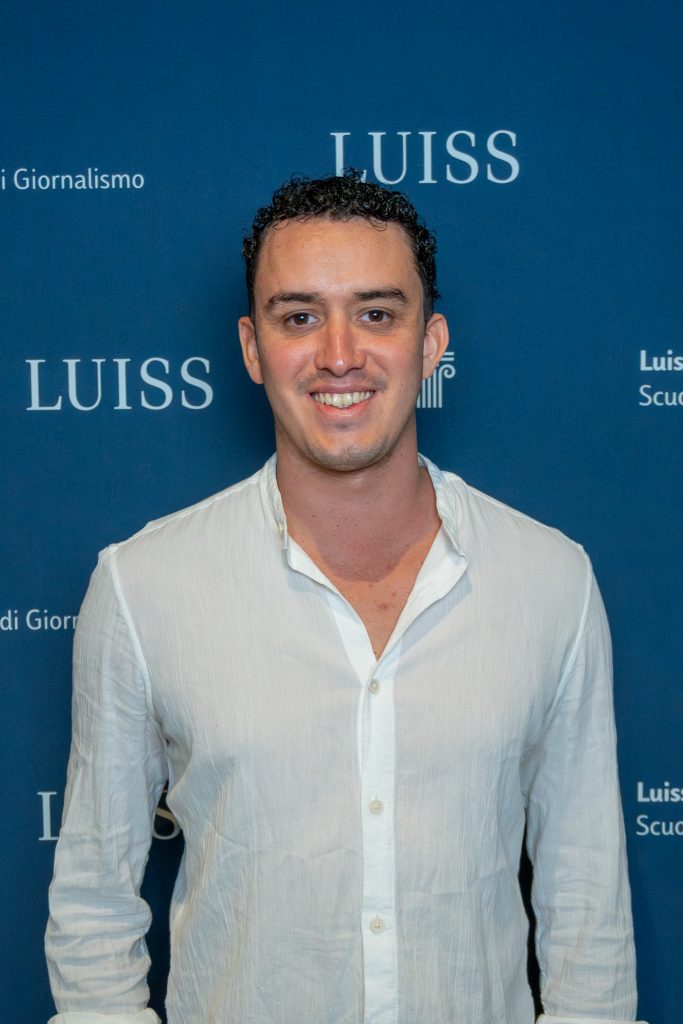
Encouraged by friends and family, Luciano created his own channel. He started talking about football in El Salvador and publishing interviews, including one with Lisa Boattin, another female football player. This was his first interview in Italian. From that moment, Luciano has conducted more than 15 interviews. One of his most memorable moments came in March 2026, when he covered Uruguay-Algeria at Turin’s Juventus Stadium and asked questions to Marcelo Bielsa, the Argentine coach of Uruguay. “It was an incredible feeling; my dream was becoming real”, he recalls.
Luciano’s ambition goes beyond reaching the biggest stages himself. During his last summer in El Salvador, Luciano created a six-episode documentary called Historias de un Sueño Frustrado. He spoke with six Salvadoran sports journalists about the World Cup qualifying campaigns in which El Salvador failed to qualify over the past 40 years. The project explores the political and social context of each period and how football became a source of hope for a country affected by wars, political changes, and economic crises.
Luciano biggest dream is to cover El Salvador at a World Cup. The country has now been waiting 45 years. He expresses, “I want to tell that story and create a memory that stays with my people to make millions feel the emotion of a historic moment and finally see my country on football’s biggest stage.” Now in Rome for the LUISS Master’s in Journalism, he sees this opportunity as another step towards his goal. Luciano left El Salvador to find his place in Italy. Now, he wants to build a career that could take him to the biggest football stages while using journalism to give something back to the country where his story began.