
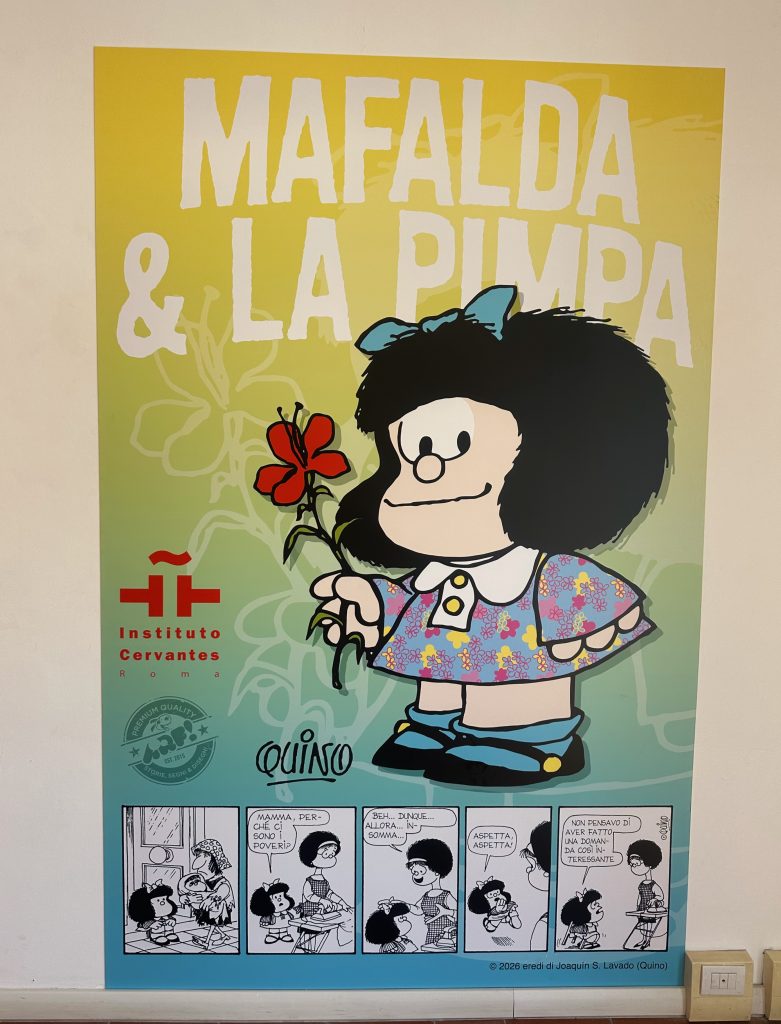
A comic strip of a little girl with raven-black hair cut in a 1960s bob and topped with a bow stands next to one of a white dog covered in red polka dots, smiling broadly with her tongue hanging out. In the first, illustrated in black and white, the girl comes home from school sobbing and tells her mother, “I’m okay, it’ll pass. We just learned about human rights.” In the second, rendered in bright colours, the dog gazes at the moon in wonder, asking it to come down and share a snack with her. These distinctive characters are Mafalda and Pimpa. For those who first encountered them through the innocent gaze of childhood, revisiting them years later reveals how deeply their stories reflect the realities, contradictions, and hopes of the world we live in.
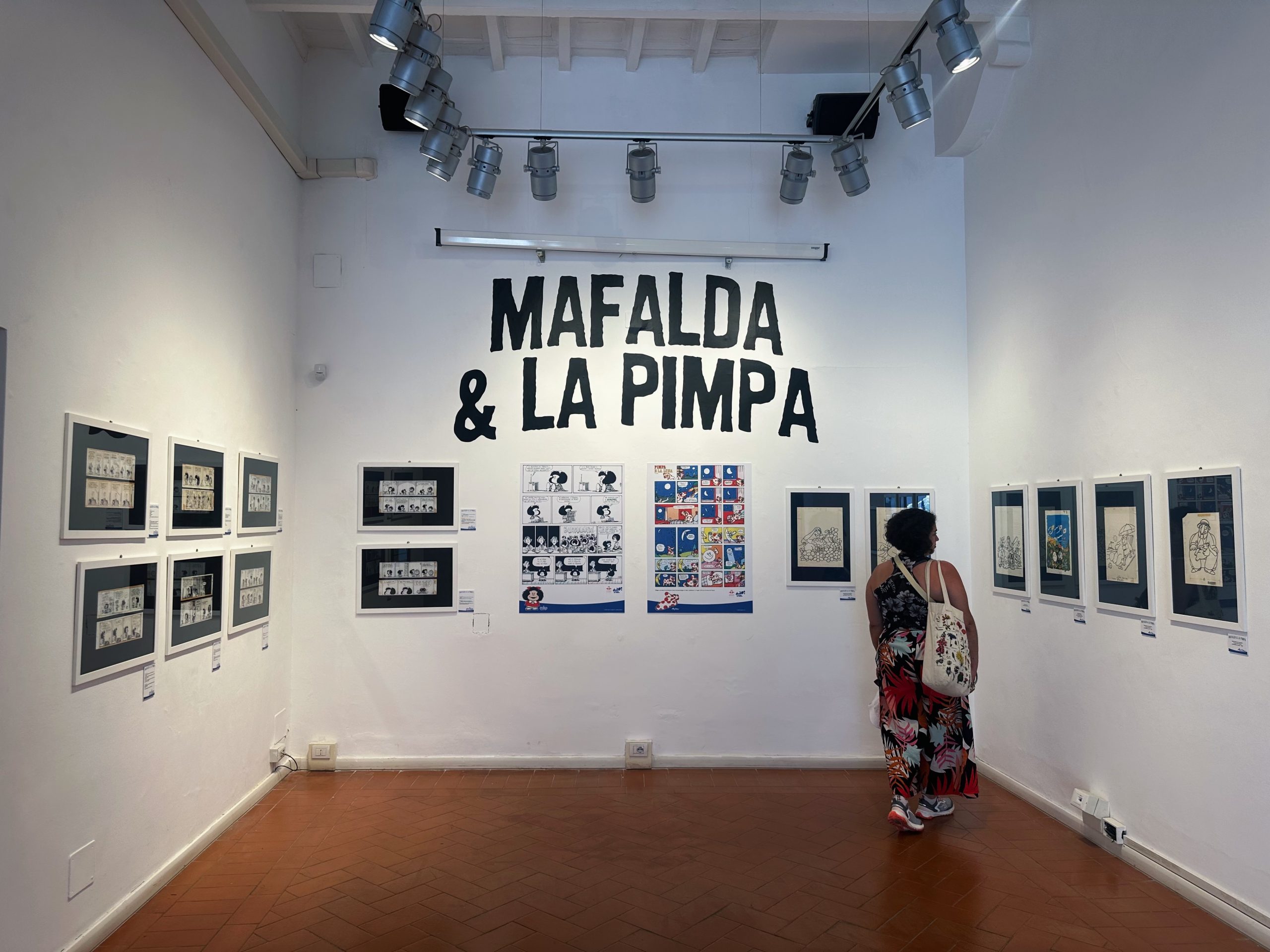
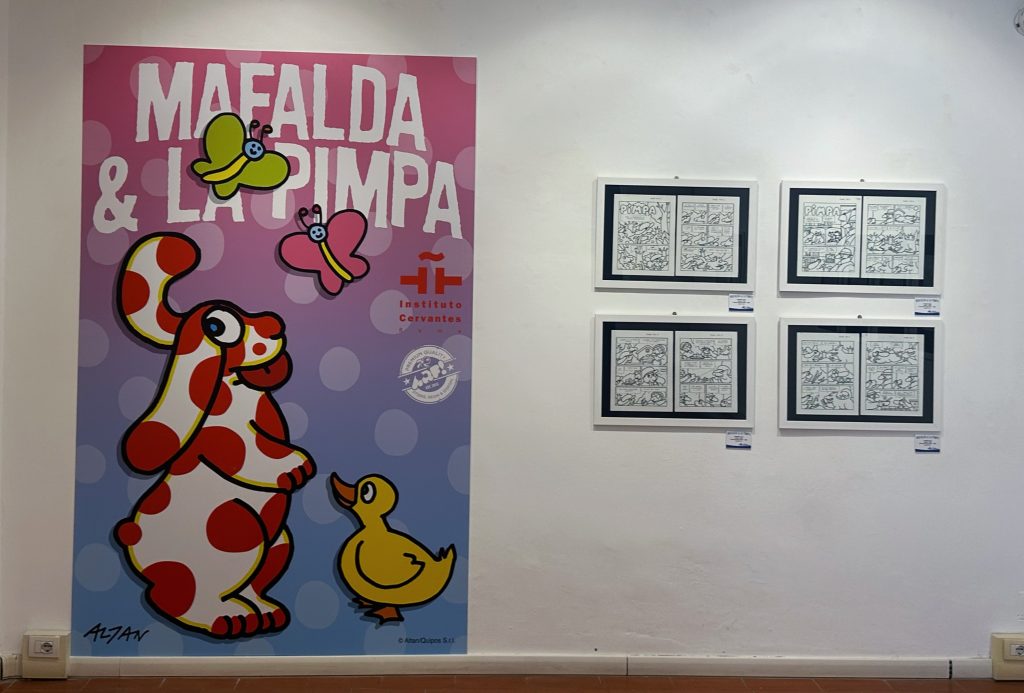
ARF! Festival, Rome’s annual event dedicated to comics and illustration, brings together Pimpa and Mafalda for the first time in the Italian capital in the exhibition Parlare ai bambini per parlare agli adulti (Speaking to children in order to speak to adults). The showcase takes place from 14 May to 11 July in the Istituto Cervantes in Piazza Navona.
Martina Juarez, a collaborator with the Istituto Cervantes, describes the significance of these characters, saying: “Even though these comics were originally made for children, many adults still read them because they speak to them too. Mafalda is more direct and ironic, but always makes you think by pointing out contradictions in the adult world. Pimpa also resonates with adults, but in a softer, more philosophical way, inviting reflection through kindness and imagination.”
Italian comic artist Francesco Tullio Altan created Pimpa in 1975, a little dog driven by innate curiosity and ability to see magic and goodness everywhere around her. Meanwhile, Mafalda, created by Argentine cartoonist Joaquín Salvador Lavado “Quino” in 1964, depicts a young girl who is concerned about the future of society and addresses themes of injustice with wit and a comic undertone.
Explore other exhibitions in Rome
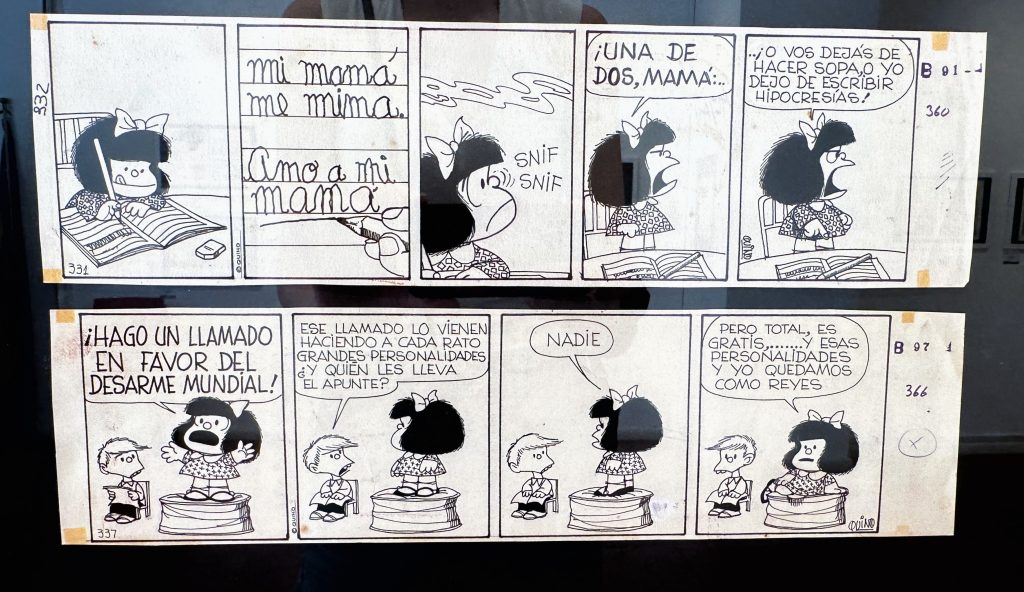
One of the comic strips featured in the display shows Mafalda standing on a pedestal with her hands raised in the air, declaring, “I call for worldwide disarmament!” A friend responds, “Important people make that same appeal all the time, and who pays any attention to them?” Mafalda replies, “No one, but it doesn’t cost anything… and those important people and I still end up looking great.”
Victoria Perez, an Argentinian visiting the exhibit, explains that what stood out to her most about Mafalda was “the way she responded to everything, even as a little girl. In the comic strips published during Argentina’s dictatorship, she would still be depicted responding to the police and adults without hesitation.”
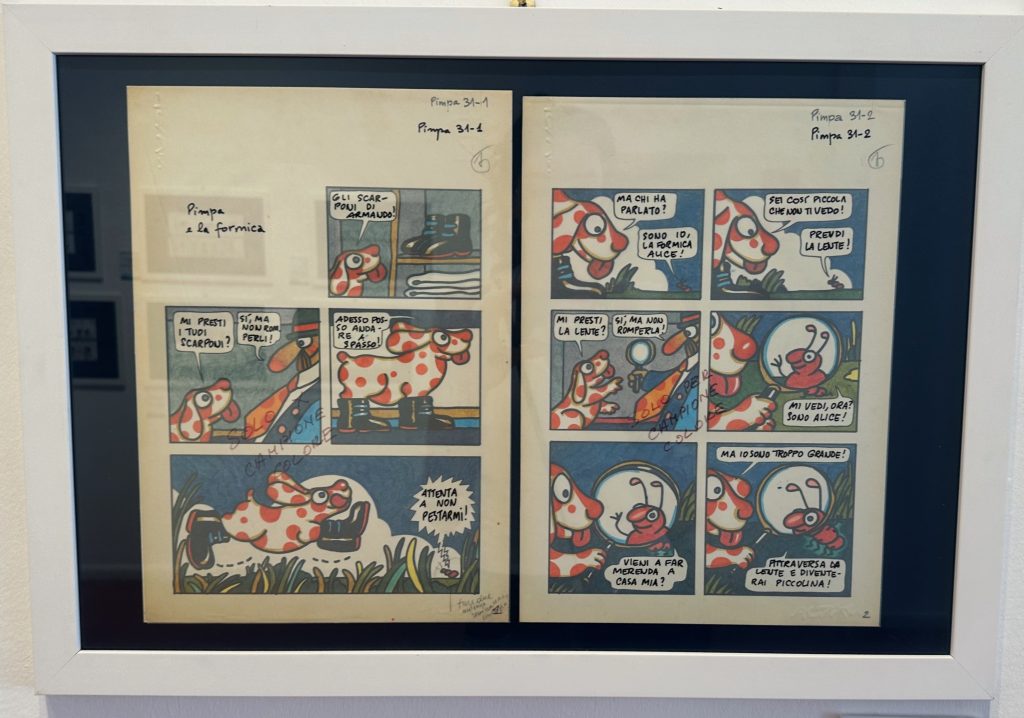
Another comic showcased is Pimpa and Bibì the Ant, where Pimpa hears an ant pleading, “Please don’t step on me.” Curious, she shrinks herself down with a magnifying glass and visits her new friend’s anthouse, where they share a snack and listen to the radio before Pimpa returns home to tell her owner, Armando, about her adventure.
In Pimpa’s universe, animals and even objects are humanized, but without exclusion, rigid hierarchies, or cruelty. While Mafalda observes a fractured reality shaped by inequality and hypocrisy, Pimpa offers a gentler vision of humanity, one where kindness and collaboration are simply part of nature.
In this pairing, comics emerge as a universal language, not merely something made for children, but a space where the world can be seen with openness and vulnerability. The exhibition presents the perspectives of two childlike characters, who in their own distinct ways both pose the same question: what sort of people have we grown into?